• Home
  • Recipes
    • Vegetarian
    • Seafood
    • Snacks
    • Chicken
    • Mutton
    • Egg
    • Roti & Parathas
    • Dessert
    • Sides
    • Soups
    • Salad & Bowls
    • Rice
    • Daal
    • Bakes
    • Roasted
    • Beverages
    • Sauces, Spices & Curry Base
    • Chutney & Dips
    • Festive Recipes
  • Cuisine
    • Bengali
    • Maharashtrian
    • Rajasthan
    • Punjab
    • Chennai
    • Andhra
    • Mangalore
    • Mughlai
    • Kashmiri
    • Chinese
    • Singapore
    • Mexican
    • Continental
    • Italian
    • French
    • American
    • Thai
    • Bangladeshi
    • Arab & Persia
    • North East
  • Meal Type
    • Breakfast
    • Lunch
    • Dinner
    • Snacks
    • Dessert
    • Appetizer
    • Accompaniments
  • How To
    • Preservation Techniques
  • Travel
    • East India
    • West India
    • North India
    • South India
    • Asia
    • America
  • Lifestyle
    • Craft & Creation
    • Experiences
  • Musing
  • Contact
  • Bengali Blogs

Curries & Stories

pinterest facebook twitter instagram tumblr linkedin

I completed my second trip to Bhutan and will be probably planning my third. So I thought I will share a collated list of things which either I learnt from the TripAdvisor forum, research on other platforms or from my travel experiences in this region which may help others planning a trip to Bhutan.

------------------------------------------------------------------

1. Although Bhutan is generally safe, it is advisable to keep your valuable items such as wallets, cameras, and passports in a secure place or carry them with you at all times. We occasionally left our passports and money in the car while visiting certain points, but since our driver was present, we never encountered any issues with misplaced items.

2. Dress and behavior:

  • Dress modestly and avoid wearing revealing clothes at religious sites.
  • Wind cheaters are useful in various weather conditions.
  • Layering is preferable to carrying a single heavy coat, as you can remove layers as needed.
  • Good and comfortable walking shoes are essential.
  • Some religious places may restrict open shoes or flip-flops. Check with your guide for any restrictions.
  • If you're interested, you can try out the Bhutanese traditional dress in Paro, where there are dress rental shops.

3. Stay/ Hotel

  • Some hotels might not have elevators, so it's important to check this before booking.
  • If you need a Western-style toilet, make sure to confirm its availability.
  • Farmhouses typically do not have attached baths.
  • Farmhouses may not have beds; instead, bedding is usually arranged directly on the floor, which is comfortable and warm.
  • If you're traveling during colder months, check the room's heating options, such as Bukhari or central heating.
  • Verify the availability of hot water and any time restrictions.
  • Not all hotels have disabled-friendly ramps, so ensure to check this before making a reservation.

4. Temple/ Monastery:

  • When visiting temples, please remove your footwear and ensure that your head remains uncovered. Exception cases are where you need to keep your head covered as your own religion demands it (e.g. a Sikh’s wearing turbans)
  • Walk clockwise while passing heritage and religious monuments.
  • If referring to something, indicate it with an open upward palm or motion toward it with your chin. Don’t point your fingers at religious idols or arts, it is considered as rude
  • Do not climb or step on any religious artifacts or temples

5. Do not feed wild animals:

  • It is illegal to feed any wild animals (e.g., monkeys) if you encounter them on the road. This law exists to prevent ecological disturbances, such as wild animals becoming dependent on humans for food, changes in their natural feeding habits, and attracting predators that could pose a risk to human settlements.

6. Follow the instructions given by your tour guide strictly as they know the lay of the land better than you

7. Photography:

  • Check with your guide before taking photographs within religious places or inside Dzongs.
  • Photography is not allowed inside the temples

8. Sitting on the floor:

  • When seated on the floor, it is important to sit cross-legged. It is bad manners to stretch your legs out in front of you.

9. Royals & Authorities:

  • The Bhutanese hold their Queen and Kings in high regard. It is important not to make jokes about the Bhutanese royals, clergy, or authorities.

10. Weather:

  • Make sure you are well-prepared and informed about the weather and other conditions in all the places you visit.
  • Unlike India, Bhutan does not have tropical weather, so it doesn't rain continuously even during the rainy season.
  • Nights are generally cooler, and temperatures can drop significantly depending on the month.

11. Shopping

  • Generally, I found that the handicraft market in Thimphu offers cheaper options for souvenir shopping compared to Paro
  • However, if you're looking for good quality souvenirs at a reasonable price in Paro, there's a lone shop by the Paro Chu bank (your guide will know the location). The lady there sells beautiful gift items at very reasonable prices.
  • Invest in some good local things like Yak Wool Shawls/ mufflers ( Location : Lawa La Pass)
  • If you're shopping for handicraft items or souvenirs, the best place is actually Jaigaon market on the border with Phuentsholing. You get the same quality as Thimphu and Paro, at much less price. Unfortunately, most of these 'made in Bhutan' items are product of India or Nepal and imported and sold in Bhutan. The second-best place to buy is Thimphu. In Paro they are much more expensive. If you do have to shop in Paro, the Choden souvenir shop opposite to the Paro Dzong photo-point is the place to go. Things are relatively cheaper there. Bargaining or haggling is generally not recommended; you may ask politely for a discount.

12. Walking / Hiking sticks:

  • There are lot of stairs at various locations such as Dzongs, Monasteries, Hotels, Restaurants, and Attractions. Be prepared for a lot of climbing!
  • For elderly individuals or those with mobility challenges, it is highly recommended to carry walking or hiking sticks.

13. Internet

  • Get a SIM card from Phuentsholing (if entering by road) or Paro (if entering by flight). There are affordable 7-day data and voice plans available, such as 200 NU
  • If you run out of data, you can visit any shop or ask your guide to top it up for you at very low rates, like 49 NU
  • Hotels provide in-house Wi-Fi, so you only need coverage for the day while traveling
  • Both Tashi Cell and Bhutan Telecom offer good connectivity, even in remote areas.
  • Unless you have an urgent need to stay connected at all times, you can enjoy some internet-free time in Bhutan

14. Medicines:

  • It's advisable to carry basic medicines with you, as there are very few medicine shops in remote areas.
  • Many roads have numerous turns and bends, so if you suffer from motion sickness, please bring anti-nausea medication

15. Street Animals:

  • Bhutan has many stray animals, as people here are generally very compassionate towards them. During both of my trips, I found all the strays to be very harmless. The locals enjoy petting and feeding them. I petted almost all the cats I encountered, and we fed the street dogs. My suggestion is not to be afraid of any strays, and if you love animals, you might enjoy petting a few. Also some people point out stray dogs barking at night causing a nuisance, but we didn’t face any such issues.

16. Money:

  • The local currency of Bhutan is the Ngultrum (BTN), which has the same value as the Indian rupee (1 INR = 1 Ngultrum/NU).
  • It's best to carry enough cash with you as cards of other countries might not work in local ATMs.
  • I recommend completing your trip payment, which is the bulk amount, before your trip and only carrying cash needed for temple/Dzong/attractions entry, food, water, etc., which are over and above your package. This way, you can minimize the amount you need to carry.
  • Carry some emergency funds per person in case you need them.
  • INR denominations – Rs 10, Rs 50, Rs 100, and Rs 500 – all worked for us across Bhutan. However, the widely accepted denominations are Rs 500 and Rs 100.
  • You might receive change from the Bhutanese either in NU or INR.
  • Make sure to use up most of the NU before you leave Bhutan as they can't be used in India.
  • I usually keep aside a few local currencies as souvenirs from my trip.
  • ATM and banking facilities are limited in the interior of Bhutan, so it's best to do banking in Paro or Thimphu
  • DO NOT RELY on ATMs. Due to the rush of tourists, they are almost always out of order or out of cash. UPI payment (Apple Pay, Google Pay etc.) do not work in Bhutan, and neither do debit or credit cards in most restaurants and shops.
  • Indian citizens can bring up to Rs. 25,000 in Indian currency to Bhutan ( as per current rule)

17. Documents

  • It's advisable to carry the contact number of your tour agent (if applicable), a backup emergency contact, and hotel contact numbers.
  • Keep photocopies of your passport / voter’s card
  • Have photocopies of your e-permit, as this needs to be shown at immigration.

18. Food

  • Bhutan offers plenty of vegetarian options.
  • Hotels that cater to Indian tourists often provide Indian food or buffets for dinner.
  • If you prefer not to have Indian food, you can inform the hotel, and they may arrange an alternative menu based on availability.
  • Be open to trying traditional Bhutanese food, as you will mostly dine outside your hotel during lunch, where restaurants typically serve Bhutanese cuisine.
  • Most restaurants have a set menu for the day, costing around 500-600 NU for 1 or 2 non-vegetarian items and 700-800 NU for more than 2 non-vegetarian items. On average, lunch for two people would cost between 1000-1500 NU.
  • If you stay in farmhouses, expect to be served traditional Bhutanese food instead of Indian food. Inform the farmhouse owners of any dietary restrictions or preferences.
  • The cost of a water bottle is similar to India (20 NU for 500 ml).
  • Almost every place in Bhutan has specific regional dishes, so don't miss out on them (e.g., Hontey /Buckwheat momos in Haa Valley, Puta/Buckwheat noodles in Bumthang).
  • Contrary to popular belief, not all Bhutanese dishes are loaded with chilies. Specific dishes like Ema Datshi use chilies as a core ingredient, but many Bhutanese dishes have low spice levels. Locals often enjoy condiments like Ezay, a dry side dish made of chopped red dry chilies, green chilies, tomato, onion, and cheese. Ezay has several variants, and we particularly enjoyed the one with green chilies, which helps spice up the dishes.

19. Power Plugs & Sockets

  • The standard voltage of electricity in Bhutan is 230 V and the frequency is 50 Hz. So countries like UK, Europe, Australia, and most of Asia and Africa, can use their electric or electronic appliances in Bhutan without a voltage converter.
  • For Indians their chargers would work as is without any adapter
  • If you travel with multiple gadgets like a camera, laptop, phone, tablet, or smartwatches, it's advisable to bring an extension cord with surge protection. Some hotels may have limited power outlets.
  • I did not experience any power outages during any of my trips to Bhutan

20. Tipping

  • Tipping is not mandatory but is recommended if you are satisfied with the service.
  • It is suggested to tip your driver and guide based on the quality of service received. A decent tip is considered to be NU 300 – NU 500 per day per person (guide/driver).
  • Instead of handing over cash directly, it is recommended to place it in an envelope before giving it.
  • You can also bring small gifts for your driver/guide from your own country, such as spices or fridge magnets. These small gestures can make a big difference. For example, we brought Darjeeling tea on our first trip and jute bags and handmade diyas on our next trip. These gifts are optional and are over and above the tip.
  • Treating your guide or driver to a meal is optional but recommended. For instance, you can invite them to join you for a meal on the last day of the trip.

21. Guides

  • Having a guide is not mandatory if you are just exploring the town, but you need to be accompanied by guides when visiting landmarks, religious places, or Dzongs. Additionally, guides are required when traveling from one place to another.
  • Drivers and guides should be separate individuals, as guides undergo rigorous training to answer tourist queries and are well-versed in communication languages like English and Hindi. They are knowledgeable about Bhutanese history, culture, religion, and natural heritage, making them invaluable for answering questions.
  • Guides are proficient in English and local languages, but if you need a guide fluent in a foreign language, your tour operator can arrange it for you.
  • You can also find guides with specialized skills such as birding, rafting, trekking, biking, and photography.
  • Sometimes, tourists bring their personal translators if they are not comfortable with English.
  • Inform your guides about your food preferences or any dietary restrictions so they can arrange lunch accordingly.
  • Guides can help you discover hidden gems in restaurants and local attractions based on your preferences.
  • Occasionally, guides can arrange a picnic, so check with your guide for that option.
  • Have a curious mind and you can ask any number of question to your guide who is more than happy to answer them for you
  • Guides and drivers generally stay on duty till 5-6pm or till they drop you to the hotel. If you need them in the evening, let them know in advance. Many times, they have to arrange their own accommodation after they drop you off and their hotel might be quite far from yours. So be considerate of that, when asking them to be available for dinner.

22. Taktsang Monastery / Tiger's Nest

  • If for any reason you cannot keep Tiger's Nest in your itinerary , it will not make your trip to Bhutan useless! I have seen people associate Bhutan with only Tiger's nest because of the extremely instagrammable location it offers but believe me Bhutan is so much more than Tiger's Nest. And if you cant make it there, you will find hundreds of other fulfilling experiences in Bhutan.

23. Interaction with Locals

  • 100% recommended from my side because Interacting with locals can reveal so many aspects of Bhutan that guidebooks won't cover. While you might not understand the language, especially in villages or farms, your guide can assist you. In cities, if you stay in boutique accommodations where the owner resides, definitely try striking up a conversation. We did this at Dhumra Farm Resort and now have an extended family in Bhutan!

24. Bonus Tip - Bhutanese Literature & Songs

  • Our introduction to Bhutanese literature came from an unexpected source - Druk Air's in-flight magazine, Tashi Delek. While it may not be classified as traditional literature, it opened up a new perspective on Bhutan for us. We picked it up from the reception's reading materials and were captivated by the fluidity of the language used by some Bhutanese writers. From then on, we made it a point to read Bhutanese storybooks, articles, and magazines in English at every hotel we stayed in, thoroughly enjoying the experience. Some anthologies provided us with a detailed insight into Bhutan's socio-economic and cultural structure, which we couldn't find elsewhere. Similarly, we fell in love with Bhutanese songs after hearing them on various occasions. I noticed that Bhutanese people generally have excellent vocals and a love for singing, which inspired us to explore the karaoke culture in Bhutan.
  •  If interested to read up on Bhutanese history and culture before your trip, I can recommend 'History of Bhutan' by Karma Phuntsho. It's a comprehensive record of Bhutan and its past, present and future.

25. Helpful Links

  • Registered Guide List - https://a.storyblok.com/f/171618/x/2800ffd75d/dot-certified-list-guides-2.pdf
  • Registered Tour Agent List: https://a.storyblok.com/f/171618/x/75eaa722bf/dot-certified-list-to-2.pdf
  • Monument Entry Charges : https://curriesanstories.blogspot.com/2024/09/bhutan-monuments-entry-fee-and-timing.html ( compiled list)
  • 2025 Festival calendar –
  • https://www.drukasia.com/bhutan/bhutan-festivals-calendar-2025/

26. Best Time to Visit

Well there is no straight answer for this. It entirely depends on what is your focus area – cost, greenery, festival, snow, trekking etc. Bhutan is round the year destination so each month and each region/district has very distinct things that one can plan on experiencing. Based on my experience so far here are my two cents:

  • Winter (Jan – Feb) :This is the coldest time to visit Bhutan, with temperatures across the country frequently dipping below zero. Anywhere above 3,000 metres is likely to see substantial snow and strong winds, making trekking in the highlands untenable. Occasionally, remote regions may be cut off due to extreme conditions. However, the central and southern region will be warmer and still accessible for hiking.
  • Spring (Mar-April): Peak Season. Widely considered one of the best times to travel, spring sees pleasant temperatures and mostly clear skies, which means the incredible landscapes are at their best. Rainfall and humidity are low at this time. The wildlife and flowers are at their most vivid. The magnificent rhododendrons, magnolias and other wildflowers are in bloom and birdlife is abundant. April is also known for the beautiful Rhododendron Festival ( Thimphu , Trashigang ). Multiple festivals (Punakha Drubchen, Punakha Tshechu, Gom Kora, Paro Tshechu) are usually planned during these months which draw a large crowd. If your primary target is to attend festivals then be sure to check the festival calendar of Bhutan well in advance and plan your stay and travel. Great time for trekking. Lot of Indian tourists visit during this time.
  • Summer (May – June): Shoulder Season. Summer begins at the start of May and sees increased humidity and rainfall. But before the arrival of the monsoon in late June, this can still be a good time to visit, with warmer temperatures throughout the country and shoulder-season rates. A few festivals like Domkhar Tshechu, Ura Yakchoe happens ( as per 2025 festival calendar ). June doesn’t have any festivals in 2025.
  • Monsoon (Jul-Aug) : Off Season. July is the warmest month in Bhutan, with temperates in the east reaching up to 31.5°C. Usually considered the off season as its monsoon time. Bhutan does not have a tropical climate like India, so even in monsoon season one might not experience continuous rain throughout the day. A few showers of light rainfall can be expected. The weather will range from pleasant, warm to cold ( high passes). Please note some roads might get landslides ( e.g Phobjika to Bumthang) so gather proper information before planning travel on such routes. Since its off season one can book premium hotels at great low season deals. Popular Festivals (Kurjey Tshechu)
  • Autumn (Sep-Oct): Peak Season. The most popular time to visit Bhutan, October being the most popular month to travel. The weather is milder, the skies are generally clearer making it particularly suitable for hiking and trekking. Popular Festivals (Thimphu Tshechu, Gangtey Tshechu, Jakar Tshechu, Pemagatshel Tshechu)
  • Autumn ( Nov– Dec): Peak Season. Winter begins and temperatures will start to dip, especially in Thimphu, Paro. November is the best time to see the famous black-necked crane- in Phobjika and Eastern Bhutan (Tashi Yangtse etc.). This is also a great time to witness subtle fall colours and scattered cherry blossom. Bumthang has some of the best autumn views. Multiple festivals happen at this time (Jambay Lhakhang Drup, Prakhar Duchhoed, Black Necked Crane Festival, Mongar Tshechu, Trashigang Tshechu, Trongsa Tshechu etc). Skies are mostly clear and blue, trekking conditions are fantastic. Very limited Indian tourists, mainly foreign tourists visit. Hotel prices are expensive and gets sold out 8-10 months in advance.

Lastly, rather than just visiting Bhutan as a tourist and focusing on the number of sightseeing spots, take some time to 'stop and smell the flowers.' Bhutan is a beautiful country with wonderful people who appreciate your visit. Make sure to soak in the beauty of the moment and feel blessed to be in a country that still has so much natural beauty.


Share
Tweet
Share
No comments
Bhutanese Meal

I wanted to recreate some of the amazing traditional recipes that we tasted in Bhutan. And when I say traditional, I don't mean the set menu that you get in the traditional restaurants in Thimpu. For me traditional means, the meal you are served in a farmhouse, following a farm-to-table concept. So if you are planning for a Bhutan trip and a farmhouse meal is not yet considered in your itinerary, then you better do because otherwise you will miss out on experiencing the charm of having food with the locals in their house with the ingredients they source directly form their farms. 

Traditional Bhutanese Meal

A traditional Bhutanese meal recreated by yours truly with as many sides as I could make in a single day! The meal I prepared today had the following items:

  • Chili Potato Stir Fry
  • Chicken with Bhutanese Chili Powder - Stir fry
  • Asparagus Stir fry
  • Brinjal stir fry
  • Chili Onion Salad with Cheese
  • Rice

All of these dishes take maximum 15-20 minutes to prepare and are super easy. I will have a separate series of blogs on the vegetarian and non-vegetarian Datshis that I made at home.


Traditional Bhutanese meal


Chili Potato Stir Fry

Preparation Time : 5 minutes 

Cooking Time : 15 minutes 

Serves - 1 adult

Ingredients :

  • Potato - 1 medium
  • Bhutanese Chili powder / Red Chili Powder - 1/2 tsp * ( can be adjusted)
  • Butter - 2.5 tsp
  • Oil - 1 tsp
  • Salt as per taste
Procedure :
  1. Cut potatoes into thin flat shapes ( Refer to image) and wash them well
  2. Now boil some water and blanch these potatoes for 2 minutes
  3. Discard the water and separate out the blanched potatoes
  4. Now in a pan heat 2 tsp of butter. Keep the flame on medium so as to not burn the butter. Once the butter melts, add 1/2 tsp of Bhutanese red chilli powder or any chilli powder.
  5. Add the blanched potatoes and coat them in the butter chilli sauce. Add salt. Add Sichuan pepper powder ( optional). Cook this for 5 minutes till potatoes are done. You can add a little water if you feel the potatoes are sticking to the pan. And that's it, a super simple potato side to go with rice.
    Traditional Bhutanese Meal

Chicken with Bhutanese Chili Powder - Stir fry

Preparation Time : 10 minutes 

Cooking Time : 20 minutes 

Serves - 1 adult

Ingredients :

  • Chicken - 300 gm
  • Bhutanese Chili powder / Red Chili Powder - 1/2 tsp * ( can be adjusted)
  • Dry Red Chili ( whole) - 2
  • Onion - 1 medium, sliced
  • Butter - 2 tsp
  • Oil - 1 tsp
  • Salt as per taste
Procedure :
  1. Cut chicken on the bone into bite sized pieces. You can use boneless chicken too. Wash and keep the chicken aside.
  2. Now heat some water in a vessel and add a spoon of salt. When the water comes to a rolling boil, drop in the chicken pieces. Let the chicken pieces be in the water for 2 minutes. Turn off the heat and strain the water and chicken in two different bowls and keep the water aside, we will use it later.
  3. Now heat a pan and add 3 tsp of butter and 1 tsp of refined oil. When the oil is hot, temper it with dry red chili. Once fragrant add the sliced onions and let it fry till pinkish.
  4. Now add the boiled chicken pieces and 1 tsp of Bhutanese chili powder or any chili powder. Toss everything well and let the chicken fry for about a minute.
  5. Now add about 1/2 cup of the reserved water and cover and cook. You can repeat adding a little water until the chicken is soft and cooked.
  6. Now remove the cover and dry out any excel water till the oil releases.
  7. Serve it hot with steamed rice. Best served with Bhutanese red rice.
Traditional Bhutanese Meal

Asparagus Stir fry
This asparagus stir-fry with garlic and butter is one of my favorite side dishes. Please note the Bhutanese version uses very tender spears of Asparagus which are in season in summer and tastes amazing.

Procedure :

Preparation Time : 5 minutes 

Cooking Time : 15 minutes 

Serves - 1 adult

Ingredients :

  • Asparagus - 250 gm
  • Garlic - 4 cloves, minced
  • Butter - 2 tsp
  • Oil - 1 tsp
  • Salt as per taste
Prepping
  • You need to separate the tough ends of the Asparagus before you cook them. The easiest trick for this is to remove the white or pale green/pink part of each spear, then rinse the spears under water and pat them dry.  
  • Asparagus cooks very quickly in the pan, so be sure to get your sauces ready before you start cooking the Asparagus. 
  • Mince the garlic finely.
Cooking
  1. Add refined oil to the pan and when the oil is hot, add the minced garlic and cook for a minute or two until it is fragrant. Add 1/2 tsp of chili flakes and toss in the oil. 
  2. Next add the asparagus and salt as per taste. Stir every 30-40 seconds to ensure each side of the Asparagus gets enough time to be in direct contact with the hot pan. Cover and cook, the Asparagus will get cooked in its own moisture, but if you feel they are sticking, sprinkle a few drops of water in between. The Asparagus usually gets cooked in 4-5 minutes. 
  3. When you are stir frying, you need to keep a close watch on the spears. Keep testing the spears during the cooking process, so you wont pull them out too early or you don't overcook them turning it into a mush.
  4. Add 1 tsp of butter before finishing the dish, let the butter melt in the pan and coat the fried Asparagus evenly.
Transfer to a plate and enjoy immediately while they are still hot for the best taste.

Traditional Bhutanese Meal

Brinjal stir fry
Tender brinjals which have no/ very less mature seeds are best for this preparation. We saw these long and tender brinjals everywhere in their vegetable markets which were completely seedless. The local name for Eggplant/ brinjal is "Dolom".

Procedure :

Preparation Time : 5 minutes 

Cooking Time : 10 minutes 

Serves - 1 adult

Ingredients :

  • Brinjal/ Eggplant ( preferably tender and thin) - 100 gm
  • Rice Flour - 2 tsp
  • Corn flour - 4 tsp
  • Sichuan Pepper - 1/2 tsp, finely crushed ( Optional)
  • Black Pepper powder - 1/4 tsp
  • Salt as per taste
Procedure :
  1. Wash and clean the brinjals.
  2. Cut the eggplants into thin long slices.
  3. Now make a slurry of corn flour, rice flour, salt and Sichuan pepper powder ( optional) or black pepper powder. The slurry will be slightly runny in texture.
  4. Heat oil in a wok enough for deep frying the brinjals.
  5. Now dip each of the brinjal slices in the slurry so as to coat them properly and slowly slower them into the hot oil. Fry till the outer layer is crispy
Serve immediately with steamed rice.

Traditional Bhutanese Meal

Chili Onion Salad with Cheese

Procedure :

Preparation Time : 5 minutes 

Serves - 1 adult

Ingredients :

  • Onion - 1/2 medium
  • Green Chili - 1, chopped
  • Tomato - 1/2 , medium
  • Cheese - 20 gm or 1 slice
  • Salt as per taste
Procedure :
  1. Chop onions, green chilli and tomato
  2. In a mixing bowl add the chopped onions, green chilli, tomato and add salt as per taste
  3. Now crumble some cheese and give it a nice mix
Serve it with your Bhutanese meal.
Share
Tweet
Share
No comments

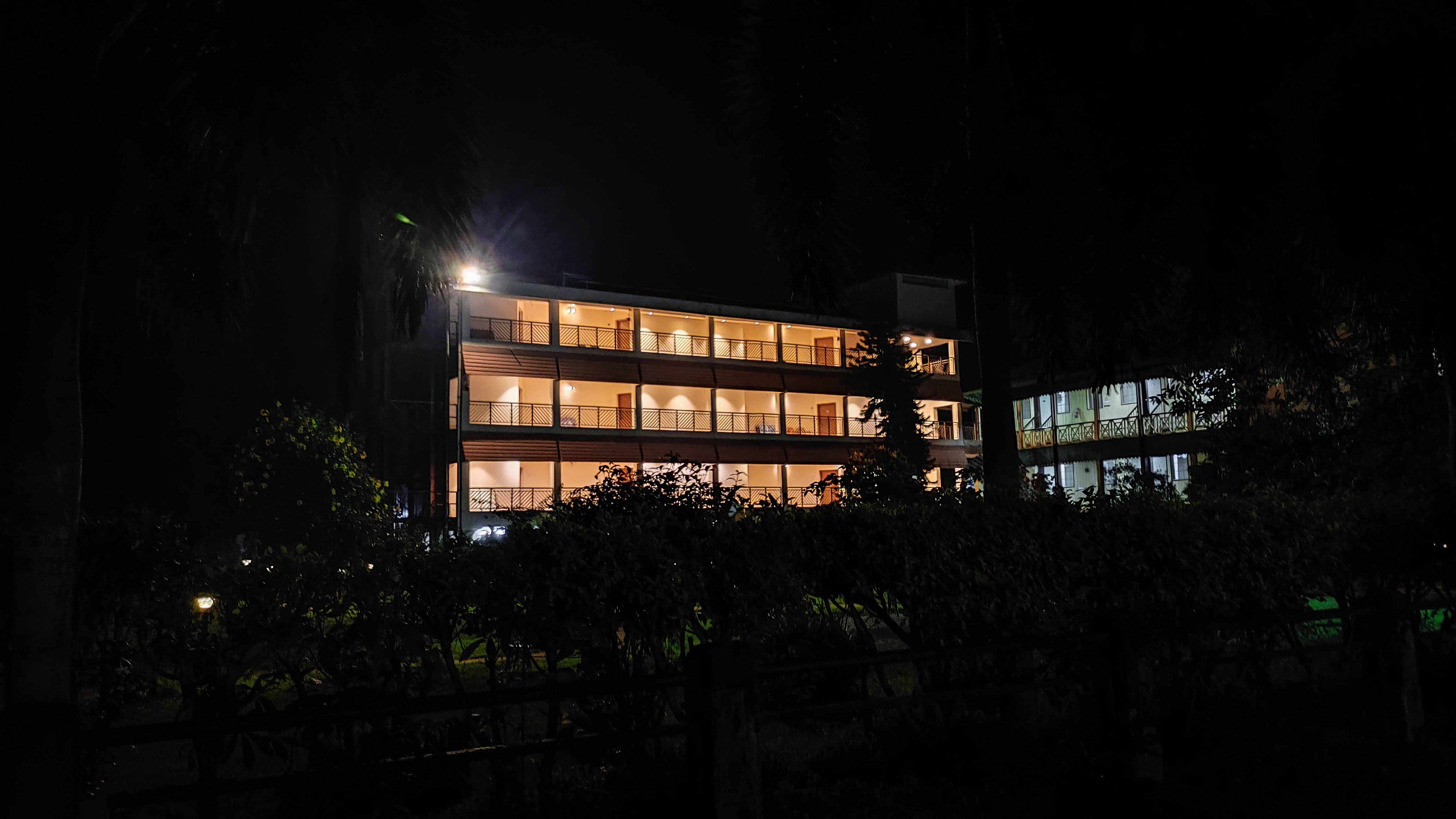
Aranya Tourism Property at Night

 A few introductory posts on Bhutan are already up on my blog (I’ll include the link at the end), so now let’s dive into the main part. I decided to call this segment Day 0 for a reason. Initially, I planned for us to fly in and out of Bhutan. However, while planning, my mom was visiting me in Pune for a few months and didn’t have her passport with her. When I tried to book flight tickets to Paro, I was required to provide our passport details, just like for any other international destination. Additionally, when my tour agency needed to apply for the e-permit, a passport or voter ID card was required. Since I couldn’t obtain my mother’s passport details in time to book the flights and secure the permits, I had to revise my plans.
Originally, we planned to start and end our trip in Paro, as the airport is located there. With that option unavailable, I had to consider traveling by road via Jaigaon/ Phuentsholing. This change meant adding extra days to the itinerary, as the journey from Bagdogra (the nearest airport to Jaigaon) to Thimphu takes 9-10 hours.

As mentioned in my previous blogs, we used the services of Amedewa Tours & Trek for this trip. They are a local Bhutanese company specializing in inbound travel. If you haven’t read the other parts yet, you might wonder why I chose a local Bhutanese company over Indian tour operators who offer Bhutan trips. While Indian tour operators might seem safer, selecting a local Bhutanese operator is also a good option. You just need to do due diligence before choosing any local Bhutanese operators. Every operator is registered under the government, and you can verify the authenticity of your local operator through this link - LINK. As long as they are on this list, they are 100% genuine, and there are no safety concerns. I was particularly impressed with Amedewa's thoroughness and attention to detail. Additionally, its owner, Tashi, is very accommodating and promptly addresses all queries and doubts. Based on my personal experience, Indian tour operators don’t offer as much flexibility. that was another reason for not choosing Indian Tour operators. For such local Bhutana

So having said all this now the plan looked like below:
  • June 7 - Kolkata to Bagdogra ( early morning flight) | Bagdogra to Jaldapara ( Aranya Tourism Property) 
  • June 8 - Jaldapara - Jaigaon/ Phuentsholing - Thimpu
  • June 9 - Thimpu Local sightseeing
  • June 10 - Thimpu to Punakha via Dochula Pass
  • June 11 - Punakha to Phobjika Valley | Back to Punakha
  • June 12 - Punakha to Paro
  • June 13 - Paro to Haa Valley via Chelela Pass
  • June 14 - Paro to Siliguri [ Original plan was - Paro to Hashimara ( Train ) - this plan got changed last moment as we took a flight|
  • June 15 - Siliguri to Kolkata ( early morning flight)
Fortunately, Amedewa arranged for our pickup from Bagdogra to Jaldapara and the drop from Jaldapara to Phuentsholing through a tie-up with an Indian cab provider. While I might have found a slightly cheaper option by researching local cab companies in Siliguri, I preferred not to haggle with a new company just to save Rs 1000. So, I entrusted this task to Amedewa. I must mention that all the cars they provided were in excellent condition.

The first step in realizing this trip was my journey from Pune to Kolkata. Notably, June 1st (Saturday) was election day in Kolkata, so to avoid any potential trouble, I decided to travel on the next day, June 2nd. Mom had already returned to Kolkata a fortnight earlier, so it was just me flying to Kolkata that day. The biggest challenge with the Pune to Kolkata flight is that there is only one direct flight, which is very early in the morning, requiring an early wake-up. For those wondering about the safety of traveling to Kolkata right after election day, I can assure you that I didn’t face any challenges. The cabs were available as usual. The best part of travelling on the next day of election was that the usual Sunday market which i have to cross to reach home, was absolutely deserted and that reduced my travel time largely.

After five more days, our travel day finally arrived. We had arranged for a known cab driver to take us to the airport. Our day began at 6:45 AM on a Friday morning as we set off from our home in Dumdum. Despite living just 20 minutes away from Netaji Subhash Chandra Bose International Airport, we aimed to arrive early to ensure a smooth check-in process. 


Kolkata Airport

Since it was early morning, there was practically no traffic on the road. We had already scanned our boarding passes into DigiYatra. DigiYatra is incredibly useful for bypassing queues at airports that have it enabled. Fortunately for us, both Pune and Kolkata have DigiYatra enabled. 

This allowed us to go directly to the DigiYatra gates, scan the generated QR code, and verify our identity without needing to show a separate ID card. DigiYatra also provides separate entries at the security queue, reducing wait time significantly. I 100% recommend using DigiYatra for all your travels.

After bypassing the queue at entrance we still had to wait some time in the baggage drop queue. Next was security check in. This is one area I particular do not like because I carry quite a few electronic gadgets and to take them out in separate trays and again collect them after scanning is a lot of hassle. The best way to manage is to have the devices and accessories placed in either transparent pouches or individual organizers  like a small camera bag). This way you don't have to pull out each and every gadget every single time. Security check in was also non eventful and it got done in a jiffy. 

Then we walked towards our gates. On way we stopped at WHSmith to check out books. This is almost like a mandatory ritual for me. No matter which airport I am, I will definitely stop at the book store and do a quick survey. In case I find something interesting to read on the way, I will grab it. Since my mom is also a book lover so both of us can not resist the urge to visit these book stores whether we buy or not.


Since it was early morning, most of the shops inside the airport were still closed. We hadn't eaten anything before we left home so both of us were feeling a tad hungry. I do not remember which shop it was, but I got something which had a very unique name —fish kasundi patties. Never have I ever heard about such a thing. So I thought why not, trips are always the best time to experiment as you are already in a good mood. Along with that I also got a chicken patties, while my mom got machine made tea. Unfortunately, none of these tasted particularly good. The fish kasundi was a perfect disaster, none of the flavors went along with the pastry crust, it was like some hotchpotch of various flavors thrown in together.  The chicken patties were also not fresh. Mom complained the tea was rather watery and I couldn't agree more. All 300 odd bucks spent was totally a waste. 

Soon we were called for boarding. while we were in Zone 2, we were the last to be summoned for the gates. As the aircraft taxied down the runway, the engines roared to life, and we felt the thrilling anticipation of our upcoming adventure. As we ascended, the sprawling cityscape of Kolkata gradually unfolded beneath us. The vast expanse of Kolkata’s skyline transformed into a patchwork of vibrant colors and textures. The feeling of soaring above the clouds, with the promise of new adventures ahead, was a perfect start to our journey. 

The aerial distance between Kolkata and Bagdogra is approximately 280 miles. Flying with Indigo, the journey took around 1 hour and 15 minutes to complete. Stepping into Bagdogra after what appeared like a million years, it felt great. So many things had changed. The taxi stand had now got permanent structures and everything was much more streamlined now. We collected our luggage and made way to the exit where our driver was already waiting for us. 

The weather in Siliguri was something I didn't expect. It was reported the week before that north Bengal was getting a lot of pre-monsoon showers so I was expecting a better and pleasant whether in Siliguri compared to Kolkata. This is where the major disappointment was - the weather was as humid and uncomfortable as it was in Kolkata. 

The distance from Bagdogra to Jaldapara is approximately 135 km. We would travel primarily via NH 27, then onto NH 517 and NH 17, reaching our destination in about 3.5 hours. After a 9-10 year hiatus, traveling through North Bengal felt incredibly refreshing even if the outside weather was bad. The only thing - we had to keep the windows closed and the air conditioning on throughout the journey.

We made a stop at Jaldapara before continuing to Bhutan, as we had a 5-6 hour journey to Thimpu the next day. Additionally, we wanted to spend some quality time in the Dooars to enjoy the forest.  Like I mentioned we were coming back to North Bengal after so many years and there is a definite nostalgia we have about this place. So when we got the opportunity of staying one day somewhere near the border area, it was by default North Bengal. Let me mention one more thing over here, staying in Jaigaon instead of Jaldapara/ hashimara is definitely more convenient logistics wise as the next day your travel time decreases but the challenge is finding a good hotel in Jaigaon area. Most of the hotels there are lodges, 1 star or max 2 star properties and when you are with family you want to stay in a decent place, especially since we were a all ladies group. The other option is to stay overnight in Phuentsholing, which would mean you pay additional SDF for one day as you will be staying overnight. 

There was one more option of stay which would pop up the moment you look up for Hashimara/ Jaldapara stays - Jungle book resort. But i went through the reviews which said they often have parties in their premises which is not something I appreciate when you are inside a forest. Hence we chose the WB tourism property over the private resort.

Finally the most awaited moment arrived when the landscape unfolded into endless stretches of tea gardens, each one appearing lush and vibrant. They were blanketed in a fresh, dewy sheen due to the recent rains, making the entire scene look almost surreal. British planters were the pioneers of tea cultivation in the Dooars and the adjacent Terai region. Today, Dooars Tea retains its British heritage and is regarded as one of the most exquisite tea varieties in the country.

Dooars Tea Gardens
Dooars Tea Gardens


We arrived at the beautiful hidden gem, Aranya Tourism Property, at 1:30 PM. This property is managed by West Bengal Tourism. While entering into teh property suddenly an old memory got rekindled and my mother reminded me that we have been to this property earlier as well when we had done a North Bengal Trip some 10-12 years ago. And surely enough when I googled it told me that earlier this place was known as Jaldapara tourist Lodge which was rebranded as Aranya Tourism property.

The check -In process was smooth. They already had our details, we just had to provide our ID cards ( as mentioned during reservation) and they took a photocopy of them. Once we completed the check-in formalities, we headed to our rooms in the newly constructed brick block of the property. There are three categories of rooms/ blocks in this property ( detailed tariff is given at the end of the blog):
  • Wooden block ( Old construction & most economic)
  • Cottages & suites ( Old construction, suitable for medium sized families)
  • Brick Block ( New construction with all modern amenities)
The brick block is slightly more expensive than the wooden block. The brick block is situated just adjacent to the wooden block and there is a flight of stairs which connects both the blocks. Just like the wooden block, the brick block is also having 3 floors. Something you should note here however is that this property doesn't have any lifts. So if you have anyone in the group with a mobility problem or a senior citizen, choose either the ground or first floor. We chose the first floor which would give us decent height and view of the forest and at the same time not too many stairs to climb. The property had someone carry our luggage to our rooms. 

I was impressed with the room quality, which rivals with any 4-star hotel. At first look you wouldn't even feel this is a government property. Kudos to Didi to really spruce up the tourism game.  The room is very spacious and chic. It has a number of amenities including flatscreen TV, AC, electric kettle and tea/coffee station, sofa, center table, a large double bed with enough pillows and surprise surprise two Kolbalish/ pashbalish (load pillows) for the Kolbalish loving Bengalis!  Each room also has an attached balcony offering a beautiful view of Jaldapara National Park. There is additional chairs and table in the balcony for you to enjoy the view and relax. There is a big cupboard which has extra pillows and blankets. You can use this to keep your belongings. There is a separate wooden table to keep your luggage.  The bathroom features sleek, modern fittings that exude both style and functionality. Soft, ambient lighting completes the look, creating a relaxing and luxurious atmosphere.

Aranya Tourism Property, jaldapara

Aranya Tourism Property, jaldapara


It was already lunch time and we were like super duper hungry. After a quick shower we headed for lunch at the in-house restaurant. The temperature outside was super humid and hot. Thankfully the restaurant area is completely AC. It has big glass windows which makes sure you can enjoy the surrounding view while you dine in. 

I think because it was almost at the end of the lunch hour the restaurant wasn't much crowded. We found a nice table by the window and settled down. I had heard a lot about the food quality improvement in all teh WB tourism property from different Vloggers, so I was eagerly looking forward to try the food. We were presented with the menu which had a lot of items listed both under Ala carte and Thali menus. We opted for thalis - the simple reason being - taste maximum dishes on the menu. I selected the mutton thali and for mom it was chicken thali. I also keep hearing about the famous Boroli fish of this region and was super happy to see it on the menu. My mistake was to not notice that there were two different preparation of Boroli fish - simple fry and curry. I just said Boroli fish one plate to the waiter who also didn't bother to check with us which version we wanted. 

Aranya Tourism Property - Boroli Fish Curry
Boroli Fish Curry

Mutton Thali Aranya Tourism Property
Mutton Thali


There was a lot of food in the thalis. The mutton thali came with - rice, mutton curry (2 pieces), aloo fry, bhindi aloo subzi, daal, papad, salad, chutney and rashogolla. In the chicken thali the mutton was replaced with chicken gravy. The boroli fish was served in a curry format which I really didn't want, I had visualized a super crunchy fried Boroli plate. But since it was already served and partly it was a miss form my side as well, we didn't send it back. Coming to the food, the best things I liked in the thali was aloo bhaja, bhindi subzi, daal and the chutney. The aloo bhaja and daal combo was super. But mutton was a let down. Nothing special there. Chicken was also average. The Boroli fish itself was fresh but putting it in a curry format wasn't working well. The ginger garlic wasn't sauteed well hence there was a raw smell of that in the gravy and it didn't taste nice. My first experience of having Boroli wasn't that great. I thought maybe for dinner I will again give it a try with fried Boroli. But good thing is, the taste of everything is very homely not like some hotel, so its light on the tummy. 

After having a good meal, we decided to take a walk around the property. Along the way, we came across a painted map of Dooars that highlighted all the key places in and around the area. It was pretty interesting as we could spot some of the places where we have already visited.

Then we walked towards the beautifully manicured garden. The garden is really pretty filled with a variety of beautiful plants and flowers. The standalone cottages are situated around the garden's perimeter and they each have a name of a bird found in the forests of Jaldapara. Me and mom were the only two souls in the garden at that time, as I believe most of the tourists were either out for sightseeing or enjoying their afternoon siesta in the AC. If you're staying here for a few days, it's highly recommended to spend time in the garden, either relaxing with a book or simply soaking in the natural beauty. The safari booking office for Jaldapara is conveniently located right next to the resort, offering a significant advantage.

After spending some more time in the garden taking in the views, we decided to get some rest. After a nice and relaxing nap we ordered some tea and biscuits in the evening. We were still full from the lunch so didn't want to have much in snacks. We wanted to enjoy our tea in the balcony, but it was too hot and humid outside. So, after finishing our tea indoors, we stepped out onto the balcony. The sun was setting, and the forest was gradually coming to life. In the background, we could hear the sounds of beetles ( sound like bells) and peacocks. The call of the peacocks is a very unique experience for city dwellers. The peacock's call is a distinctive and resonant sound almost echoes through the forest. It begins with a series of loud, high-pitched cries that resemble a combination of a honk and a yelp, often described as "kee-ow, kee-ow." The call can be heard over long distances, piercing through the ambient noise of the jungle. 
Evening Tea

Since the humidity was a killer outside so we had to move back into the room. We spent some time browsing our phones and having a nice chit chat. Since I knew that from next day onwards getting a network might become a challenge so the urge of taking in social media was eminent. But we did have a nice adda also along with it. Especially the hot topic of teh day was Kangana Ranaut getting slapped by a security guard and the aftermath of it. In between I also took a backup of my photo and video dump from the day. This is an activity which takes a lot of time during my travels, but at the same time its something which has to be done.

The restaurant called and informed us about the dinner timings. So around 8 PM we decided to step out for dinner. I checked the current temperature and it showed 28 degrees outside. But I think the real feel was somewhere above 30s. It really didn't feel like we were so near to the mountains. 

This time, we took the scenic route to the restaurant, walking along the backside of our room and through the main garden. The cottages were beautifully lit, looking quite enchanting in the dark. The property has I think 3 garden areas. The one in front of the brick block has many stone statues of wild  animals found in the Jaldapara region. And those statues are so lifelike especially the slithering snakes hidden in the grasses, that it may give you a scare if you are not aware those are just sculptures! There is one small garden in the back of the brick block which opens to the Jaldapara national park, the view that we see from our balconies in brick block. And the third and biggest garden is the main garden which is surrounded by the cottages. 

Aranya Tourism Property, jaldapara


Aranya Tourism Property, jaldapara
Brick Block - Our room was on the first floor

I really appreciated the fact that the property used subtle lighting, which didn't cause any inconvenience to the guests at the same time ensured that the wildlife wasn't disturbed. In fact, it truly felt like we were standing inside the heart of the forest, surrounded by wildlife. The silence, punctuated by the sound of the night critters was was the most soothing music I had heard in a long time.

We walked along the backside of the wooden block towards the entrance gate. We could totally immerse in the silence all around. And that is one of the best things about this property. The lighting at the gate however was a different story - they had purple and green string lights which didn't really go with the aesthetics of the place but I think we can discount it as they had to put up something at the entrance to make it distinguishable if any tourist is coming at night. 

Aranya Tourism Property
Entrance Gate at Night

There is a liquor shop in the premise for those interested. I think we saw a few locals purchasing liquor form that shop. There is also a small outlet in the property that sells wood carved artifacts. You can purchase some souvenir if you want from that place.  

Aranya Tourism Property, jaldapara
Wooden Artifacts on Sale

There is an interesting thing right outside the gate of the property - a rickety old wooden bridge that connects the area coming form the main road with this property. We could see traces of a river below the bridge, but at that moment it was all dried up. Maybe when its full monsoon time the river comes to life. My adventurous spirit longed to walk across the bridge and explore the area at night. However, the locals advised us not to venture too far, as we were inside a forest zone. 

We spent a considerable amount of time by the bridge, watching jeeps and motorcycles pass by. Each time a vehicle crossed, the bridge creaked in a way that made me fear it might give in, but it held up surprisingly well. There was an ominous, mystic vibe to the bridge, reminiscent of a scene from a ghost or thriller movie, as if something extraordinary was about to unfold. My brain went on an overdrive thinking about all the possibilities!

After spending some more time outside, we headed to dinner. This time, we both opted for the vegetarian thali as we were not that hungry. I also ordered a Katla fish fry on the side. The same alu fry and chutney was repeated in the thali. Apart from that we had a paneer subzi, cauliflower subzi, a different daal, salad, papad and, rashogolla. Veg thali was good but still the bhindi subzi they had served in lunch tasted much better. The katla fish was fresh and tasty. Since it was hot, we also took some packaged litchi drink ( paperboat) along with our meal. The restaurant has a corner where you can choose anything from the available packaged drinks at an additional cost. 

Aranya Tourism Property, jaldapara
Dinner Thali

Aranya Tourism Property, jaldapara
Reception Area

Aranya Tourism Property, jaldapara

We also informed one of the servers in the restaurant that we would need our breakfasts to be packed next day as we would be leaving quite early.

After finishing dinner, we headed to the reception outside the restaurant. Since we planned to check out by 7:30 AM the next day, we wanted to complete the checkout formalities that night. The receptionists, dressed in beautiful sarees as their uniform, added a touch of elegance to the experience, these small things make the overall experience a notch above any regular government properties. The lady at the desk handed me the final invoice, and I noticed a 12% GST added to the room tariff. I was a bit confused, and it seemed another group at the counter for their checkout formalities felt the same. The receptionist clarified that the online room booking charges didn't include the 12% GST. She pointed out that this was mentioned in the booking printout. The rationale was that if you didn't show up at the property, you wouldn't need to pay the GST amount; you would only pay for the room, which could be refunded according to the policy.

While returning back to the room we again took the long scenic route along the main garden area just soaking in the sights and sound of the beautiful night. In the morning I hadn't noticed, but they had a few lamps with little  pug marks and they looked very cute in the night. 

There was a peaceful silence all around. At one point the only sound we could hear was the crickets and I recorded that. You can check it out in the video linked below. 
Aranya Tourism Property, jaldapara
Sculptures of Animals at the entrance

Aranya Tourism Property, jaldapara
Wooden Block seen from the park

Aranya Tourism Property, jaldapara
Cottages

Aranya Tourism Property, jaldapara
Wooden Block seen form the park

Aranya Tourism Property, jaldapara
The Third garden which had life size animal sculptures

We came back to the room and arranged all our luggage, next morning we wouldn't get time for packing. I put all my gadgets on charging and called it a day soon afterwards.

The simplicity and beauty of the forest stay at Aranya Tourism Property , with its unfiltered sounds and sights, provided a rare escape into a world where nature's rhythms set the pace, leaving us rejuvenated and inspired. 

Stay tuned for the next part.

Day 0 - Trip Video:


Room Tariff as mentioned below ( as of Date 3rd August 2024, check the website for booking)

All Tariffs mentioned excludes 12% GST, so for final cost add 12% GST on top of the mentioned tariff

  • A.C Cottage - Rs 3500 | Guest Capacity: 2 (Adult) , 2 (Child)
  • A.C Cottage Large - Rs 4000 | Guest Capacity: 2 (Adult) , 2 (Child)
  • A.C Suite - Rs 3700 | Guest Capacity: 2 (Adult) , 2 (Child)
  • AC Dlx Brick Block (IIIrd Floor) - Rs 3000 (new block) | Guest Capacity: 2 (Adult) , 2 (Child)
  • AC Dlx Brick Block (IInd Floor) - Rs 3000 (new block) | Guest Capacity: 2 (Adult) , 2 (Child)
  • AC Dlx Brick Block (Ist Floor) - Rs 3000 (new block) | Guest Capacity: 2 (Adult) , 2 (Child)
  • AC Dlx Wooden Block (IInd Floor) - Rs 2800 ( Old block) | Guest Capacity: 2 (Adult) ,2 (Child)
  • AC Dlx Wooden Block (Ist Floor) - Rs 2800 (Old block) | Guest Capacity: 2 (Adult) , 2 (Child)
Other Blogs in the Bhutan Series:
  1.  Bhutan Diaries 2024 - A preamble | Tips & Recommendation | Helpful Information 
  2. Things you didn't know about Bhutan
  3. What to Pack for Bhutan | Summer Trip  - June | Thimpu - Punakha - Phobjika - Paro
  4. Bhutan Travel Diary - Day 0 - Kolkata to Jaldapara | Aranya Tourism Property Jaldapara 

Share
Tweet
Share
No comments
Older Posts

About me

I am a software engineer by profession and a writer at heart. Born and brought up in Kharagpur, I moved to the city of dreams Mumbai when I got my first job. Till then I had not cooked a single dish in my life. Not even Maggi or tea. My dad had a strong belief that his little princess never will be in a situation where she had to cook for herself. Hence I was not allowed to spend time in the kitchen till I was studying.


So when I faced the daunting task of living alone, dabbas came to initial rescue. After that I managed a whole year on just boiled vegetables and rice. And then I landed in US. The bounty of fresh produce and cooking ingredients available in the super marts eventually lured me into making my very first meal ever. There was no turning back after that. I finally discovered how much I was in love with cooking and being creative in the kitchen.


This blog is a humble attempt to present our culinary heritage to one and all and document some of the very traditional recipes which gets passed on through generations just by word of mouth.


So just sit back with a cup of tea or coffee and enjoy the curries and the stories related to each.


Follow Us

Footprints

Blog Archive

  • ▼  2026 (4)
    • ▼  May (1)
      • A Suitcase Full of Stories: My Heartfelt Shopping ...
    • ►  January (3)
  • ►  2025 (3)
    • ►  December (1)
    • ►  June (1)
    • ►  February (1)
  • ►  2024 (21)
    • ►  December (2)
    • ►  September (1)
    • ►  August (3)
    • ►  July (4)
    • ►  May (2)
    • ►  April (5)
    • ►  March (3)
    • ►  January (1)
  • ►  2023 (7)
    • ►  December (2)
    • ►  November (1)
    • ►  October (1)
    • ►  May (1)
    • ►  March (1)
    • ►  January (1)
  • ►  2022 (18)
    • ►  September (1)
    • ►  August (2)
    • ►  July (2)
    • ►  June (3)
    • ►  April (1)
    • ►  March (3)
    • ►  February (2)
    • ►  January (4)
  • ►  2021 (60)
    • ►  December (5)
    • ►  October (5)
    • ►  September (5)
    • ►  August (7)
    • ►  July (6)
    • ►  June (5)
    • ►  May (3)
    • ►  April (4)
    • ►  March (6)
    • ►  February (6)
    • ►  January (8)
  • ►  2020 (55)
    • ►  December (5)
    • ►  November (3)
    • ►  October (10)
    • ►  September (7)
    • ►  August (7)
    • ►  July (9)
    • ►  June (3)
    • ►  May (9)
    • ►  March (1)
    • ►  January (1)
  • ►  2019 (3)
    • ►  November (1)
    • ►  April (1)
    • ►  January (1)
  • ►  2018 (1)
    • ►  December (1)
  • ►  2017 (4)
    • ►  December (2)
    • ►  November (1)
    • ►  September (1)
  • ►  2016 (10)
    • ►  August (1)
    • ►  July (2)
    • ►  June (5)
    • ►  April (1)
    • ►  March (1)
  • ►  2015 (10)
    • ►  December (1)
    • ►  August (1)
    • ►  June (1)
    • ►  May (2)
    • ►  April (4)
    • ►  March (1)
  • ►  2014 (22)
    • ►  November (2)
    • ►  August (2)
    • ►  July (3)
    • ►  June (2)
    • ►  May (4)
    • ►  April (3)
    • ►  January (6)
  • ►  2013 (22)
    • ►  November (2)
    • ►  October (4)
    • ►  September (5)
    • ►  August (2)
    • ►  July (1)
    • ►  June (1)
    • ►  May (2)
    • ►  April (1)
    • ►  March (1)
    • ►  February (2)
    • ►  January (1)
  • ►  2012 (31)
    • ►  December (4)
    • ►  October (3)
    • ►  September (8)
    • ►  July (1)
    • ►  June (1)
    • ►  May (14)
  • ►  2010 (9)
    • ►  July (3)
    • ►  June (2)
    • ►  April (1)
    • ►  March (2)
    • ►  February (1)
  • ►  2009 (4)
    • ►  February (2)
    • ►  January (2)

recent posts

Pinterest Board

Popular Posts

  • Champaran Mutton / Ahuna Mutton - A Bihari Delicacy
      When I finish a long week of work, self doubt, frustration of dealing with people and finally when the weekend comes, I feel cooking somet...
  • Kochur Dum / Kochur Dalna / Arbi Masala/ Taro or Colocasia Curry
    August 19 Kochu or taro is one of my favorite vegetables. It is as versatile as potato only much more tasty. It is equally starchy an...
  • Tetor Macher Jhol (Bitter Gourd Fish Curry)
    Anything Bitter hardly finds takers. Same applies for Bitter Gourd. As a kid I hated bitter gourd in any form. Grown ups around me would...
  • Khandeshi Kala Masala - Kala Mutton Masala
      25 September Maharashtra is a land of unique local flavours. And still it is mainly known for its Vada Pavs, poha, pav bhaji and modaks. I...
  • Complete Details to plan your ISKON Mayapur Visit
    Radha Madhav during Pushya Abhishek on 6th Jan 2023 First of all wish you a very happy new year. I have been away from blogging for a while ...
  • Macher Bhorta | Fish Bharta | Mach Makha| Bengali Style Mashed Fish
      October 18 Bhortas or bharta as we call it in pan India, are the quintessential Bengali food, a staple in Bangladeshi cuisine. They are th...
  • Golda Chingri Malaikari (Giant River prawns in coconut milk gravy)
    One of the main reasons I love Kolkata is because of the fish we get here. Its so fresh and one can get restaurant grade fish quality even i...
  • Tangy Sweet Mint Fish | Fish Pudina Recipe | Fish Hariyali
    February 20 I am a hardcore fishiterian..if that's a word. There has been hardly any occurrence where I have tasted a fish and not liked...
  • Kumro Phool bhaja (Pumpkin Blossom fritter) and a Jade trip of Konkan in rains
    Rains , Lush green forest laden mountains, Cascading milky white waterfalls, cloud filled valleys, Turbulent coastlines,...
  • Varhadi Mutton - A Traditional Vidharba Cuisine
    Varhadi is a dialect of Marathi typically spoken in Vidarbha region of Maharashtra. Vidarbha is the north-eastern region of Maharashtra ...

Liebster Award

Liebster Award

Very Good Recipes

Very Good Recipes

You can find my recipes on Very Good Recipes

Contact Us

Name

Email *

Message *

Pages

  • Travelogue Index
  • VEGETARIAN RECIPE
  • CHICKEN RECIPES
  • SEAFOOD RECIPES
  • MUTTON RECIPES
  • RICE RECIPES
  • EGG RECIPES
  • DAAL RECIPES
  • ROTI & PARATHA RECIPES
  • BAKING RECIPES
  • SWEET RECIPES
  • SNACKS RECIPES
  • SIDES RECIPES
  • SOUP RECIPES
  • SALAD & BOWLS RECIPES
  • ROASTED RECIPIES
  • JAM & PRESERVE RECIPES
  • BEVERAGE RECIPES
  • SAUCES, SPICES & CURRY BASE RECIPES
  • CHUTNEY & DIPS RECIPES
  • FESTIVE RECIPES
  • Contact Us
  • TRAVELOGUES OF EAST INDIA
  • TRAVELOGUES OF WEST INDIA
  • TRAVELOGUES OF SOUTH INDIA
  • TRAVELOGUES OF NORTH INDIA
  • TRAVELOGUES of ASIA
  • North East Recipe

This Blog is protected by DMCA.com

DMCA.com for Blogger blogs
FOLLOW ME @INSTAGRAM

Curries n Stories © 2020 All rights reserved.
Created with by BeautyTemplates