• Home
  • Recipes
    • Vegetarian
    • Seafood
    • Snacks
    • Chicken
    • Mutton
    • Egg
    • Roti & Parathas
    • Dessert
    • Sides
    • Soups
    • Salad & Bowls
    • Rice
    • Daal
    • Bakes
    • Roasted
    • Beverages
    • Sauces, Spices & Curry Base
    • Chutney & Dips
    • Festive Recipes
  • Cuisine
    • Bengali
    • Maharashtrian
    • Rajasthan
    • Punjab
    • Chennai
    • Andhra
    • Mangalore
    • Mughlai
    • Kashmiri
    • Chinese
    • Singapore
    • Mexican
    • Continental
    • Italian
    • French
    • American
    • Thai
    • Bangladeshi
    • Arab & Persia
    • North East
  • Meal Type
    • Breakfast
    • Lunch
    • Dinner
    • Snacks
    • Dessert
    • Appetizer
    • Accompaniments
  • How To
    • Preservation Techniques
  • Travel
    • East India
    • West India
    • North India
    • South India
    • Asia
    • America
  • Lifestyle
    • Craft & Creation
    • Experiences
  • Musing
  • Contact
  • Bengali Blogs

Curries & Stories

pinterest facebook twitter instagram tumblr linkedin


Ukadiche Modak

11 September

- No Recipe Post ~

|| ॐ गं गणपतये नमो नम: 

श्री सिध्धीविनायक नमो नम: 

अष्टविनायक नमो नम: . 

गणपती बाप्पा मोरया ||

Presenting some of my favorite Ukadiche Modak shots from this year's Ganesh Chaturthi. This is more a photoblog.

There were many firsts this year in terms of shooting the prasad and Bappa. Last year I remember when the pandemic had hit us and we spent Ganesh Chaturthi in the confines of our home, for the first time I brought out my DSLR to shoot food photos. Before that my DSLR was purely used for travel photography. I had never imagined in my wildest dreams that one day I would start food photography, open an Instagram page and becomes suddenly so passionate about food photography, techniques, editing, composition etc. I started taking food pictures with my phone around the time pandemic hit, because like everyone else I was feeling stressed locked at home and needed some good energy through creativity. It was just a casual hobby until I took the first food photo with my DSLR.

Ukadiche Modak


You must be wondering why I didn't use my DSLR to take photos earlier. It was out of sheer laziness. Getting the camera, putting the right lenses, setting up a tripod just to take a food picture didn't sound too enticing to me. Point and shoot was more my genre. Plus I didn't know then that to take one single food photography there would be so many steps right from cooking till the final editing. This all changed when I took the Rawa modak shot on the first day of Ganesh Chaturthi last year. I observed that the photos of food which were taken with the DSLR were much more crisp and with beautiful depth of field. Even minimal editing made the final shot look superb. That was the beginning, after that it had been a long learning curve if 1 year so far and there are so many things I have picked up by observing other food bloggers. I feel proud at times looking at some of my recent compositions, how far I have come from last year in terms of food photography. But then there is so much more to learn, this is just the starting line. And this entire learning process is such an exciting journey. Especially, its magical what you can achieve on the editing board. While the composition needs to be good, but still with a little bit of imagination you can practically create amazing pictures. It fascinates me to no extent. When I got my hands set on Snapseed I was excited. When I learnt Lightroom, it felt exhilarating and finally when I edited the first ever drip shot in Photoshop I felt like a speck in the wide universe. Photoshop is absolutely stunning in itself. I mean don't laugh on me because I am gushing about a software which everyone knows is brilliant. But just feel from the eyes of a person who is beginning on their photoshop journey. Its simply amazing. It is a different world altogether and now I am hooked. Technology has really made magic available at fingertips. 

These lovely modaks were made by Pooja Parsewar Bachewar. 

Ukadiche Modak


Ukadiche Modak

I always wanted to create a perfect drip shot. But my tripod had been giving me some pain and I never felt confident about pulling it off. This time I took Ganapati bappa's name and plunged into the idea. The only challenge was, since my tripod was not helping me I had to find someone to hold the spoon with the ghee while I took the shot. The default choice was mom. But to convince her to hold the spoon, make her wait till I got the perfect shot after trying for N number of times, keeping a check on the receding light on a rainy afternoon and wrapping up shooting before my mother's patience ran thin was a humongous task. I think all you photographers who engage their mothers for making action shot would empathize with me right now. It is a tedious job , but at times things do fall in the right place. I do not have any BTS (behind the scene ) for this shoot because of the above mentioned reason. I had to clean up everything before she got ticked off :D. But someday, I promise, some of these days I will try to do a detailed BTS and put it up on my blog. Fingers crossed.


Ukadiche Modak


Ukadiche Modak


Ukadiche Modak


Ukadiche Modak


Bappa came in his bal avataar this time. The cute little Bappa really made us all fall in love with him.

Ukadiche Modak


Share
Tweet
Share
No comments

Mirchi Thecha


 26 July

Though I have been staying in Maharashtra for over a decade now, it was just a couple of years ago I started exploring the local or traditional delicacies of this state beyond vada pavs and misal pavs. And I was surprised to see that many of the dishes felt really interesting to my Bengali palate. Especially the non vegetarian preparations. They have such a unique flavored spice mixes which varies from region to region even within the borders of Maharashtra. The one dish which I have perfected is Kaleji Masala. We Bengalis usually don't like chicken liver that much because of the smell it has. But the Marathi preparation of Kaleji fry has such a rustic flavor profile due to the addition of roasted coconut and a bunch of other ground spices. I will talk about this recipe some day which is now my absolute favorite. 

On my birthday, I had ordered Maharashtrian delicacies and with them came the freshly made mirchi thecha. Mirchi Thecha is a classic Maharashtrian accompaniment which pairs up best with different Bhakhri (wheat , jowar, ragi etc.) or even with normal rotis.  It is a fiery delectable combo made up of pounded green chillies, toasted garlic, peanuts and fresh coriander leaves.  

When we were having office before the pandemic hit, I used to look forward to the various kinds of thecha my colleagues used to bring. But the pandemic put an end to invading other's lunchboxes. But the maharashtrian meal I ordered after all this time rekindled my memories of having thecha. I thought of trying to make it at home. My maid gave a few tips and my mom tried to make it, and I must say it was a hit even the first time it was made. My mom doesn't usually have fondness for other cuisines but she literally went ga-ga over this. We found it so good that the first batch of Thecha only lasted 2 days and it was about 150 gm! 

Personally I feel this goes best with different Maharashtrian non vegetarian recipes to accompany your flatbread. They are best consumed fresh so people make small batches of Thecha and store it in the fridge for no more than 2-3 days. After that, the color and the taste of the thecha starts to change.

Traditionally thecha is made by pounding everything in a mortal pestle. The final texture should be somewhat course and not like a paste.  You can make this in a mixer grinder but then you cannot control the texture of the thecha. And in addition thecha tastes best when you make it the traditional way. But the effort it taskes that way is a put off for many.

So there is an easy tip to get the best taste without putting in too much effort of pounding. If you have a vegetable chopper then you can use it to chop the ingredients till its 50-60% done. Then transfer it to the mortar pestle and pound it to give the finial finish. I have tried and tested this method multiple times and now its my go to method of making thecha at home.

Checkout other accompaniment recipes on my blog:

  • Bengali Tomato Chutney
  • Pickled Onions - Sirke Wala Peyaz
  • Lebanese Toum - Garlic Sauce

Mirchi Thecha


Preparation Time : 10 minutes
Cooking Time: 15 minutes

Ingredients :
  • Whole Jeera - 1/4th tsp
  • Green chilies (non spicy ones) - 1 cup, chopped
  • Whole Garlic Cloves - 1/4 cup
  • Peanuts - 1/4 cup - ground
  • Fresh Coriander leaves - 1/2 cup, chopped
  • Salt to taste -
  • Oil to fry - 1 tbsp

Equipment:
  • Non stick pan
  • Vegetable chopper
  • Mortal Pestle / Mixer grinder

Recipe Video:


Some tips before you start

Tip 1: If you like or for extending the shelf life of Thecha you can also fry it again in a tbsp of oil on low heat for around 5-6 minutes. Now you can store the Thecha in a clean- dry airtight container and keep it in the fridge for 2-3 weeks easily.

Tip 2: To easily de-skin peanuts, dry roast them on a skillet for about 3-4 minutes stirring continuously. Let it cool down and then transfer them to a bowl and give a good shake. The skin will come off. 

Tip 3: This one is a killer tip. It is recommended to always pound the thecha in a mortar pestle the traditional way for the best taste instead of a mixer. But it is a lot of work that way. So as a hack you can use a hand held chopper to chop the thecha into smaller pieces and then transfer it to a mortar and pestle and pound it to the desired consistency. This helps in drastically reducing the effort to pound the ingredients and the taste still remains in tact as chopping the ingredients don't generate much heat unlike the grinder method.

Tip 4:  In a mixer grinder coarsely pulse the roasted peanuts and store it. You can use this coarsely ground peanut in your thecha or sabudana khichadi. This saves you a little effort in hand pounding the peanuts.

Method:

Mirchi Thecha


1. Dry roast the peanuts in a non stick pan for 3 to 4 minutes till black spots appear and the peanuts are fragrant. Keep stirring them continuously on medium flame. Keep aside and let it cool. Once cool rub the peanuts between your fingers and the skin will come off.

2. Heat oil in a non stick pan. Once hot temper the oil with whole jeera. Now add the whole garlic to the pan and sauté it for another 1 minute

3. Add the chopped green chilies and on medium flame sauté the green chilies for about 2 minutes. Keep stirring in between.

Note: If you are not a fan of spicy things, then go for the light green chilies which are less spicy by equally tasty. And if you want a really spicy thecha you can go for the dark green small ones. 

4. Add the deskinned whole peanuts, sauté for about 1 minute. Add salt as per taste.

Mirchi Thecha


5. Transfer the mixture to a mortar pestle or a chopper. Add chopped fresh coriander. If you are using a chopper, chop them till 3/4th chopped and then transfer to the mortar pestle for the final finish. Or from scratch, you can pound it to the desired texture in a mortar and pestle.

Note: You can also pulse them in a mixer grinder but the taste wont be as good.

Serve it with roti or bhakhri and your favorite vegetarian or non vegetarian dish.


Share
Tweet
Share
No comments


Kothimbir Vadi


5 July 

With the onset of rains, the craving for having fritters and steaming hot tea comes naturally. Across the length an dbreadth of India some of the monsoon snacks remain same with subtle regional flavour differences - onion pakoda/kanda bhajji, mirchi vada, palak pakoda/pale bhajji, dal vada (lentil fritters), corn on the cob, dimer chop/ egg cutlet etc. are few of the common snacking items you will get almost everywhere in our country.

Just like Bengal which has its own array of famous street side food, similarly Maharashtra has some signature snacks which are iconic to this region. While vada pav, misal pav or pav bhaji are some of the names most people might be aware of. There are a few traditional snacks like, sabudana vada, aluvadi, thalipeet or kothimbir vadi which give you a taste of a typical and authentic Maharashtrian household and these dishes are worth craving for. 

This post is about a delicious snack known as Kothimbir vadi. In Marathi 'kothimbir' or 'kothmir' means coriander leaves. The word ‘vadi’ means cubes or slices or wedges. So Kothimbir vadis are basically steamed coriander and gram flour cake cubes that are later fried or can be even had as is. Dont misjudge the dish if you didn't have a good experience at a restaurant eating a kothimbir vadi which was heavy on besan and with slight traces of coriander leaves. The ones made at home taste heavenly because they are loaded with fresh coriander leaves and spices. This is one recipe which is made best at home. I know because our office canteen used to serve this as an evening snacks and I never really liked them much. But then once, one of my neighbors made a batch of kothimbir vadis and gave me to taste. They were absolutely heavenly. I kept craving for them even after they were finished. 

Kothimbir Vadi

For ages coriander has been considered as one of the chief garnishing element in Indian cuisine. If some dish is lacking bold flavors then just add a sprinkle of chopped coriander leaves and even the biggest flaws get hidden. Also, chaats are incomplete without a dash of the spicy hot coriander chutney. There will hardly be a household which does not keep a consistent stack of fresh coriander in their pantry.

Me and a few of my friends in Instagram will be hosting a monthly collaboration on Instagram on grains , herbs and spices. Every month a group of Instagrammers will be posting recipes with the 3 core ingredients of the month from each of these categories. This month it is rice, bay leaf and coriander. I chose to make a dish from coriander. Plating and taking a enticing photo of rice has never been my area of expertise, hence I wanted to make something which I could make to look good! That is when Kothimbir Vadi came to my rescue. I had been meaning to make this recipe from a long time and this was a perfect opportunity.

This recipe is even gluten free. You take away the hing (asafetida) and this is an absolute gluten free recipe. To make it even more healthy, skip frying it all together. So the next time you have excess Coriander leaves in the refrigerator, don't just think of making a chutney. Try this easy Maharashtrian Snack recipe  and I am sure you would enjoy it with your evening tea. 

Checkout other snacks recipes on my blog:

  • Kachki Macher Bora - Fried Anchovy Fritters
  • Kumro Ful Bhaja - Fried Pumpkin flower fritters
  • Besan Ka chila
Kothimbir Vadi


Preparation Time : 10 minutes
Cooking Time: 15 minutes

Ingredients :
  • Coriander leaves (finely chopped) - 2 cups
  • Besan (gram flour / chickpea flour) - 1 cup
  • Red Chilli Powder -
  • Ginger - Garlic  Paste -
  • Green Chilli (finely chopped) -
  • Coriander Powder - 1/2 tsp
  • Cumin Powder -  1/2 tsp
  • Hing (Asafoetida) - 1 pinch (optional)
  • Sesame Seeds -  1 tsp
  • Garam Masala powder - 1/4 tsp
  • Turmeric - 1/2 tsp
  • Lemon Juice - 1/2 lemon
  • Water - 1/4 cup
  • Salt as per taste
  • Refined Oil - as required

Ingredients :
  • Mixing Bowl
  • Deep Kadai 
  • Trivet
  • Steaming tray
  • Skillet

Procedure (steaming):

Kothimbir Vadi

1.  In a mixing bowl, add the chopped coriander leaves, besan, chopped green chilli, red chilli powder, lemon juice, sesame seeds, turmeric, coriander powder, cumin powder, ginger garlic paste, hing, garam masala powder and salt as per taste. Combine everything together with hand.  Squeeze the coriander leaves with hands, they will release some water into the mixture. 

Tip 1: Sift the Chickpea Flour for a lump free dough.

Tip 2: Wash the coriander leaves well and drain them completely before chopping.

Tip 3: If you want a gluten free version skip the hing. 

Note: The quantity of coriander leaves should always be double the amount of chickpea flour used.

2. Now add the water and knead everything together. It will become a sticky soft dough.

Note: Add the water only when the mixture is damp

3. Now grease a tray with oil. Grease your hands also with oil and add the batter into the tray. Flat it out with the help of your fingers.

Kothimbir Vadi
Ready for steaming


4. Boil water in a steamer or a deep bottom pan. Place a trivet in center and once the water comes to a rolling boil, place the tray with the batter. Cover and steam for about 10-15 minutes on medium flame.

5. Insert a knife or a toothpick, if it comes out clean take the tray off the heat. Let it cool down.

6. To remove the steamed cake, with a butter knife loosen the edges and cut it into thick squares. You can store it in an airtight box in the refrigerator for 48 hours if you don't plan to consume immediately.

Kothimbir Vadi


Frying the Vadi:

Shallow Fry : Take a skillet and add oil. Once hot add the Vadis in a single layer and fry each side till golden brown in color.

Deep Fry : You can also deep fry the vadis for a more crispy texture.

Can Kothimbir Vadi be air fried?

Yes, you can. Preheat the Air Fryer for 5 mins at 200 Degrees C. Place the cut vadis inside the airfryer basket and spray / brush some oil.

Garnish the hot vadis with some grated fresh coconut. Serve it for snacks with tomato sauce and steaming chai (tea).


Share
Tweet
Share
No comments


August 24
First of all wish all my readers a very Happy Ganesh Chaturthi. may the lord bless you all with health and happiness all year round.
The festive season has started. Any other year this would be a time for fun and frolic. The mood would actually be festive. But this year it is a bit different. Last year it was for the first time Ganapati was celebrated in our brand new Housing society. So the entire ten days was like a fun fair, everyday there was some event, dress theme etc. This time however since Pune has now become the epicenter of the pandemic numbers, hence many housing societies are not even having the opportunity of hosting a communal Ganpati festival.

In my housing society however, they decided on a very low key affair with all the safety measures in place. Ganpati has gone virtual this time around. So everyday we are having the morning and evening aarti live telecast on Facebook Live. I really appreciate the concept because it still helps you get the feel of the aarti right from the safety pf your homes. Also the cultural events have gone digital. So everyone was asked to send in their dances or performance recording to the cultural committee for Ganeshotsav and  they would be streaming it on the designated day over Zoom meeting. That's a real clever thing to do. One can still feel the festival vibe but without any fear of mingling in the crowd. Especially its a hard year for the kids. They are the ones who are mostly missing out the fun in the festivities.

Frankly Speaking I had no clue till three days ago that I will be making modaks as prasad for the Ganapati at my home. I had thought to get some store bought sweets for the naivedyam. One of the reasons is that I am not much of a sweet lover and hence I have not experimented a lot with sweet stuffs. Traditionally the Ukadiche Modak are are steamed dumplings with an outer rice flour dough and a coconut-jaggery stuffing. Now for a person who is really not that hands on with sweet dishes, making a rice flour dumpling sounds a little tricky. Hence I had dismissed that idea of making modaks at home for the puja.

Then while browsing some articles I came across a video which was talking about instant mawa modak. Now mawa is something I am not really fond of. I don't like the taste or smell of it. But something that caught my eye was the process and how easy it was to make a modak at home without any mould.

So now the next thing on my agenda was to find a replacement for mawa. It had to be something which is easy and also readily available in my pantry. Then the thought came to use Rava as a replacement. But the next point in question was how to make rava into something as stiff as a modak? I referred to some videos by Ranveer Brar where he was making gulab jamuns with rava, but he fried them to make them hold. So then my mom suggested that I steamed them at last so that I can ensure the rava is cooked and it stands too.  So that is exactly what I did. I speculated with the flavor of the modak then. I was sure that I wanted to make one set with Rose flavour or gulkand (a sweet preserve of rose petals). The other set was something that took a little time to decide. Usually you would find indian sweets are always having cardamom as the preferred flavoring  agent. But I decided to go for a less traditional approach and included cinnamon as the star ingredient in my coconut- cinnamon modak.


So with much anticipation I started making the modaks on Ganesh Chaturthi and be it Bappa's blessings or my beginners luck they all turned out super awesome! Each of my tweaks worked and I ended up with 16 lovely modaks on my plate. Worth mentioning is that I did buy a modak mould but then I decided to go mouldfree as I wanted to make it look similar to handmade modaks. You can see the results in the pictures.

I never expected this would stir in so much interest across my friend and family. I got many queries and questions about how I made this. SO here is the recipe.

You can choose to play with whatever flavors you want. Please note that since I went mold free I didn't add any filling, instead added all the flavors into the dough. But if you are using a mould then you may as well add some filling in the center just like the original modaks.

Preparation Time : 20 minutes
Cooking Time: 5 minutes
Constructing time : 30 minutes
Steaming Time : 5 minutes
Serving : 16 small modak 

Ingredients :
  • Fine Rava (Barik) / Sooji - 1 cup
  • Milk - 1.5 cup
  • Castor Sugar/ Ground Sugar - 5 tbsp
  • Desi Ghee -  1tsp + 1 tsp
  • Refined oil - 2 tsp
For Gulkand Modak
  • Gulkand - 2 tsp
  • Dry Rose petals/ Fresh rose petals - 1/5 cup
  • Beet Root Juice/ Rose Pink Food color - 2 to 3 drops
  • Rose Petals (For garnish) - As per choice
For Cinnamon - Coconut Modak
  • Shredded/ Grated fresh coconut / Desiccated coconut - 4 tbsp
  • Cinnamon Powder - 1 tsp
  • Shredded Coconut (For Garnish) - 1 tsp
Special Utensils

  • Fork -  1
  • Idli Steamer/ Any steamer 

Method:

1. Take a frying pan and keep it on low flame/ low heat. Add one cup of fine (barik) rava and fry it over low flame for 2-3 minutes, taking care it is not browned.

Note: If you do not have barik rava, then you can just take the big grained rava in a grinder and pulse it a couple of times to get the fine grains.

Note 2: Standardize the cup you use. The same cup has to be used for measuring the rava and the milk.

2. Take one cup of milk (same cup size as you measured rava in). The milk should be warm if not boiling. I warmed the milk I used for about 50 seconds in the microwave before using. Now add this warm milk to the rava in the pan stirring continuously to avoid getting lumps. The flame should be on low at all times. Keep folding in the rava into the milk for about a minute or so and the milk will start getting absorbed into the rava.

3. Add the remaining 1/2 cup of warm milk to the rava and again fold everything in. Cook for a minute and when the rava becomes a sticky lump remove it it a plate. I had oiled the plate beforehand to avoid sticking the rava to the plate. Now let it cool down to room temperature before you start kneading. 

Note: I started kneading almost after 2 minutes of removing the rava. But be careful it might be hot.


4. Now comes the hardest part. Kneading the rava atta. Be ready to knead it with all your strength for about 6-8 minutes. 3 minutes into the kneading, add 1 tsp of desi ghee and keep kneading.

Tip: Desi ghee or buffalo ghee would impart a richer flavor.

Tip 2: Add a little oil to your palm when your kneading, this will prevent the dough from sticking to your fingers

Start Kneading

Add Ghee
5. At the end of 6-8 minutes you will have a near smooth dough. Now add the castor/ powdered sugar. Powdered sugar will be easy to incorporate with the dough. Again repeat the kneading process like before. The sugar will release water and make the dough sticky. So oil your palms and if required add  1 tsp of refined oil or ghee into the dough for easy kneading. Knead it until you have a nice smooth dough.

Tip: If you don't have castor sugar then take normal sugar and grind it to powder.

Note: Add sugar to the dough only if you are making a filling - less modak like me. Otherwise you can skip this step as your filling will be sweet.


6.  Now divide this sweet dough into two equal parts. First we will make the coconut-cinnamon modak as it is colorless.

Divide the dough into two equal parts
Cinnamon -Coconut Modak Recipe

7. In a skillet take the shredded coconut and dry roast for about 2-3 minutes until fragrant. No oil needs to be added to this. Coconut will release its own oils. This process is done to make the coconut more fragrant and to dry up the moisture in it. Make sure it doesn't get browned or burnt.

Dry Roast the coconut till lightly fragrant
8. Flatten the dough on the plate with fingers and add this roasted coconut to the dough portion and also add the cinnamon powder. Now knead this well to incorporate the ingredients. Add a little oil whenever you feel the dough is hard to handle and is becoming sticky.

Add the dry roasted coconut
Add the cinnamon powder
9. Now make small lemon sized balls from the dough. It will make approximately 8 small balls with this portion.

Make balls from the dough

10. Now with your oiled hands slowly pinch the top of the ball and make the top of the ball tapered like a modak. Now press the ball lightly to flatten its base. Don't worry if you don't get it in the perfect shape at the first try. Just roll it into a ball again and start over.

11. Now with a fork, start making half moon grooves on all along the side so that it starts resembling a modak. Again don't worry too much about perfection of the grooves.

Gulkand Modak Recipe

12. Now we will make the gulkand modak. Flatten the other half of the dough and add the gulkand and rose petals. Also add two drops of beetroot juice or light pink food color to the dough. Knead the dough nicely till a smooth texture is formed.

Tip: If you have rose syrup you can use 1 tsp of that instead of gulkand to give it a rosy flavour and light pink color. But still I would recommend using Gulkand as it gives a nice flavour to teh modaks

Note: You may vary the color or the amount of gulkand as per your liking.

Note 2: You can also use 1/4th tsp rose water in the dough. This is completely optional. I didn't use it.

Note 3: I have used dried rose petals. I found that these rose petals are lovely in terms of flavor and color. I have used them for making my own rose tea pre-mix also.
Add Gulkand
Add Dried Rose petals
The dough
13. Now just like the other modak, shape these too, and use to fork to make grooves into it.

Modaks Before Steaming

Steaming the Modak

14. Once you are done with the grooves sprinkle some cinnamon powder over the coconut -cinnamon modaks and now place them on the steamer stand. You can use a normal idli steamer like me. For the gulkand ones, you don't need to sprinkle anything, just place them also in the stand.

Steam them in batches for 5 minutes each.

Note: You need to keep enough gap between the modaks so don't try to shove in all at once, otherwise they may stick.

Putting the modaks in the idli steamer
15. Now open the steamer and let the modaks sit on the stand before it is a bit cooled. Then remove them onto a plate. They will cool down and take the look and feel of an authentic modak.

Garnish with cinnamon powder, fresh coconut and rose petals and enjoy!


Re-heating the Modak

The best part of these modaks is that they can be easily stored in an air tight container in the refrigerator for 3-4 days. So if you have extra modaks do not worry, just put them in the refrigerator. When you are ready to eat them, just pop them into a microwave safe covered container and heat for 30 seconds. It will be as good as new.

If you do not have a microwave oven you can again steam it for 5 minutes and consume.


Share
Tweet
Share
No comments

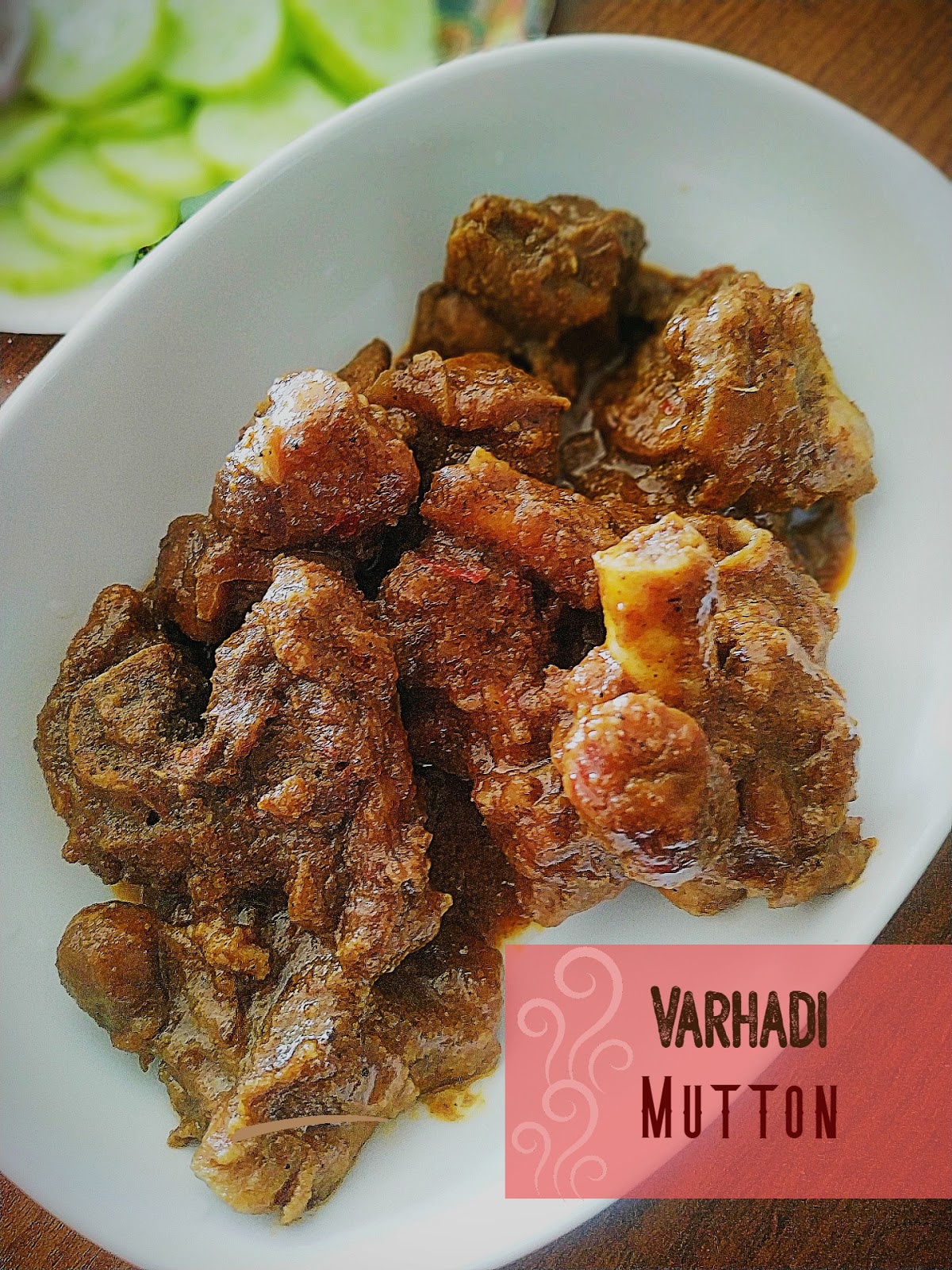
Varhadi is a dialect of Marathi typically spoken in Vidarbha region of Maharashtra. Vidarbha is the north-eastern region of Maharashtra and is known for its extreme climates - round the year dry weather and  also known for its boldness. This region primarily consists of Amravati and Nagpur. Here  there are two cuisines  "varhadi" and "saoji". Both these cuisines are particularly spicy, and not meant for the faint hearted.

Saoji is a community which is known for its super spicy non vegetarian food. Varhadi cuisine is a little milder than its counterpart saoji, but it is still on the spicier side. A typical morning in Nagpur would start of with a plate of "tarri pohe",which is served with a thin gravy that is spicy and hot. It is garnished with shev and coriander. Lunch would then comprise of many types of bhaats like - "gola bhaat","pithla bhaat" etc.. Unlike other Maharashtrian cities, rice is pretty staple here and part of both lunch and dinner. The Varhadi or Saoji non vegetarian spicy preparations go very well with these rice dishes.

Now you might be wondering how come me being a Bengali, I am talking about Varhadi cuisine. Well to tell the truth until this day I was not even aware of the cuisine name let alone the recipe. I have a very good friend who is a certified and a passionate chef. Since mom is visiting me now, he offered to drop by and prepare a very traditional Maharashtrian preparation for us. He didn't tell me what dish he was about to make, just gave me instructions that I should soak some 10-12 odd dry red chillies in hot water for half an hour before he arrived. And of course clean and keep the mutton aside.

He arrived at my home with a small blue tupperwear container. When I peeked in it looked like a fresh masala paste with a very unique aroma. I couldn't quite place it as to what was giving that different aroma, but it certainly didn't smell like the usual masala that goes into a mutton curry. Then began the cooking. The soaked chillies had to be made into a paste. Mom offered a lending hand and made the paste with the help of sil batta. It is a rectangular shaped rough unpolished stone with a cylindrical, movable stone on top is used to make wet/dry masalas and chutneys in Indian households. All my childhood I have always seen my mom making masala paste with sil batta. But I am devoid of that expertise and rather lousy at it. But I do admit the taste and texture of a sil batta based masala paste and that made in mixer grinder is very different.

Once the chilli paste was done, the actually cooking started.  I noticed the change in look and feel of the gravy base when the secret paste was added. The flavours were very unique and appetizing. Nothing I had have before. The color was also on the blackish side, which is signature to this cuisine. Finally it was kind of a picnic feel when we all sat down on the floor, placing all the food on top pf newspapers. The whole house was already smelling of the secret masala. I had made Indrayani rice to go with the mutton. Its a special kind of fragrant rice found in this part of the country which I like better than basmati. It needs to be cooked with a little more than required water to give that mushy texture. A dollop of ghee and the mutton tasted like a piece of heaven. It was not until we finished our food that my friend finally gave away the name of his recipe - Varhadi mutton. He also said, this preparation is so very traditional that its hardly found commonly in Pune. Nonetheless here is his special recipe for it.

Picnic style serving on a newspaper

Preparation Time : 30 minutes
Cooking Time: 60 minutes

Ingredients (for Varhadi Masala):
  • Bay Leaf - 2
  • Dry Coconut -  1/2 grated
  • Cumin Seed - 1 tsp
  • Coriander seed - 1 tsp
  • Stone flower (Dagad Phool) - 2 tbsp
  • Black Pepper - 15-20
  • Black Cardamom - 6-8
  • Caraway seeds (Shah jeera) - 1/2 tsp
  • Clove - 3
  • Nutmeg - 1/2 grated
  • Star Anise - 1
  • Mace - 1
  • Cinnamon - 1 inch
  • Poppy Seeds - 2 tsp
Ingredients (for gravy):
  • Mutton - 750 gm
  • Dried Red chilli (Beydgi) - 10 to 12
  • Onion - 2 big, finely chopped
  • Garlic - 15-16, finely chopped
  • Ginger - 1 small piece
  • Varhadi Masala - 3 tbsp [paste of everything mentioned under varhadi masala]
  • Curd - 3 tbsp
  • Mustard oil
  • Salt as required

1. Clean and wash the mutton. marinate it with salt and red chilli powder.

2. Take all the spices mentioned under Varhadi masala and make into a fine paste with required water. Consistency will be like the picture


3. Soak the dried red chillis in hot water for about half an hour
Tip: If you do not have the specific red chilli use any variant of spicy dry red chilli for this

4. Using sil batta grind the chillis to a fine paste
Note: You can always grind it in mixer, but the texture from using a sil batta is finer


5. Chop the onions and the garlic finely

6. Take a wok, and heat oil. When the oil is smoking add the onion and chilli paste. Add the ginger. Fry it till the onions are softer.

7. Add the Varhadi masala to it and cook till oil separates.


8. Switch off the flame and add the curd so as to not curdle it. Notice the rich dark brownish color the masala base acquires. Hence at times it is also called kala masala.


9. Add the marinated mutton. Fold in. Cook for 15 minutes on medium flame.


10. Take a pressure cooker and cook for 5-6 whistle or till the required time for mutton to cook.

11. Open the pressure cooker and transfer the contents back into the wok. Cook till oil floats up for about 5-10 minutes.


Serve with Indrayani rice, Basmati rice, sweet pulao or any other less spicy rice. If it is Indrayani rice add some desi ghee on top to accentuate the flavours of the mutton when had with the rice. Have a garden salad on the side.


Cuisine reference link
Share
Tweet
Share
No comments
Older Posts

About me

I am a software engineer by profession and a writer at heart. Born and brought up in Kharagpur, I moved to the city of dreams Mumbai when I got my first job. Till then I had not cooked a single dish in my life. Not even Maggi or tea. My dad had a strong belief that his little princess never will be in a situation where she had to cook for herself. Hence I was not allowed to spend time in the kitchen till I was studying.


So when I faced the daunting task of living alone, dabbas came to initial rescue. After that I managed a whole year on just boiled vegetables and rice. And then I landed in US. The bounty of fresh produce and cooking ingredients available in the super marts eventually lured me into making my very first meal ever. There was no turning back after that. I finally discovered how much I was in love with cooking and being creative in the kitchen.


This blog is a humble attempt to present our culinary heritage to one and all and document some of the very traditional recipes which gets passed on through generations just by word of mouth.


So just sit back with a cup of tea or coffee and enjoy the curries and the stories related to each.


Follow Us

Footprints

Blog Archive

  • ▼  2026 (3)
    • ▼  January (3)
      • If You Still Feel It
      • A Ten-Second Wind That Took Me Home
      • We Don't Say It Anymore
  • ►  2025 (3)
    • ►  December (1)
    • ►  June (1)
    • ►  February (1)
  • ►  2024 (21)
    • ►  December (2)
    • ►  September (1)
    • ►  August (3)
    • ►  July (4)
    • ►  May (2)
    • ►  April (5)
    • ►  March (3)
    • ►  January (1)
  • ►  2023 (7)
    • ►  December (2)
    • ►  November (1)
    • ►  October (1)
    • ►  May (1)
    • ►  March (1)
    • ►  January (1)
  • ►  2022 (18)
    • ►  September (1)
    • ►  August (2)
    • ►  July (2)
    • ►  June (3)
    • ►  April (1)
    • ►  March (3)
    • ►  February (2)
    • ►  January (4)
  • ►  2021 (60)
    • ►  December (5)
    • ►  October (5)
    • ►  September (5)
    • ►  August (7)
    • ►  July (6)
    • ►  June (5)
    • ►  May (3)
    • ►  April (4)
    • ►  March (6)
    • ►  February (6)
    • ►  January (8)
  • ►  2020 (55)
    • ►  December (5)
    • ►  November (3)
    • ►  October (10)
    • ►  September (7)
    • ►  August (7)
    • ►  July (9)
    • ►  June (3)
    • ►  May (9)
    • ►  March (1)
    • ►  January (1)
  • ►  2019 (3)
    • ►  November (1)
    • ►  April (1)
    • ►  January (1)
  • ►  2018 (1)
    • ►  December (1)
  • ►  2017 (4)
    • ►  December (2)
    • ►  November (1)
    • ►  September (1)
  • ►  2016 (10)
    • ►  August (1)
    • ►  July (2)
    • ►  June (5)
    • ►  April (1)
    • ►  March (1)
  • ►  2015 (10)
    • ►  December (1)
    • ►  August (1)
    • ►  June (1)
    • ►  May (2)
    • ►  April (4)
    • ►  March (1)
  • ►  2014 (22)
    • ►  November (2)
    • ►  August (2)
    • ►  July (3)
    • ►  June (2)
    • ►  May (4)
    • ►  April (3)
    • ►  January (6)
  • ►  2013 (22)
    • ►  November (2)
    • ►  October (4)
    • ►  September (5)
    • ►  August (2)
    • ►  July (1)
    • ►  June (1)
    • ►  May (2)
    • ►  April (1)
    • ►  March (1)
    • ►  February (2)
    • ►  January (1)
  • ►  2012 (31)
    • ►  December (4)
    • ►  October (3)
    • ►  September (8)
    • ►  July (1)
    • ►  June (1)
    • ►  May (14)
  • ►  2010 (9)
    • ►  July (3)
    • ►  June (2)
    • ►  April (1)
    • ►  March (2)
    • ►  February (1)
  • ►  2009 (4)
    • ►  February (2)
    • ►  January (2)

recent posts

Pinterest Board

Popular Posts

  • Champaran Mutton / Ahuna Mutton - A Bihari Delicacy
      When I finish a long week of work, self doubt, frustration of dealing with people and finally when the weekend comes, I feel cooking somet...
  • Khandeshi Kala Masala - Kala Mutton Masala
      25 September Maharashtra is a land of unique local flavours. And still it is mainly known for its Vada Pavs, poha, pav bhaji and modaks. I...
  • Complete Details to plan your ISKON Mayapur Visit
    Radha Madhav during Pushya Abhishek on 6th Jan 2023 First of all wish you a very happy new year. I have been away from blogging for a while ...
  • Macher Bhorta | Fish Bharta | Mach Makha| Bengali Style Mashed Fish
      October 18 Bhortas or bharta as we call it in pan India, are the quintessential Bengali food, a staple in Bangladeshi cuisine. They are th...
  • Green Chilli Thecha || Maharashtrian Hirvi Mirchi Thecha || Green Chilli Salsa
     26 July Though I have been staying in Maharashtra for over a decade now, it was just a couple of years ago I started exploring the local or...
  • Dim Toast | Egg Toast | Dim Pauruti | Savoury French Toast
      April 25 Calcutta or Kolkata. A city known for its food and culture, where hospitality and love are synonymous with lip-smacking grub. Cho...
  • About Slow Travel | Spice2Nuts - a spice initiative by Harish Bali (Visa2Explore)
    Moments from my travels - 1. Forest in Meghalaya 2. An old boat in Shnongpdeng 3. Fish Mint 4. Local Cinnamon  Traveling has always been a p...
  • Varhadi Mutton - A Traditional Vidharba Cuisine
    Varhadi is a dialect of Marathi typically spoken in Vidarbha region of Maharashtra. Vidarbha is the north-eastern region of Maharashtra ...
  • Arabic Chicken Mandi | Smokey Chicken & Rice
      Dec 14 Chicken Mandi has always been on my bucket list. The soft succulent meat pieces soaked in beautiful aromatics, the fragrant long gr...
  • Tangy Sweet Mint Fish | Fish Pudina Recipe | Fish Hariyali
    February 20 I am a hardcore fishiterian..if that's a word. There has been hardly any occurrence where I have tasted a fish and not liked...

Liebster Award

Liebster Award

Very Good Recipes

Very Good Recipes

You can find my recipes on Very Good Recipes

Contact Us

Name

Email *

Message *

Pages

  • Travelogue Index
  • VEGETARIAN RECIPE
  • CHICKEN RECIPES
  • SEAFOOD RECIPES
  • MUTTON RECIPES
  • RICE RECIPES
  • EGG RECIPES
  • DAAL RECIPES
  • ROTI & PARATHA RECIPES
  • BAKING RECIPES
  • SWEET RECIPES
  • SNACKS RECIPES
  • SIDES RECIPES
  • SOUP RECIPES
  • SALAD & BOWLS RECIPES
  • ROASTED RECIPIES
  • JAM & PRESERVE RECIPES
  • BEVERAGE RECIPES
  • SAUCES, SPICES & CURRY BASE RECIPES
  • CHUTNEY & DIPS RECIPES
  • FESTIVE RECIPES
  • Contact Us
  • TRAVELOGUES OF EAST INDIA
  • TRAVELOGUES OF WEST INDIA
  • TRAVELOGUES OF SOUTH INDIA
  • TRAVELOGUES OF NORTH INDIA
  • TRAVELOGUES of ASIA
  • North East Recipe

This Blog is protected by DMCA.com

DMCA.com for Blogger blogs
FOLLOW ME @INSTAGRAM

Curries n Stories © 2020 All rights reserved.
Created with by BeautyTemplates