• Home
  • Recipes
    • Vegetarian
    • Seafood
    • Snacks
    • Chicken
    • Mutton
    • Egg
    • Roti & Parathas
    • Dessert
    • Sides
    • Soups
    • Salad & Bowls
    • Rice
    • Daal
    • Bakes
    • Roasted
    • Beverages
    • Sauces, Spices & Curry Base
    • Chutney & Dips
    • Festive Recipes
  • Cuisine
    • Bengali
    • Maharashtrian
    • Rajasthan
    • Punjab
    • Chennai
    • Andhra
    • Mangalore
    • Mughlai
    • Kashmiri
    • Chinese
    • Singapore
    • Mexican
    • Continental
    • Italian
    • French
    • American
    • Thai
    • Bangladeshi
    • Arab & Persia
    • North East
  • Meal Type
    • Breakfast
    • Lunch
    • Dinner
    • Snacks
    • Dessert
    • Appetizer
    • Accompaniments
  • How To
    • Preservation Techniques
  • Travel
    • East India
    • West India
    • North India
    • South India
    • Asia
    • America
  • Lifestyle
    • Craft & Creation
    • Experiences
  • Musing
  • Contact
  • Bengali Blogs

Curries & Stories

pinterest facebook twitter instagram tumblr linkedin


25 September

Maharashtra is a land of unique local flavours. And still it is mainly known for its Vada Pavs, poha, pav bhaji and modaks. I know because I also belong from a different state by birth. People only know food items that are shown in the Bollywood movies but the traditional flavors of this land unfortunately is very limited to the locals.  Thus even after spending more than 15 years in Maharashtra, I started understanding and exploring the signature regional cuisines of Maharashtra from only a couple of years ago. Mumbai being a melting pot of various cultures, I hardly came across a place claiming to serve authentic Maharashtrian Thali. I am talking about 12 years ago, it might also be that even if such a place exists in Mumbai I was unaware of. After spending a reasonable amount of time in Pune and due to some local friends and a few team lunch outs, I got exposed to the traditional fares which are uncommon to an outsider to the state. Now I really feel bad that I started exploring the beautiful cuisines of this place so late. Nonetheless, its better late than never!

Maharashtra is divided into 5 main regions : Konkan, Paschim Maharashtra also known as Desh - (Pune Division), Khandesh - (Nashik Division), Marathwada - (Aurangabad Division) and Vidarbha - (Nagpur and Amravati divisions).The coastline of Maharashtra is usually called the Konkan and boasts its own Konkani cuisine, which is a harmonized combination of Malvani, Gaud Saraswat Brahmin, and Goan cuisines. Besides the coastal Maharashtra cuisine, the interior of Maharashtra or the Vidarbha area has its own distinctive cuisine known as the Varadi cuisine.

The cuisine of each of these 5 regions are diverse and yet similar in many ways. From the coastal delicacies of the Kokan where fish curry and rice is a staple to the specialties of Deccan plateau and the fiery fare from heat of Vidharbha in the east, Maharashtrian food is truly unique. Quoting a food article, the North-Western region of Maharashtra which covers areas like Jalgaon, Malegaon and Nasik is known for its extremely spicy curries. This cuisine is called the Khandeshi cuisine which is the hottest cuisine of Maharashtra. Peanut oil, dry coconut and the Lavangi Mirch are the highlights of this cuisine. The curries are identifiable because of the red spicy oil that floats atop and is called 'Tawang or Tarri'.

There is a Maharashtrian Restaurant a little away from my place, where for the first time I got introduced to an amazing dish from Khadenshi cuisine - Kala Mutton. The burst of flavors and how succulent the mutton pieces were literally blew my mind! It was like nothing I had had before. Every inch of the mutton had a infusion of rich flavors from the whole spices, slowly cooked over the wood fire for hours. A bite of the piping hot bhakhris dipped in Kala mutton gravy with a slice of raw onions is something you need to try once in your life to know how heavenly it tastes.

From then on every time I visited the place, that was the dish for me by default. I am so much smitten with this particular dish that I had to try making this at home. I just had to! The main element of the dish of course is the Kala Masala. When you look at the ingredient list you might feel overwhelmed but that is the key behind all the beautiful flavors this curry has. It is definitely a labor of love! I can proudly say, that the mutton made with this kala masala tasted super amazing and everyone at home really loved it. Check out the recipe for the masala below. I will be posting the Kala Masala Mutton Curry recipe soon. Just as a side note, I did try making this with Chicken as well, it did taste amazing but no where near to the one that you get with Mutton. So if you want to try this out for the very first time, make a Mutton curry with it.

Checkout other accompaniment recipes on my blog:

  • Bengali Tomato Chutney
  • Pickled Onions - Sirke Wala Peyaz
  • Lebanese Toum - Garlic Sauce
  • Hirva Mirchi Thecha

Preparation Time: 30 minutes
Cooking Time : 40 minutes 
Serves - 100 gm 

Ingredients for Garam Masala:
  • White Sesame - 1 tsp
  • Coriander Seeds - 2 tsp
  • Dry Red Chilli - 4
  • Black Pepper - 10
  • Cloves - 3
  • Star Anise - 1
  • Bay Leaf - 1
  • Mace - 1/4th 
  • Naag Kesar (Optional) - 4 to 6
  • Cinnamon - 1 inch
  • Black Cardamom - 1
  • Salt - 1/4 tsp
Ingredients for Kala Masala:
  • Garam Masala / Goda Masala - 1 tbsp
  • Onion - 2 medium
  • Green Chilli - 4
  • Khopra / Dried Coconut - 1/2 coconut or  Fresh Coconut  - 1/4 coconut
  • Fresh Coriander Leaves - handful, chopped
  • Garlic Pod - 10
  • Ginger - 1 inch
  • Red Chili Powder - 1/2 tsp
  • Salt - 1/2 tsp
  • Ghee - 2 tsp
Equipment:
  • Kadai 
  • Spice grinder 
  • Iron Wok

Method for Garam Masala
1. Dry roast on medium heat all the ingredients mentioned under garam masala apart from the salt till they are fragrant. You have to constantly keep stirring it so that they don't burn.

2. Let them cool down

3. In a mixer grinder, grind all the dry spices into a fine powder. Preserve this for the next phase.

Method for Kala Masala

1. Cut off the head of the onion and make deep slits in the onion. Now over direct gas flame char the onions until they turn black on the outside. 

Tip: I use the onions with the skin. The skin burns and adds a beautiful black color to the final masala.

2. Char the coconut and the green chilies over the flame. Cool everything down.

Tip: If you do not have dry coconut, you can use fresh coconut as well. The quantity will be half that of dry coconut.

3. Now chop the chapped onions , coconut and green chillies and transfer them into a mixer grinder jar. Add chopped fresh coriander, the garam masala prepared in phase 1, garlic pods, green chilis, salt, some water and grind all of these to a fine paste.

Tip: If you do not want to make the garam masala you can replace it with same amount of Goda Masala. But still I highly recommend you prepare a fresh batch of garam masala for better flavor.

4. Heat an iron wok and add 2 tbsp of ghee. Once the ghee is hot add 1/2 tsp of red chili powder. Give it a nice stir till fragrant.

Note: You can use any kind of wok but cooking the masala in an iron wok will ensure it gets a rich black color.

5. Now add the ground kala masala paste and cook over medium flame while stirring frequently. Cook untill oil separates, the masala becomes black and a little thick in nature.

Note : The masala in the picture is before it is cooked so it is still a lighter shade of black. Once cooked it will turn quite black.

You can use this masala to make Kala Mutton or Chicken Rassa. I will talk about that recipe in my next blog post. Stay Tuned!


Share
Tweet
Share
4 comments


Kothimbir Vadi


5 July 

With the onset of rains, the craving for having fritters and steaming hot tea comes naturally. Across the length an dbreadth of India some of the monsoon snacks remain same with subtle regional flavour differences - onion pakoda/kanda bhajji, mirchi vada, palak pakoda/pale bhajji, dal vada (lentil fritters), corn on the cob, dimer chop/ egg cutlet etc. are few of the common snacking items you will get almost everywhere in our country.

Just like Bengal which has its own array of famous street side food, similarly Maharashtra has some signature snacks which are iconic to this region. While vada pav, misal pav or pav bhaji are some of the names most people might be aware of. There are a few traditional snacks like, sabudana vada, aluvadi, thalipeet or kothimbir vadi which give you a taste of a typical and authentic Maharashtrian household and these dishes are worth craving for. 

This post is about a delicious snack known as Kothimbir vadi. In Marathi 'kothimbir' or 'kothmir' means coriander leaves. The word ‘vadi’ means cubes or slices or wedges. So Kothimbir vadis are basically steamed coriander and gram flour cake cubes that are later fried or can be even had as is. Dont misjudge the dish if you didn't have a good experience at a restaurant eating a kothimbir vadi which was heavy on besan and with slight traces of coriander leaves. The ones made at home taste heavenly because they are loaded with fresh coriander leaves and spices. This is one recipe which is made best at home. I know because our office canteen used to serve this as an evening snacks and I never really liked them much. But then once, one of my neighbors made a batch of kothimbir vadis and gave me to taste. They were absolutely heavenly. I kept craving for them even after they were finished. 

Kothimbir Vadi

For ages coriander has been considered as one of the chief garnishing element in Indian cuisine. If some dish is lacking bold flavors then just add a sprinkle of chopped coriander leaves and even the biggest flaws get hidden. Also, chaats are incomplete without a dash of the spicy hot coriander chutney. There will hardly be a household which does not keep a consistent stack of fresh coriander in their pantry.

Me and a few of my friends in Instagram will be hosting a monthly collaboration on Instagram on grains , herbs and spices. Every month a group of Instagrammers will be posting recipes with the 3 core ingredients of the month from each of these categories. This month it is rice, bay leaf and coriander. I chose to make a dish from coriander. Plating and taking a enticing photo of rice has never been my area of expertise, hence I wanted to make something which I could make to look good! That is when Kothimbir Vadi came to my rescue. I had been meaning to make this recipe from a long time and this was a perfect opportunity.

This recipe is even gluten free. You take away the hing (asafetida) and this is an absolute gluten free recipe. To make it even more healthy, skip frying it all together. So the next time you have excess Coriander leaves in the refrigerator, don't just think of making a chutney. Try this easy Maharashtrian Snack recipe  and I am sure you would enjoy it with your evening tea. 

Checkout other snacks recipes on my blog:

  • Kachki Macher Bora - Fried Anchovy Fritters
  • Kumro Ful Bhaja - Fried Pumpkin flower fritters
  • Besan Ka chila
Kothimbir Vadi


Preparation Time : 10 minutes
Cooking Time: 15 minutes

Ingredients :
  • Coriander leaves (finely chopped) - 2 cups
  • Besan (gram flour / chickpea flour) - 1 cup
  • Red Chilli Powder -
  • Ginger - Garlic  Paste -
  • Green Chilli (finely chopped) -
  • Coriander Powder - 1/2 tsp
  • Cumin Powder -  1/2 tsp
  • Hing (Asafoetida) - 1 pinch (optional)
  • Sesame Seeds -  1 tsp
  • Garam Masala powder - 1/4 tsp
  • Turmeric - 1/2 tsp
  • Lemon Juice - 1/2 lemon
  • Water - 1/4 cup
  • Salt as per taste
  • Refined Oil - as required

Ingredients :
  • Mixing Bowl
  • Deep Kadai 
  • Trivet
  • Steaming tray
  • Skillet

Procedure (steaming):

Kothimbir Vadi

1.  In a mixing bowl, add the chopped coriander leaves, besan, chopped green chilli, red chilli powder, lemon juice, sesame seeds, turmeric, coriander powder, cumin powder, ginger garlic paste, hing, garam masala powder and salt as per taste. Combine everything together with hand.  Squeeze the coriander leaves with hands, they will release some water into the mixture. 

Tip 1: Sift the Chickpea Flour for a lump free dough.

Tip 2: Wash the coriander leaves well and drain them completely before chopping.

Tip 3: If you want a gluten free version skip the hing. 

Note: The quantity of coriander leaves should always be double the amount of chickpea flour used.

2. Now add the water and knead everything together. It will become a sticky soft dough.

Note: Add the water only when the mixture is damp

3. Now grease a tray with oil. Grease your hands also with oil and add the batter into the tray. Flat it out with the help of your fingers.

Kothimbir Vadi
Ready for steaming


4. Boil water in a steamer or a deep bottom pan. Place a trivet in center and once the water comes to a rolling boil, place the tray with the batter. Cover and steam for about 10-15 minutes on medium flame.

5. Insert a knife or a toothpick, if it comes out clean take the tray off the heat. Let it cool down.

6. To remove the steamed cake, with a butter knife loosen the edges and cut it into thick squares. You can store it in an airtight box in the refrigerator for 48 hours if you don't plan to consume immediately.

Kothimbir Vadi


Frying the Vadi:

Shallow Fry : Take a skillet and add oil. Once hot add the Vadis in a single layer and fry each side till golden brown in color.

Deep Fry : You can also deep fry the vadis for a more crispy texture.

Can Kothimbir Vadi be air fried?

Yes, you can. Preheat the Air Fryer for 5 mins at 200 Degrees C. Place the cut vadis inside the airfryer basket and spray / brush some oil.

Garnish the hot vadis with some grated fresh coconut. Serve it for snacks with tomato sauce and steaming chai (tea).


Share
Tweet
Share
No comments

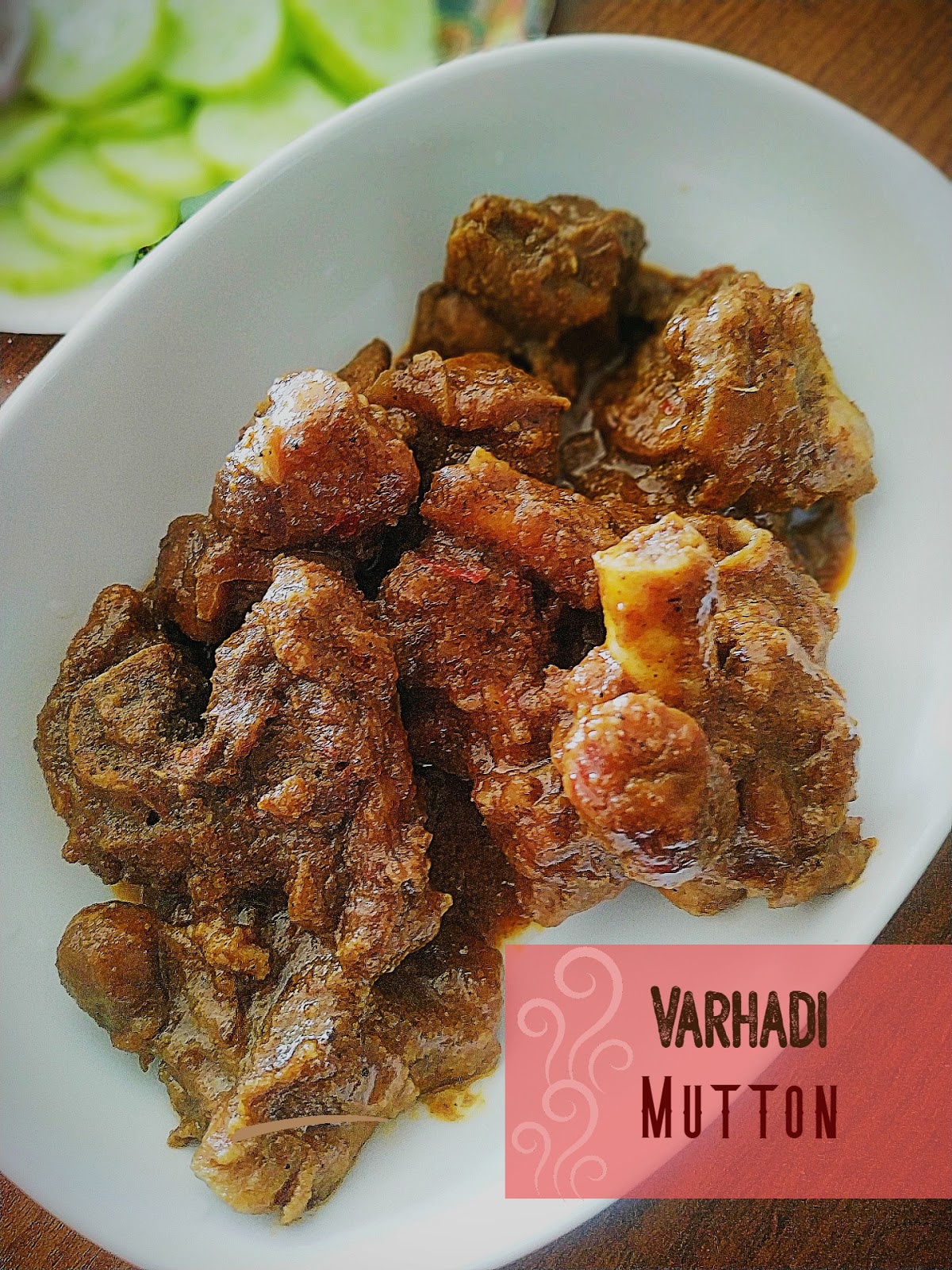
Varhadi is a dialect of Marathi typically spoken in Vidarbha region of Maharashtra. Vidarbha is the north-eastern region of Maharashtra and is known for its extreme climates - round the year dry weather and  also known for its boldness. This region primarily consists of Amravati and Nagpur. Here  there are two cuisines  "varhadi" and "saoji". Both these cuisines are particularly spicy, and not meant for the faint hearted.

Saoji is a community which is known for its super spicy non vegetarian food. Varhadi cuisine is a little milder than its counterpart saoji, but it is still on the spicier side. A typical morning in Nagpur would start of with a plate of "tarri pohe",which is served with a thin gravy that is spicy and hot. It is garnished with shev and coriander. Lunch would then comprise of many types of bhaats like - "gola bhaat","pithla bhaat" etc.. Unlike other Maharashtrian cities, rice is pretty staple here and part of both lunch and dinner. The Varhadi or Saoji non vegetarian spicy preparations go very well with these rice dishes.

Now you might be wondering how come me being a Bengali, I am talking about Varhadi cuisine. Well to tell the truth until this day I was not even aware of the cuisine name let alone the recipe. I have a very good friend who is a certified and a passionate chef. Since mom is visiting me now, he offered to drop by and prepare a very traditional Maharashtrian preparation for us. He didn't tell me what dish he was about to make, just gave me instructions that I should soak some 10-12 odd dry red chillies in hot water for half an hour before he arrived. And of course clean and keep the mutton aside.

He arrived at my home with a small blue tupperwear container. When I peeked in it looked like a fresh masala paste with a very unique aroma. I couldn't quite place it as to what was giving that different aroma, but it certainly didn't smell like the usual masala that goes into a mutton curry. Then began the cooking. The soaked chillies had to be made into a paste. Mom offered a lending hand and made the paste with the help of sil batta. It is a rectangular shaped rough unpolished stone with a cylindrical, movable stone on top is used to make wet/dry masalas and chutneys in Indian households. All my childhood I have always seen my mom making masala paste with sil batta. But I am devoid of that expertise and rather lousy at it. But I do admit the taste and texture of a sil batta based masala paste and that made in mixer grinder is very different.

Once the chilli paste was done, the actually cooking started.  I noticed the change in look and feel of the gravy base when the secret paste was added. The flavours were very unique and appetizing. Nothing I had have before. The color was also on the blackish side, which is signature to this cuisine. Finally it was kind of a picnic feel when we all sat down on the floor, placing all the food on top pf newspapers. The whole house was already smelling of the secret masala. I had made Indrayani rice to go with the mutton. Its a special kind of fragrant rice found in this part of the country which I like better than basmati. It needs to be cooked with a little more than required water to give that mushy texture. A dollop of ghee and the mutton tasted like a piece of heaven. It was not until we finished our food that my friend finally gave away the name of his recipe - Varhadi mutton. He also said, this preparation is so very traditional that its hardly found commonly in Pune. Nonetheless here is his special recipe for it.

Picnic style serving on a newspaper

Preparation Time : 30 minutes
Cooking Time: 60 minutes

Ingredients (for Varhadi Masala):
  • Bay Leaf - 2
  • Dry Coconut -  1/2 grated
  • Cumin Seed - 1 tsp
  • Coriander seed - 1 tsp
  • Stone flower (Dagad Phool) - 2 tbsp
  • Black Pepper - 15-20
  • Black Cardamom - 6-8
  • Caraway seeds (Shah jeera) - 1/2 tsp
  • Clove - 3
  • Nutmeg - 1/2 grated
  • Star Anise - 1
  • Mace - 1
  • Cinnamon - 1 inch
  • Poppy Seeds - 2 tsp
Ingredients (for gravy):
  • Mutton - 750 gm
  • Dried Red chilli (Beydgi) - 10 to 12
  • Onion - 2 big, finely chopped
  • Garlic - 15-16, finely chopped
  • Ginger - 1 small piece
  • Varhadi Masala - 3 tbsp [paste of everything mentioned under varhadi masala]
  • Curd - 3 tbsp
  • Mustard oil
  • Salt as required

1. Clean and wash the mutton. marinate it with salt and red chilli powder.

2. Take all the spices mentioned under Varhadi masala and make into a fine paste with required water. Consistency will be like the picture


3. Soak the dried red chillis in hot water for about half an hour
Tip: If you do not have the specific red chilli use any variant of spicy dry red chilli for this

4. Using sil batta grind the chillis to a fine paste
Note: You can always grind it in mixer, but the texture from using a sil batta is finer


5. Chop the onions and the garlic finely

6. Take a wok, and heat oil. When the oil is smoking add the onion and chilli paste. Add the ginger. Fry it till the onions are softer.

7. Add the Varhadi masala to it and cook till oil separates.


8. Switch off the flame and add the curd so as to not curdle it. Notice the rich dark brownish color the masala base acquires. Hence at times it is also called kala masala.


9. Add the marinated mutton. Fold in. Cook for 15 minutes on medium flame.


10. Take a pressure cooker and cook for 5-6 whistle or till the required time for mutton to cook.

11. Open the pressure cooker and transfer the contents back into the wok. Cook till oil floats up for about 5-10 minutes.


Serve with Indrayani rice, Basmati rice, sweet pulao or any other less spicy rice. If it is Indrayani rice add some desi ghee on top to accentuate the flavours of the mutton when had with the rice. Have a garden salad on the side.


Cuisine reference link
Share
Tweet
Share
No comments
Older Posts

About me

I am a software engineer by profession and a writer at heart. Born and brought up in Kharagpur, I moved to the city of dreams Mumbai when I got my first job. Till then I had not cooked a single dish in my life. Not even Maggi or tea. My dad had a strong belief that his little princess never will be in a situation where she had to cook for herself. Hence I was not allowed to spend time in the kitchen till I was studying.


So when I faced the daunting task of living alone, dabbas came to initial rescue. After that I managed a whole year on just boiled vegetables and rice. And then I landed in US. The bounty of fresh produce and cooking ingredients available in the super marts eventually lured me into making my very first meal ever. There was no turning back after that. I finally discovered how much I was in love with cooking and being creative in the kitchen.


This blog is a humble attempt to present our culinary heritage to one and all and document some of the very traditional recipes which gets passed on through generations just by word of mouth.


So just sit back with a cup of tea or coffee and enjoy the curries and the stories related to each.


Follow Us

Footprints

Blog Archive

  • ▼  2026 (4)
    • ▼  May (1)
      • A Suitcase Full of Stories: My Heartfelt Shopping ...
    • ►  January (3)
  • ►  2025 (3)
    • ►  December (1)
    • ►  June (1)
    • ►  February (1)
  • ►  2024 (21)
    • ►  December (2)
    • ►  September (1)
    • ►  August (3)
    • ►  July (4)
    • ►  May (2)
    • ►  April (5)
    • ►  March (3)
    • ►  January (1)
  • ►  2023 (7)
    • ►  December (2)
    • ►  November (1)
    • ►  October (1)
    • ►  May (1)
    • ►  March (1)
    • ►  January (1)
  • ►  2022 (18)
    • ►  September (1)
    • ►  August (2)
    • ►  July (2)
    • ►  June (3)
    • ►  April (1)
    • ►  March (3)
    • ►  February (2)
    • ►  January (4)
  • ►  2021 (60)
    • ►  December (5)
    • ►  October (5)
    • ►  September (5)
    • ►  August (7)
    • ►  July (6)
    • ►  June (5)
    • ►  May (3)
    • ►  April (4)
    • ►  March (6)
    • ►  February (6)
    • ►  January (8)
  • ►  2020 (55)
    • ►  December (5)
    • ►  November (3)
    • ►  October (10)
    • ►  September (7)
    • ►  August (7)
    • ►  July (9)
    • ►  June (3)
    • ►  May (9)
    • ►  March (1)
    • ►  January (1)
  • ►  2019 (3)
    • ►  November (1)
    • ►  April (1)
    • ►  January (1)
  • ►  2018 (1)
    • ►  December (1)
  • ►  2017 (4)
    • ►  December (2)
    • ►  November (1)
    • ►  September (1)
  • ►  2016 (10)
    • ►  August (1)
    • ►  July (2)
    • ►  June (5)
    • ►  April (1)
    • ►  March (1)
  • ►  2015 (10)
    • ►  December (1)
    • ►  August (1)
    • ►  June (1)
    • ►  May (2)
    • ►  April (4)
    • ►  March (1)
  • ►  2014 (22)
    • ►  November (2)
    • ►  August (2)
    • ►  July (3)
    • ►  June (2)
    • ►  May (4)
    • ►  April (3)
    • ►  January (6)
  • ►  2013 (22)
    • ►  November (2)
    • ►  October (4)
    • ►  September (5)
    • ►  August (2)
    • ►  July (1)
    • ►  June (1)
    • ►  May (2)
    • ►  April (1)
    • ►  March (1)
    • ►  February (2)
    • ►  January (1)
  • ►  2012 (31)
    • ►  December (4)
    • ►  October (3)
    • ►  September (8)
    • ►  July (1)
    • ►  June (1)
    • ►  May (14)
  • ►  2010 (9)
    • ►  July (3)
    • ►  June (2)
    • ►  April (1)
    • ►  March (2)
    • ►  February (1)
  • ►  2009 (4)
    • ►  February (2)
    • ►  January (2)

recent posts

Pinterest Board

Popular Posts

Liebster Award

Liebster Award

Very Good Recipes

Very Good Recipes

You can find my recipes on Very Good Recipes

Contact Us

Name

Email *

Message *

Pages

  • Travelogue Index
  • VEGETARIAN RECIPE
  • CHICKEN RECIPES
  • SEAFOOD RECIPES
  • MUTTON RECIPES
  • RICE RECIPES
  • EGG RECIPES
  • DAAL RECIPES
  • ROTI & PARATHA RECIPES
  • BAKING RECIPES
  • SWEET RECIPES
  • SNACKS RECIPES
  • SIDES RECIPES
  • SOUP RECIPES
  • SALAD & BOWLS RECIPES
  • ROASTED RECIPIES
  • JAM & PRESERVE RECIPES
  • BEVERAGE RECIPES
  • SAUCES, SPICES & CURRY BASE RECIPES
  • CHUTNEY & DIPS RECIPES
  • FESTIVE RECIPES
  • Contact Us
  • TRAVELOGUES OF EAST INDIA
  • TRAVELOGUES OF WEST INDIA
  • TRAVELOGUES OF SOUTH INDIA
  • TRAVELOGUES OF NORTH INDIA
  • TRAVELOGUES of ASIA
  • North East Recipe

This Blog is protected by DMCA.com

DMCA.com for Blogger blogs
FOLLOW ME @INSTAGRAM

Curries n Stories © 2020 All rights reserved.
Created with by BeautyTemplates