
• Home
  • Recipes
    • Vegetarian
    • Seafood
    • Snacks
    • Chicken
    • Mutton
    • Egg
    • Roti & Parathas
    • Dessert
    • Sides
    • Soups
    • Salad & Bowls
    • Rice
    • Daal
    • Bakes
    • Roasted
    • Beverages
    • Sauces, Spices & Curry Base
    • Chutney & Dips
    • Festive Recipes
  • Cuisine
    • Bengali
    • Maharashtrian
    • Rajasthan
    • Punjab
    • Chennai
    • Andhra
    • Mangalore
    • Mughlai
    • Kashmiri
    • Chinese
    • Singapore
    • Mexican
    • Continental
    • Italian
    • French
    • American
    • Thai
    • Bangladeshi
    • Arab & Persia
    • North East
  • Meal Type
    • Breakfast
    • Lunch
    • Dinner
    • Snacks
    • Dessert
    • Appetizer
    • Accompaniments
  • How To
    • Preservation Techniques
  • Travel
    • East India
    • West India
    • North India
    • South India
    • Asia
    • America
  • Lifestyle
    • Craft & Creation
    • Experiences
  • Musing
  • Contact
  • Bengali Blogs

Curries & Stories

pinterest facebook twitter instagram tumblr linkedin

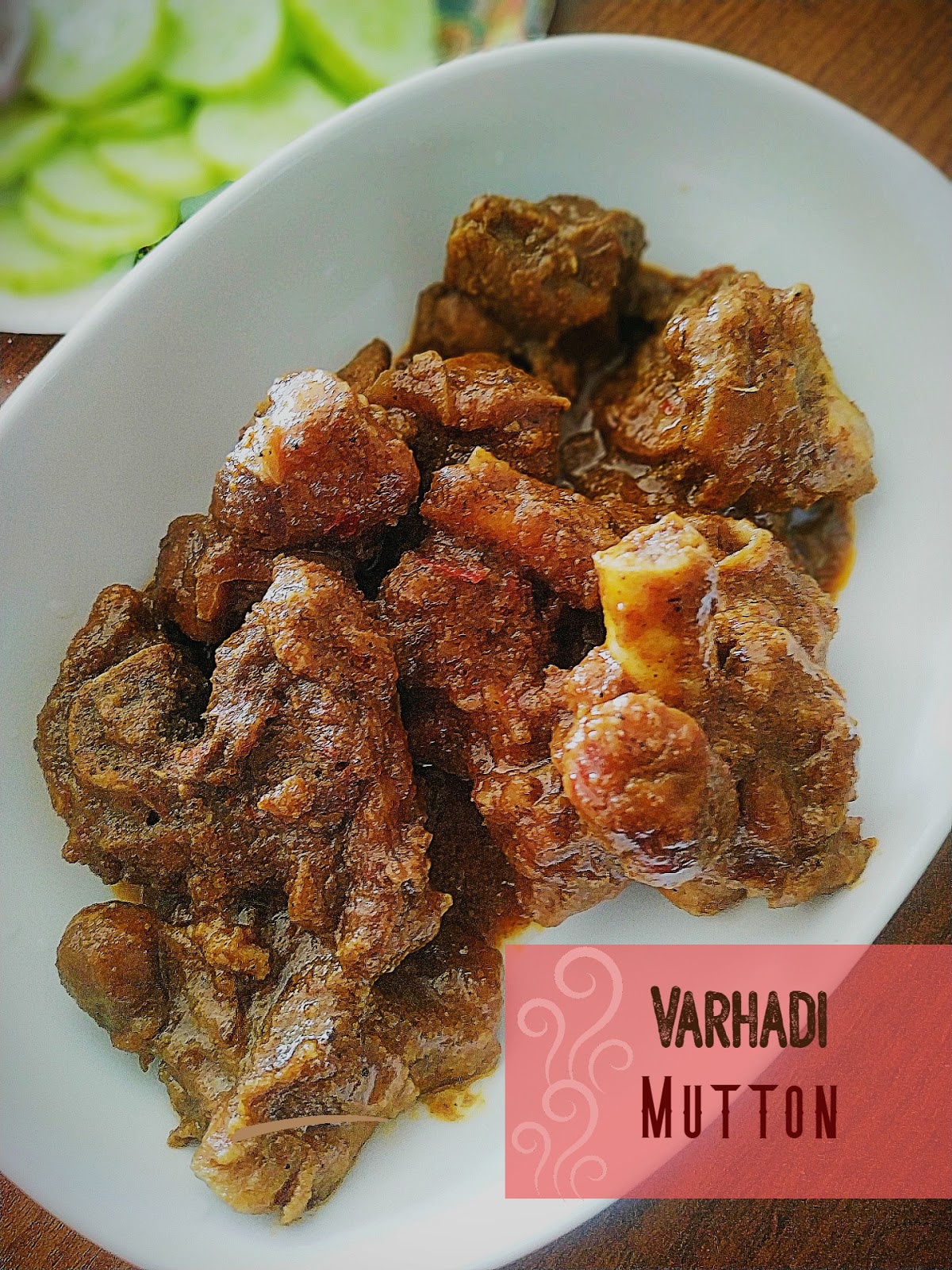
Varhadi is a dialect of Marathi typically spoken in Vidarbha region of Maharashtra. Vidarbha is the north-eastern region of Maharashtra and is known for its extreme climates - round the year dry weather and  also known for its boldness. This region primarily consists of Amravati and Nagpur. Here  there are two cuisines  "varhadi" and "saoji". Both these cuisines are particularly spicy, and not meant for the faint hearted.

Saoji is a community which is known for its super spicy non vegetarian food. Varhadi cuisine is a little milder than its counterpart saoji, but it is still on the spicier side. A typical morning in Nagpur would start of with a plate of "tarri pohe",which is served with a thin gravy that is spicy and hot. It is garnished with shev and coriander. Lunch would then comprise of many types of bhaats like - "gola bhaat","pithla bhaat" etc.. Unlike other Maharashtrian cities, rice is pretty staple here and part of both lunch and dinner. The Varhadi or Saoji non vegetarian spicy preparations go very well with these rice dishes.

Now you might be wondering how come me being a Bengali, I am talking about Varhadi cuisine. Well to tell the truth until this day I was not even aware of the cuisine name let alone the recipe. I have a very good friend who is a certified and a passionate chef. Since mom is visiting me now, he offered to drop by and prepare a very traditional Maharashtrian preparation for us. He didn't tell me what dish he was about to make, just gave me instructions that I should soak some 10-12 odd dry red chillies in hot water for half an hour before he arrived. And of course clean and keep the mutton aside.

He arrived at my home with a small blue tupperwear container. When I peeked in it looked like a fresh masala paste with a very unique aroma. I couldn't quite place it as to what was giving that different aroma, but it certainly didn't smell like the usual masala that goes into a mutton curry. Then began the cooking. The soaked chillies had to be made into a paste. Mom offered a lending hand and made the paste with the help of sil batta. It is a rectangular shaped rough unpolished stone with a cylindrical, movable stone on top is used to make wet/dry masalas and chutneys in Indian households. All my childhood I have always seen my mom making masala paste with sil batta. But I am devoid of that expertise and rather lousy at it. But I do admit the taste and texture of a sil batta based masala paste and that made in mixer grinder is very different.

Once the chilli paste was done, the actually cooking started.  I noticed the change in look and feel of the gravy base when the secret paste was added. The flavours were very unique and appetizing. Nothing I had have before. The color was also on the blackish side, which is signature to this cuisine. Finally it was kind of a picnic feel when we all sat down on the floor, placing all the food on top pf newspapers. The whole house was already smelling of the secret masala. I had made Indrayani rice to go with the mutton. Its a special kind of fragrant rice found in this part of the country which I like better than basmati. It needs to be cooked with a little more than required water to give that mushy texture. A dollop of ghee and the mutton tasted like a piece of heaven. It was not until we finished our food that my friend finally gave away the name of his recipe - Varhadi mutton. He also said, this preparation is so very traditional that its hardly found commonly in Pune. Nonetheless here is his special recipe for it.

Picnic style serving on a newspaper

Preparation Time : 30 minutes
Cooking Time: 60 minutes

Ingredients (for Varhadi Masala):
  • Bay Leaf - 2
  • Dry Coconut -  1/2 grated
  • Cumin Seed - 1 tsp
  • Coriander seed - 1 tsp
  • Stone flower (Dagad Phool) - 2 tbsp
  • Black Pepper - 15-20
  • Black Cardamom - 6-8
  • Caraway seeds (Shah jeera) - 1/2 tsp
  • Clove - 3
  • Nutmeg - 1/2 grated
  • Star Anise - 1
  • Mace - 1
  • Cinnamon - 1 inch
  • Poppy Seeds - 2 tsp
Ingredients (for gravy):
  • Mutton - 750 gm
  • Dried Red chilli (Beydgi) - 10 to 12
  • Onion - 2 big, finely chopped
  • Garlic - 15-16, finely chopped
  • Ginger - 1 small piece
  • Varhadi Masala - 3 tbsp [paste of everything mentioned under varhadi masala]
  • Curd - 3 tbsp
  • Mustard oil
  • Salt as required

1. Clean and wash the mutton. marinate it with salt and red chilli powder.

2. Take all the spices mentioned under Varhadi masala and make into a fine paste with required water. Consistency will be like the picture


3. Soak the dried red chillis in hot water for about half an hour
Tip: If you do not have the specific red chilli use any variant of spicy dry red chilli for this

4. Using sil batta grind the chillis to a fine paste
Note: You can always grind it in mixer, but the texture from using a sil batta is finer


5. Chop the onions and the garlic finely

6. Take a wok, and heat oil. When the oil is smoking add the onion and chilli paste. Add the ginger. Fry it till the onions are softer.

7. Add the Varhadi masala to it and cook till oil separates.


8. Switch off the flame and add the curd so as to not curdle it. Notice the rich dark brownish color the masala base acquires. Hence at times it is also called kala masala.


9. Add the marinated mutton. Fold in. Cook for 15 minutes on medium flame.


10. Take a pressure cooker and cook for 5-6 whistle or till the required time for mutton to cook.

11. Open the pressure cooker and transfer the contents back into the wok. Cook till oil floats up for about 5-10 minutes.


Serve with Indrayani rice, Basmati rice, sweet pulao or any other less spicy rice. If it is Indrayani rice add some desi ghee on top to accentuate the flavours of the mutton when had with the rice. Have a garden salad on the side.


Cuisine reference link
Share
Tweet
Share
No comments


Winter is here and everything is already so beautiful. Winter is a time for going on a gastronomic frenzy as the produce you get at this time of the year are simply so fresh, flavorful and tasty. 

I am having a gala time in my kitchen exploring many new dishes, adding new dimensions to existing traditional dishes, creating fusion of Bengali and Marathi cuisine, its just too much fun! 

When I am alone I usually avoid preparing leafy vegetables as its a hell lot of hard work to clean them. At the same time I just love the greens. Give me any leafy vegetables and I am a happy person. But the amount of hard work deters me every time. This time since mom is visiting me, I dared to try out a number of leafy vegetables. Chola shaak or Chole ka saag or Harbhara is such a thing.

Mom says, I have had chola shaak as a kid. But by seeing the shaag I couldn't recollect. Only when I tasted it did I remember that I indeed had tasted it earlier. Usually other years we get the whole bush of Chola Shaak along with the green chola, but I didn't notice chola shaak being sold. The chola shaak which has chickpeas are not suitable for this preparation as the leafs are dry and hard. The shaak which is just sold separately needs to be picked for this recipe.

Actually I went overdrive with this leafy vegetable thing due to my colleagues who would bring different greens every day to lunch. Maharashtrian saak recipe usually has shenga or peanuts in it which I totally love but never tried making myself. So this time I thought lets make it the Marathi way. But then mom wasn't too confident neither did I have the time to look up in net. Hence we mutually agreed to do it the old Bengali way with fish. I had some good potions of Rohu in my pantry too so everything fell into place.

Once the dish was made and I tasted it, it revived a good lot of childhood memories. The earthy flavor of Chickpea greens really is out of the world. It goes very well with steamed rice alone. I finished my whole rice just with this and didn't even touch the other dishes. Do try this simple yet tasty preparation if you happen to get these leafy vegetable anywhere near you.

Preparation Time: 60 minutes or more 
Cooking Time: 15 minutes
Serves: 4
Cuisine: Bengali

Ingredients:
  • Chola Shaak/ Chikpea greens/ Harbhara - 1/2 kg
  • Green Chilli - 3-4
  • Jeera / Cumin whole - 1 tsp
  • Turmeric as required
  • Salt as per taste
  • Refined Oil/ Mustard Oil - 2 tbsp
  • Fish - 250 gm (Rohu  curry cut (peti) / Shoal fish head)

Procedure
1. Cleaning the shaak:  This is the most important, tricky and time consuming part of the preparation. You need to separate the leaves from the stalk as soon as you get it from market. Because if you keep it in fridge it will wilt and become difficult to separate the leaves from the stalk. 

Pic Courtesey : Internet
Separate the soft leaves and soft stalks from the hard stalk. Now wash the leaves. I usually take a big strainer and keep it inside a bigger vessel. Then I fill the strainer with the shaag and let the water run over it. The water accumulates inside the bigger vessel. And now you can dip the strainer two three times inside that water so that your shaag is clean and less water is consumed for cleaning.
2.  clean and marinate the fish/fish head in salt and turmeric for about 10-15 minutes. Fry them in mustard oil and keep aside.

3.  Heat a pan and add mustard oil. When its hot enough temper it with cumin and split green chillies. When the cumin is fragrant add the washed shaag. Add turmeric and fold in. 


4. The shaag will sweat and start reducing. Cook till all the water is evaporated. Adjust the salt.

5. Add the fried fish. With the spatula break the fish as small as you can and mix well with the Shaag.

Note: The dish can be prepared without fish as well. Fish is just to add an extra flavour to the already flavourful greens.

Serve it with steamed rice and daal.


Share
Tweet
Share
1 comments

Finally it has started raining steadily in Pune. The entire state has been struggling with acute water crisis from almost a year due to poor rains last year. Everyone of us were eagerly praying for good rains this year. The rains from past two weeks has helped the water levels get better in the three major dams around pune which supplies water to the city and nearby areas.

Rains always seem romantic from the warm confines of our homes, but once we have to tread the murky waters on the streets it doesnt seem rosey anymore. But this year it has been different for me. I am not complaining even when I get drenched while going to office. Everyone needs the rain water badly this year. So let it rain and then some more.

The usual cravings on any rainy evening are garma garam onion pakoras and steaming chais. Or rather anything thats warm and heartfelt. Since I am not that fond of chais and also try to avoid fried food so my usual craving is for a good fulilling soup. Its another thing that I love soup irrespective of the season. The first thing I check for is the soup listing whenever I visit any restaurant. And spicy crab soup happens to be my all time favourite. I evaluate any seafood joint on the quality of its crab or seafood soup. If I am not hapy with my crab soup then its a fat chance that I will visit the restaurent again, unless they totally floor me with their maincourse offering. Yeah I am that picky about my soups. There are two places so far where I was happy with the seafood soup - Eddie's Kitchen in Camp Area and Bamboo House in Shivajinagar. Especially if you are in camp area and a Chinese food freak then never miss Eddies. They have awesome offerings in seafood varieties. I just wish this restaurent was not so far from my home!

Anyway since I dont happen to get good soups at any local restaurents around my home, I started making a chicken soup at home itself. One more thing, my soups should always be clear soups. I hate thick soups or the ones with a lot of cornflour in it. So when I started preparing my own soup I tried out many combinations of ingredients.  I wanted a hassel free soup which would not take more than 15-20 minutes to prepare and yet be as tasty and filling, so finally I came up with the concotion that totally matched my palate.

This particular chicken soup is super easy to make and needs very little ingredients which are almost always present in our pantry. I have had this soup in breakfast, evening snacks, when I had fever or soar throat, or just to satiate a hunger pang anytime during the day. And best thing you dont need to boil the chicken before hand. It gets cooked in its own juices within the 10 minutes of the soup making.


Preparation Time: 5 minutes  

Cooking Time: 10 minutes

Serves: 2

Cuisine: Oriental

Ingredients:
  • Chicken - 100 gm
  • Garlic cloves - 7-8 finely chopped
  • Onion - 1/2 small, finely chopped
  • Pepper Corn - 8 
  • Green Chilli - 1 small, finely chopped
  • Dried Parsley - 1/4 tsp (optional)
  • Butter - 1 1/2 tbsp
  • Chicken Bullion/prawn bullion/ Tom yum bullion - 1/4 tsp
  • Salt and sugar as per taste
  • Water - 4 cups


Procedure:

1. Clean the chicken and pat dry. Chop the chicken into small pieces. I prefer to keep the pieces a little smaller than bite size.

2. Grind the peppercorns coarsely. Chop all the ingredients as mentioned above.

3. Take a skillet and heat it. When the skillet is hot, add the butter, ground peppercorn, chopped garlic, chopped onion, chopped green chilli. Let it sizzle for a half a minute.

4. Add the chopped chicken pieces and adjust the salt and sugar. Fry everything on high heat  till the chicken pieces become white, taking care not to burn anything.

5. Add the water. You may increase the water depending on the amount of soup you want. Make sure you adjust the salt and sugar levels accordingly.

6. Add the bullion and fold in. I used Knor tom yum bullion to add to the flavour and colour, but you can also use any chicken bullion like the one that is available from Maggi or Knor. Also if you dont happen to have the bullion you may add a hint of ajinomoto.


7. Let the soup boil on high heat. Add the dried parsely. Parsely is totally optional. Even if you dont add it, the soup will still taste lovely.

After 10 minutes your soup will be ready. Serve the steaming chicken soup a dash of butter.

Note: 
If you are having a cold, fever or headache this soup is a very good remedy for bringing some respite to your cold. I prefer to increase the ppercorn in that case, as the heat from the pepper corn acts as a healer of cold.


Posting some of the views that I am seeing from my terrace. It's hard to find a place in a city with verdant hills as the landscape. I guess I am one of the lucky ones still to be able to enjoy such a view of the could and mountains right from my very own building. Every year I fall in love with the place some more :). 


Share
Tweet
Share
No comments

The super hot summers are back again. Its really sweltering outside as I write this blog. Whole of Maharashtra is facing huge water crisis this year due to poor rains last year. Regular water cuts and new rules are being put up to stop water wastage. Thankfully everyone promoted a dry Holi this year and conscious efforts have been made by every housing society to conserve water. I just wish we get some good rains this time around. Last weekend we went to Mahabaleshwar with a group of friends on bike ride. landscape was pretty dry and mornings were very hot in the hill station as well. But I tell you the evenings are a delight over there. We went to Mapro Garden and had the amazing fresh strawberry with cream. The strawberries and Mulberries at this time of the year are totally out of the world. After that we had a long long ride under the star light sky thorough the serpentine roads of Panchgani, the twin city of Mahabaleshwar where we were staying. Had the T20 match between India-Pakistan not been on that day, we would not have returned to the rooms before midnight. The added benefit was it was an off-season weekend. Panchgani was practically touristless. It was almost like having the entire hill station to ourselves :).

Since the summers have set in its been mostly light tangy recipes on the menu in our home, easy to digest and less spicy. Also fish is the only non-veg being made off late, chicken and red meat are almost off my pantry.  Aam Daal or Mango lentil is the preparation I am making most of the days. It really helps to beat the heat. Also we are guzzling down like 5-6 glasses of juices or drinks that we got from Mapro. Kokum Sherbat is a very very potent drink when the heat is on. Today we experimented with the kokum sherbat a bit and it came out pretty well. Maybe someday I will put that down in the blog.

So as I was saying I am giving myself a break from all kinds of fancy cooking now a days. But the other day when I was chatting with Ma while coming back from office she told me about a mutton recipe she came to know that day. Pepper was the main element of the dish and sounded quite simple. Now pepper, garlic and butter are the three things which when comes together can create magic. The combination works pretty well with mushroom or paneer. This recipe also had this terrific ingredients combo. I wanted to make mutton with pepper from long time ago, but the recipes I found on net were not very much to my liking somehow. You know after a point of time you just read a recipe and you know whether it will suit your palate or not. Same was happening with me. But this particular recipe I liked and decided to try out even in this terrible heat. It turned out to be very simple and quite flavorful.


Preparation Time: 30 minutes  

Cooking Time: 60 minutes

Serves: 3

Cuisine: Bengali 

Ingredients:
  • Mutton - 700 gm 
  • Curd - 150 gm
  • Fresh Garlic Paste - 1 tbsp + 1/2 tbsp
  • Fresh Coconut Paste - 2 tbsp
  • Pepper Paste - 2 tbsp + 1/2 tbsp
  • Onion - 2 Medium sliced thinly
  • Peppercorn Whole - 5-6
  • Bay Leaf - 1 + 1
  • Red Chilli Dried - 2
  • Ghee - 2 tbsp
  • Refined Oil - 4 tbsp
  • Salt & Sugar as per taste
Procedure:

1. Clean the mutton. Take enough water in a pressure cooker and pressure cook the mutton with a bayleaf and a few pieces of garlic, till tender. Drain and keep aside the stock. 

2. Soak the peppercorns for an hour in some water, that way it will be easier to make a smooth paste.  In a grinder make a fine paste of the peppercorns. Add water as required to make the texture smooth.

3. Make a paste of the fresh garlic. I would not prefer using a store bought garlic paste as they have some preservatives which alter the taste of the dish.  

4. Take the warm boiled mutton in a mixing bowl and add 100 gm beaten curd, 1 tbsp fresh garlic paste and 2 tbsp fresh pepper paste. Mix well and keep it for at least 15 minutes. The more time the merrier. But I would not recommend to keep it overnight in a fridge as it would cool down the mutton and the rest of the cooking process would take time again.

5. Chop the onion into thin slices and keep aside.

6. Make a paste of the fresh coconut pieces and 50 gm curd. Adding coconut is optional. But I liked it as it added a texture to the dish without overpowering the main flavors.


7. Take a deep bottomed wok and heat the oil and ghee. This will be a bit dry dish hence go a bit liberal on the oil otheriwse the dish may stick to the wok when you fry on high heat.

8. Once the ghee is hot enough and flavorful, add the bayleaf, whole peppercorns and dried red chillies. Add the onions after that, with a pinch of salt and sugar. Remember you need to cook the dish on high heat, taking care it doesn't get burnt.

9. As the onions get slightly pink add the marinated mutton and fry for a while till the onions are soft.

10. Add the remaining 1/2 tbsp of garlic paste. Adjust the salt and sugar levels. Fold in

11.  Add the coconut curd paste and cook till oil separates. Add a little mutton stock, enough to ensure the mutton doesn't stick to the wok. But don't put too much stock, we don't want a runny gravy.

12. Add the remaining 1/2 tbsp of pepper paste. You can leave this step if you feel the dish already has enough heat in it. 

You should be able to see the oil separated and the dish has no moisture left. Add 1/2 a spoon of pure desi ghee to enhance the flavors. Serve the dish with any kind of sweet pulav. I served it with a simple carrot and Kismis pulav.

1. Heat level of this dish is mildly high. The heat is not as spicy as from a chilly but you will feel pretty warm inside. So take care while serving it to kids

2. The recipe asked for ghee but next time around would try it out with butter alone


Before signing off wish a very happy Easter to all the readers!


Share
Tweet
Share
No comments
The seasons have acted up a bit curiously this year. In Pune, usually by end of February the summers would gradually crawl in and by March end it would transform into the typical summer days with blazing sun and scorching heat. But this year it had rained pretty hard in the first week of March. There after we had a week of summer like weather in mid March but again with the onset of April the weather changed. Last Sunday, people of Pune witnessed a strange phenomenon. From morning onward a feathery layer of cloud like thing engulfed the city. My apartment is located on a hill; hence I can almost see the whole span of the city from my patio. It seemed like a layer of fog had formed in the distance and the visibility became quite low. Fog in summer? Quite baffling. This is a verdant part of the city hence smog was also out of question. Clouds could not come so low and neither could be this thin. When I could not logically decipher the strange thing I decided it must be all my perception, nothing was actually different.

I place rice all over my patio in the night so that the neighborhood pigeons can eat in the morning. That night when I went out to place the rice, I noticed that the foggy mass was still very much present. And since I was not able to clearly see the highway which otherwise I could very well see every day, I became quite certain that it was not just my perception that something was there but it actually was there, only thing I could not understand what. My imagination flew high. Maybe it was an alien invasion and they had spread some kind of a sleeping gas on the unsuspecting earthlings. I smiled at my own thought. But whatever it was, it seemed quite strange and mysterious.

Next day the newspaper solved the mystery. The dust storm that had occurred in Saudi the week before was behind this sudden change in air quality.  Apparently the light particulate matter traveled all the way from Saudi and reached the western part of the Indian sub-continent. These floating particulate matters created this mysterious haze over the city. The condition in Mumbai was worse for the PM level (particulate matter) crossed the safe level. High concentration of PM is bad for babies, elders and asthmatic patients hence it was suggested to take care while going out. Actually you could only see the haze but not feel anything once you were on the road because the particle size was in microns which was more dangerous because such particles are not even restricted by masks. By Tuesday evening things cleared up. But again a dust storm in Iran brought back the haze on Friday morning, only this time it was little thinner.

Anyway the met department had predicted hailstorm and thundershowers over the weekend, which was a pleasant respite in summer days. Usually Kalbaishakhi is a signature storm that occurs in Bengal leading to abrupt heavy rainfall but it rarely happens that rainfall occurs in summer months in Pune. But this year as I have said we are getting all kinds of weather fluctuations in summer months.

Weekend means a chicken dish once is must in our household. I am more of a fishiterian and get quite bored eating chicken regularly. Unless you put your heart into a dish it doesn't come out well. And when I get bored of a dish or ingredient it becomes a grueling task to make a good dish out of it. So just to keep me engaged I try to experiment a lot with the chicken dishes. My signature dish Doi Chicken (curd chicken) is the household favorite. It’s a light soupy dish but for the summer months it still seems a bit heavy on the stomach.

The summer months result in loss of appetite especially during the hot afternoons. Your heart starts craving for light hearted dishes. Anything tangy or sour really piques the taste buds. Saturday started off on a pretty warm and humid note. So I decided if it had to be chicken then it had to be a tangy one this time. When we talk about tangy chicken the first thing that comes to my mind is using kokum or tamarind to prepare a coastal style chicken, but I was not in mood for that. I wanted something earthy yet light.

Some brainstorming later I remembered a dish that I had once seen on a TV show. A quick search on the net brought of the video and I was all set to prepare Gondhoraj Chicken. Pretty easy to cook and requires very little ingredients. It’s a recipe from the kitchens of the famous Bhojo Hori Manna Restaurant in Kolkata. It’s one of their signature dishes and is known as “Lebu Lonka Murgi”. But I prefer to call it Gondhoraj Murgi because the hero of this dish is not any regular lemon but the king of lemons or Gondhoraj. Also the name imparts the necessary zing for this dish :)


Gondhoraj lebu is endemic to Bengal. During my childhood I had seen almost all Bengali households used to have a Gondhoraj Lebu tree in their garden. We had one in our quarters too in Kharagpur. My mom is a passionate gardener and used to grow many things in her garden at that time. We had peas, chillies, and of course Gondhoraj. The Gandhoraj shrub was located very near to our dining room. Gondhoraj is not known as the king of lemons for nothing. The divine aroma of the lemon is simply out of the world. No other lemon can compete with this in terms of flavor and taste but the sad thing is that it only thrives in the soil of Bengal. You try to plant it elsewhere in the country and you would end up getting a normal lemon. The soil is the differentiator. Aroma per say only Kaffir lime leaves can slightly measure up to the Gondhoraj leaves. But again the actual Kaffir lime is rarely used in cooking only the leaves are used for flavoring. With Gondhoraj you can use every bit of it.

The aroma of the Gondhoraj on summer evenings would very therapeutic and appetizing at the same time. It was a joy to pick the lemons from the tree and hold the fragrant leaves in our hands. Crush it slightly in your palms and the aroma would remain with you for the rest of the day. The lemon is dark green in color with a woody thick exterior and bigger in size compared to normal lemon. It has very little flesh and juice inside but a couple of drops of this ambrosia is effective enough for the whole meal.  A few drops of gondhoraj lebu, masoor daal tempered with radhuni and any ghonto or bhaja – an unforgettable combo during summer months.

Once I left Bengal I left Ghondhoraj also behind. Nowhere did I find them again. Only some specialty Bengali restaurants like Oh! Calcutta has these lemons on the menu in Pune. So whenever I go to Kolkata I bring back a couple of these lemons back with me to Pune. But once they run out it’s again a long wait till I visit home.

The best way to preserve these lemons for a longer time in fridge keeping their aroma intact is to keep them wrapped up in a moist cloth inside the vegetable tray.

Now the recipe.

Preparation Time: 10 minutes

Marination Time : 30 minutes

Cooking Time: 60 minutes

Serves: 4

Cuisine: Bengali 

Ingredients:


  • Chicken on the bone - 1 kg 


  • Onion Juice - 2 tbsp


  • Ginger Juice - 2 tbsp 


  • Garlic Juice - 2 tbsp


  • Green Chilli Paste - 1 tbsp (adjust according to tolerance level)


  • Curd - 1 cup


  • Coriander Powder - 1 1/2 tsp


  • Regular lemon - 1


  • Gondhoraj Lebu - 1 


  • Gondhoraj Lebu Leaves or Kaffir lime leaves - 7-8


  • Cardamom Pods - 5-6


  • Refined Oil - 1 tbsp


  • Green Chilli - 3-4 slitted


  • Salt as per taste


  • Sugar as per taste


  • Ghee or clarified butter - 4 tbsp


  • Scale up or down the other ingredients as per the amount of chicken.


    Procedure 1 : Quick Fix Method
    1. Wash and pat dry the chicken pieces. Take 1/2 cup of the curd and beat it uniformly. Add it to the chicken.

    2. Make a paste of 1 big onion, 7-8 garlic pods, 4 inch garlic and 5-6 green chillies in the grinder. Adjust chillies according to tolerance level. Add water to the paste and with the help of a strainer strain the entire juice from the paste using a spoon to squeeze out the juice. Add a bit of water if required to strain easily.Add this strained juice to the chicken.

    3. Add the juice of the regular lemon and Gondhoraj lebu to the chicken. Carefully scrape out some zest of the Gondhoraj lebu and add that too to the chicken


    4. Add the coriander powder, salt and refiled oil to the chicken. Mix everything together. Marinate the chicken for 30 mins at least.

    5. Heat ghee in a wok. When the ghee is fragrant temper it with cardamom pods.

    6. When the cardamom pods crackle, shake off the extra marinade and add the chicken pieces one by one to the ghee.

    7. Add the chillies and the Gondhoraj lebu leaves. I substituted with Kaffir lime leaves as I didn't have the Gondhoraj leaves. Toss around the chicken for a couple of minutes, taking care to slightly brown the pieces.

    8. Add half cup of water to the marinade and add it to the wok. Adjust the salt and sugar now. Add the remaining 1/2 cup of beaten curd. Add a little Gondhoraj zest. Fold everything in. 


    Notice that I have added potatoes at this stage. The original recipe does not have potatoes but in our house its inevitable in every chicken dish. So if you want to add potatoes like me you can do so, only thing don't fry the potatoes before adding to the gravy. For turmericless recipes adding fried potatoes to the gravies might alter the actual flavor, hence I prefer to add it raw. The potatoes will get cooked along with the chicken.

    9. Cook the chicken on medium flame for an hour or till the chicken is cooked. Keep stirring 

    Procedure 2 : Actual Method
    1.  Extract the juice of the onion, ginger and garlic separately and then add everything according to the measurement written in the ingredient list. 

    Everything else remains the same in this procedure. Believe me there is practically no difference to the end result in both the process. The later one only adds to the task list. Flavor and taste per say both are same. So for lazy people like me the first process also works out perfectly!

    Serving Suggestion: Serve the dish with steamed Basmati rice. Drizzle some Gondhoraj juice on top of the chicken before serving.


    I had prepared the recipe keeping in mind the hot summer afternoon. But by the time we sat down for lunch the weather had changed again. Rain clouds had gathered all over and it became pretty windy too. Almost felt like a Kalbaishakhi coming over on a summer afternoon in Kolkata. The aroma of Gondhoraj added to this beautiful weather kind of transported me back in time when as kids we would have lunch together as a family in Kolkata. Those afternoons were much more than just having meals, it was a time when we bonded over a common love - food. No doubt sometimes a good dish can stir up a lot of fond memories!


    Share
    Tweet
    Share
    No comments
    Older Posts

    About me

    I am a software engineer by profession and a writer at heart. Born and brought up in Kharagpur, I moved to the city of dreams Mumbai when I got my first job. Till then I had not cooked a single dish in my life. Not even Maggi or tea. My dad had a strong belief that his little princess never will be in a situation where she had to cook for herself. Hence I was not allowed to spend time in the kitchen till I was studying.


    So when I faced the daunting task of living alone, dabbas came to initial rescue. After that I managed a whole year on just boiled vegetables and rice. And then I landed in US. The bounty of fresh produce and cooking ingredients available in the super marts eventually lured me into making my very first meal ever. There was no turning back after that. I finally discovered how much I was in love with cooking and being creative in the kitchen.


    This blog is a humble attempt to present our culinary heritage to one and all and document some of the very traditional recipes which gets passed on through generations just by word of mouth.


    So just sit back with a cup of tea or coffee and enjoy the curries and the stories related to each.


    Follow Us

    Footprints

    Blog Archive

    • ▼  2026 (3)
      • ▼  January (3)
        • If You Still Feel It
        • A Ten-Second Wind That Took Me Home
        • We Don't Say It Anymore
    • ►  2025 (3)
      • ►  December (1)
      • ►  June (1)
      • ►  February (1)
    • ►  2024 (21)
      • ►  December (2)
      • ►  September (1)
      • ►  August (3)
      • ►  July (4)
      • ►  May (2)
      • ►  April (5)
      • ►  March (3)
      • ►  January (1)
    • ►  2023 (7)
      • ►  December (2)
      • ►  November (1)
      • ►  October (1)
      • ►  May (1)
      • ►  March (1)
      • ►  January (1)
    • ►  2022 (18)
      • ►  September (1)
      • ►  August (2)
      • ►  July (2)
      • ►  June (3)
      • ►  April (1)
      • ►  March (3)
      • ►  February (2)
      • ►  January (4)
    • ►  2021 (60)
      • ►  December (5)
      • ►  October (5)
      • ►  September (5)
      • ►  August (7)
      • ►  July (6)
      • ►  June (5)
      • ►  May (3)
      • ►  April (4)
      • ►  March (6)
      • ►  February (6)
      • ►  January (8)
    • ►  2020 (55)
      • ►  December (5)
      • ►  November (3)
      • ►  October (10)
      • ►  September (7)
      • ►  August (7)
      • ►  July (9)
      • ►  June (3)
      • ►  May (9)
      • ►  March (1)
      • ►  January (1)
    • ►  2019 (3)
      • ►  November (1)
      • ►  April (1)
      • ►  January (1)
    • ►  2018 (1)
      • ►  December (1)
    • ►  2017 (4)
      • ►  December (2)
      • ►  November (1)
      • ►  September (1)
    • ►  2016 (10)
      • ►  August (1)
      • ►  July (2)
      • ►  June (5)
      • ►  April (1)
      • ►  March (1)
    • ►  2015 (10)
      • ►  December (1)
      • ►  August (1)
      • ►  June (1)
      • ►  May (2)
      • ►  April (4)
      • ►  March (1)
    • ►  2014 (22)
      • ►  November (2)
      • ►  August (2)
      • ►  July (3)
      • ►  June (2)
      • ►  May (4)
      • ►  April (3)
      • ►  January (6)
    • ►  2013 (22)
      • ►  November (2)
      • ►  October (4)
      • ►  September (5)
      • ►  August (2)
      • ►  July (1)
      • ►  June (1)
      • ►  May (2)
      • ►  April (1)
      • ►  March (1)
      • ►  February (2)
      • ►  January (1)
    • ►  2012 (31)
      • ►  December (4)
      • ►  October (3)
      • ►  September (8)
      • ►  July (1)
      • ►  June (1)
      • ►  May (14)
    • ►  2010 (9)
      • ►  July (3)
      • ►  June (2)
      • ►  April (1)
      • ►  March (2)
      • ►  February (1)
    • ►  2009 (4)
      • ►  February (2)
      • ►  January (2)

    recent posts

    Pinterest Board

    Popular Posts

    • Champaran Mutton / Ahuna Mutton - A Bihari Delicacy
        When I finish a long week of work, self doubt, frustration of dealing with people and finally when the weekend comes, I feel cooking somet...
    • Khandeshi Kala Masala - Kala Mutton Masala
        25 September Maharashtra is a land of unique local flavours. And still it is mainly known for its Vada Pavs, poha, pav bhaji and modaks. I...
    • Complete Details to plan your ISKON Mayapur Visit
      Radha Madhav during Pushya Abhishek on 6th Jan 2023 First of all wish you a very happy new year. I have been away from blogging for a while ...
    • Macher Bhorta | Fish Bharta | Mach Makha| Bengali Style Mashed Fish
        October 18 Bhortas or bharta as we call it in pan India, are the quintessential Bengali food, a staple in Bangladeshi cuisine. They are th...
    • Green Chilli Thecha || Maharashtrian Hirvi Mirchi Thecha || Green Chilli Salsa
       26 July Though I have been staying in Maharashtra for over a decade now, it was just a couple of years ago I started exploring the local or...
    • Dim Toast | Egg Toast | Dim Pauruti | Savoury French Toast
        April 25 Calcutta or Kolkata. A city known for its food and culture, where hospitality and love are synonymous with lip-smacking grub. Cho...
    • About Slow Travel | Spice2Nuts - a spice initiative by Harish Bali (Visa2Explore)
      Moments from my travels - 1. Forest in Meghalaya 2. An old boat in Shnongpdeng 3. Fish Mint 4. Local Cinnamon  Traveling has always been a p...
    • Varhadi Mutton - A Traditional Vidharba Cuisine
      Varhadi is a dialect of Marathi typically spoken in Vidarbha region of Maharashtra. Vidarbha is the north-eastern region of Maharashtra ...
    • Arabic Chicken Mandi | Smokey Chicken & Rice
        Dec 14 Chicken Mandi has always been on my bucket list. The soft succulent meat pieces soaked in beautiful aromatics, the fragrant long gr...
    • Tangy Sweet Mint Fish | Fish Pudina Recipe | Fish Hariyali
      February 20 I am a hardcore fishiterian..if that's a word. There has been hardly any occurrence where I have tasted a fish and not liked...

    Liebster Award

    Liebster Award

    Very Good Recipes

    Very Good Recipes

    You can find my recipes on Very Good Recipes

    Contact Us

    Name

    Email *

    Message *

    Pages

    • Travelogue Index
    • VEGETARIAN RECIPE
    • CHICKEN RECIPES
    • SEAFOOD RECIPES
    • MUTTON RECIPES
    • RICE RECIPES
    • EGG RECIPES
    • DAAL RECIPES
    • ROTI & PARATHA RECIPES
    • BAKING RECIPES
    • SWEET RECIPES
    • SNACKS RECIPES
    • SIDES RECIPES
    • SOUP RECIPES
    • SALAD & BOWLS RECIPES
    • ROASTED RECIPIES
    • JAM & PRESERVE RECIPES
    • BEVERAGE RECIPES
    • SAUCES, SPICES & CURRY BASE RECIPES
    • CHUTNEY & DIPS RECIPES
    • FESTIVE RECIPES
    • Contact Us
    • TRAVELOGUES OF EAST INDIA
    • TRAVELOGUES OF WEST INDIA
    • TRAVELOGUES OF SOUTH INDIA
    • TRAVELOGUES OF NORTH INDIA
    • TRAVELOGUES of ASIA
    • North East Recipe

    This Blog is protected by DMCA.com

    DMCA.com for Blogger blogs
    FOLLOW ME @INSTAGRAM

    Curries n Stories © 2020 All rights reserved.
    Created with by BeautyTemplates