• Home
  • Recipes
    • Vegetarian
    • Seafood
    • Snacks
    • Chicken
    • Mutton
    • Egg
    • Roti & Parathas
    • Dessert
    • Sides
    • Soups
    • Salad & Bowls
    • Rice
    • Daal
    • Bakes
    • Roasted
    • Beverages
    • Sauces, Spices & Curry Base
    • Chutney & Dips
    • Festive Recipes
  • Cuisine
    • Bengali
    • Maharashtrian
    • Rajasthan
    • Punjab
    • Chennai
    • Andhra
    • Mangalore
    • Mughlai
    • Kashmiri
    • Chinese
    • Singapore
    • Mexican
    • Continental
    • Italian
    • French
    • American
    • Thai
    • Bangladeshi
    • Arab & Persia
    • North East
  • Meal Type
    • Breakfast
    • Lunch
    • Dinner
    • Snacks
    • Dessert
    • Appetizer
    • Accompaniments
  • How To
    • Preservation Techniques
  • Travel
    • East India
    • West India
    • North India
    • South India
    • Asia
    • America
  • Lifestyle
    • Craft & Creation
    • Experiences
  • Musing
  • Contact
  • Bengali Blogs

Curries & Stories

pinterest facebook twitter instagram tumblr linkedin


30 October

The Durga Pujos are just over and today it is Laxmi Pujo in Bengal. Sharad Purnima is observed as Kojagari Lokkhi Pujo or Kojagari Lakshmi Puja in eastern states such as Bengal, Assam, Odisha, eastern Bihar. Yes in the eastern states instead of Diwali, Laxmi Puja is celebrated a few days after Durga Puja. I did my usual puja today for Lakshmiji, nothing special for Lakshmi puja. Its difficult to arrange everything on a working day when you do not have a helping hand as such. However on Diwali I will be doing it.

Finally the rains have bade farewell and it feels like the winters are knocking on the door. The mornings are cold. yesterday it said the temperature was around 16.7 degrees in Pune. I don't know how many of you feel it, but the smell in the air changes with the onset of the Diwali week. It is much crisp now and under the sun it feels good. Finally it feels like the festive season.

I have been again reading a lot these days. Finished two mystery novels in 3 weeks. Currently devouring the Pujobarshiki Anandamela. I have also got my hands on a few culinary books of late. Mostly from the suggestions of the bloggers I follow. Most of the interest pivots around cook books with recipes from the past. Most of the times now due to lack of time and resource we tend to concoct things which are easy to make and hassle-free. Due to this many a time we end up tweaking the original recipe. It is no more a word of mouth legacy that's passed on through the generation , it is more like word of google mixed with personal improvisation. I am guilty of the same many a times too. i cannot say that is a bad thing. Because unless we try something new, how will we know whether a thing works or not. At the same time it feels good to know how was the same recipe made in older days when folks didn't tamper with traditional recipes usually.


One such books I got is - "Thakur Barir Ranna" by Purnima Thakur. Purnima Devi also known as Sudakshina Devi, was the youngest child of noted Brahmo Hemendranath Tagore, and niece of Rabindranath Tagore, thus part of the larger Tagore family.  The preface of the book talks about Indira Debi Choudhurani's ( Naw Ma) collection of recipes. She was the daughter of Rabindranath tagore's brother. Indira Debi herself didn't cook but was a food enthusiast and had a knack to collect recipes from around the world in her recipe book. That is the reason at times this book doesn't talk about the exact measurements of the ingredients. But still it is a Pandora's box of recipes from the bygone era. The most fascinating thing about this book I felt was that it has many recipes across Indian cuisines - like Puran Poli, Mysore pak etc in the recipe list. I never had an idea that during those days as well the ladies in home had exposure to such a  varied range of cuisines. But then the Thakur bari was known to have been much ahead of their times in everything. Also one more thing I noticed in particular was the usage of coconut in the recipes.  Usual Bengali recipes do not incorporate coconuts so frequently, but Thakur baris cuisine has them in most of the recipes. Which makes me think, it was probably influenced by many cultures to which the household was exposed to in those days. Later on Indira debi had gifted her recipe book to Purnima Thakur and she wrote this book to mainly preserve all those legacy recipes. Purnima Debi's mother Nalini Debi was also a great cook. Thus this book also has some of Nalini Debi's recipes and Purnima Debi's recipes as well. It feels kind of a time wrap when you read the book. I have bookmarked many of the recipes which sounded quite intriguing to me. One of those recipes is Mach diye shukto or shukto made with fish. This is one of the lost recipes of Bengal. Never had I heard before that Shukto (bitter medley of vegetables), can also be made with fish. I rechecked the recipe to see if I was reading right. Indeed I was. She had used Katla Fish to make the recipe. The recipe got me thinking, can I make it with just any fish?


If you have any Bengali friends you would know how crazy the Bengalis are about Ilish or Hilsa. Its different that they are anyway crazy about fish, but the craze for Hilsa tops everything. Monsoon delicacy means Ilish. They may sound illegally expensive to others but the Bengali is ready to shell out anything for a good Ilish on their plate. This year due to the covid situation it was impossible to go to supermarket in search of Hilsa. Usually I would get it from the nearby Big Bazar. It almost seemed like this would be a Ilishless year for me when it was already past September. But miraculously I found a fish vendor in facebook [thus you see social media is not always that bad] who delivered in my area and best thing - he had Ilish in stock! It was like a God gifted opportunity! I didnt waste time in ordering my stock of Hilsa. The prices were definitely much more than what we get in Kolkata but then a good Hilsa is worth the price you pay. As scheduled it was delivered by the owner himself. What I best liked was the packaging and the cuts. It was perfect Bengali ring pieces. He also made sure that he packed the fish head and oil in separate bags so that it was easy to use. And best thing yet, the fish tasted lovely and fresh. And I was raring to go ahead and make it into a lovely fish curry.

Now, the problem is whenever we Bengalis think of Ilish only a handful of recipes come to our mind - patui, jhal, bhapa and sorshebata mainly. I wanted to try something different for once. And then I remembered Purnima Debi's recipe of Mach diye shukto. That's it, I had the best fish at hand to try out the recipe because you can never go wrong with Ilish.

Note: This recipe can also be tried with other fishes like the Katla. 


Preparation Time: 20 minutes  
Cooking Time: 30 minutes
Makes For : 3-4 adult

Cuisine: Bengali

Ingredients:
  • Ilish / Hilsa - 6 - 7 pieces (ring cut)
  • Bitter Gourd (Karela) - 1 big (cut into thick matchsticks/ batonnet cut)
  • Potato (Aloo) - 2 medium (wedges)
  • Pointed Gourd (Parwal) - 4 (wedges)
  • Brinjal (Begun)- 2 medium (wedges)
  • Red Pumpkin (Kumro) - 200 gm (cubed)
  • Broad Beans (Shim) - 10 small (remove the tip and the tail)
  • Raw Papaya (Pepe) - 200 gm (cubed)
  • Raw Banana (Kacha Kola) - 1 (cubed) 
  • Mustard Whole (Sorshe) - 1 tsbp (coarsely ground) + 1 tbsp (paste)
  • Poppy Seeds (Poshto) - 3 tbsp (paste)
  • Bay Leaf - 1
  • Dried Red Chilli - 4
  • Ginger - 2 inch grated
  • Five Spices (5 Phoran) - 1 tsp
  • Mustard Oil
  • Ghee - 1 tbsp
  • Milk - 1 cup
  • Salt and Sugar as per taste

Procedure: 

1.  Wash all the vegetables and cut it as mentioned above.

2. Fry all the vegetables and keep aside. All the vegetables must be cooked till 3/4th done. The order I follow is hard veggies first - potato, parwal, banana, papaya. Followed by the softer ones - pumpkin, broad beans etc. Followed by karela and brinjals fried standalone. 

Tip: Frying them in batches is time consuming but it really helps in controlling the color and texture of the vegetables with different textures.

Fry The Karela

Fry The Brinjals

Fry the hard Vegetables - Potato, papaya, Parwal , Banana

Add the fried Karela and the Pumpkin
3. Clean and wash the Ilish pieces. Marinate it with salt and turmeric for about 30 minutes. Now fry them in mustard oil and keep aside. I usually shallow fry them.

Tip: Always prefer the ring cut portions of Hilsa for this.


4. Make a fine paste of poppy seeds and 1 tbsp mustard seeds with water.  

Tip: Soak the poppy seeds and mustard seeds in water for about 1 hour. The more the better it will soak up water and easy to make into a paste.

5. Grind 1 tbsp of mustard seeds with a mortar pestle to a fine powder. Keep it aside

6. Take mustard oil in a deep bottomed wok and when oil is smoking temper it with bay leaves, dry red chilli, panch foron and ground mustard seeds. Give it a good toss to fry everything. Make sure not to burn the spices.

Note : Pach foron is a mixture of five spices. Typically it consists of Methi dana (fenugreek seeds), Kalonji (nigella seeds), radhuni (celery seeds), sauf (fennel seeds) and jeera (cumin). Radhuni is many a times substituted with mustard seeds. It is a very versatile spice mix and in Bengal it is extensively used to add flavour to different Dals and Vegetarian preparations.

7. When the spices are fragrant toss in the fried vegetables apart from karela into the wok and fold in. Adjust the salt and sugar at this stage. 

Tip: Try not to cover and cook, then the color of the vegetables with remain as it is. Which in turn means you have to take care the vegetables do not burn, because water will evaporate fast when cooked uncovered.

Note: Turmeric is not added to shukto, that is one of the ground rule of this preparation. The preparation will have all the natural flavours of the vegetables in tact as turmeric is not added. PS: the picture looks yellowish though because of the mustard seed paste.

8. Add the grated ginger at this stage. Mix well and cook for 3-4 minutes.

9. Add the poppy seeds + mustard seeds paste now. Fold in. Let it cook for about 5 minutes on medium flame.

10. Add the fried karela and give it a good toss to mix everything. 

Note: karela is the last thing to be added before fish

11. Add the milk and water and stir in. The flame should be medium

Pro tip: I usually warm the milk for about 50 seconds in the microwave before adding to the the shukto.


12. When the shukto is almost done, lay the fish pieces carefully on top and put a cover. Let it simmer for about 5 minutes. Switch off the flame and let it sit covered. This will ensure the flavour of the fish gets incorporated into the shukto.

Note: Handle the fish with care and do not shove it inside the gravy, else it may break and the fish bones can get mixed with the gravy.

Serve it with steamed rice. Usually Shukto is had directly with rice without any other accompaniment like dal. So that each flavour of the seasonal vegetables can be relished fully.


Share
Tweet
Share
No comments

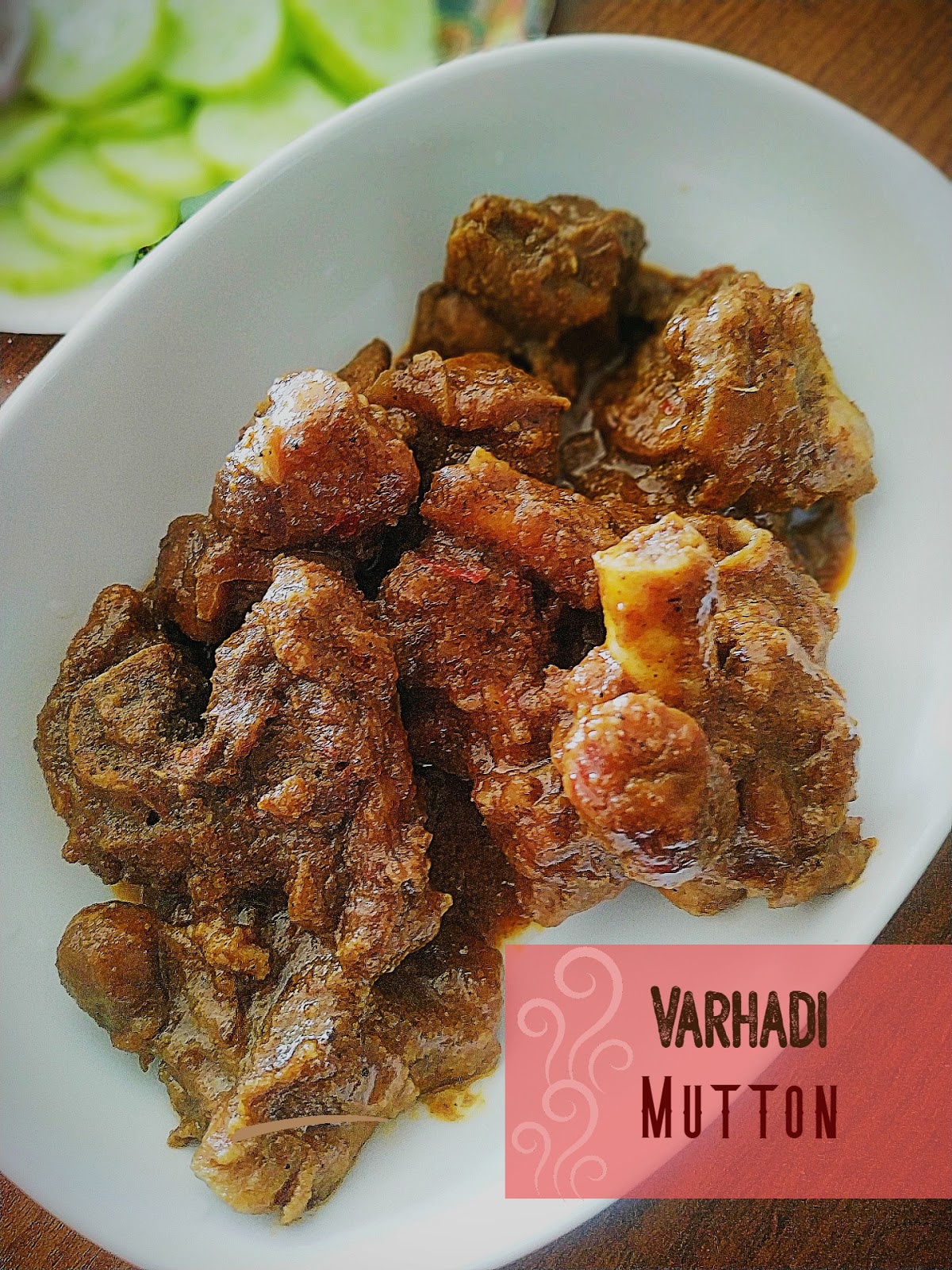
Varhadi is a dialect of Marathi typically spoken in Vidarbha region of Maharashtra. Vidarbha is the north-eastern region of Maharashtra and is known for its extreme climates - round the year dry weather and  also known for its boldness. This region primarily consists of Amravati and Nagpur. Here  there are two cuisines  "varhadi" and "saoji". Both these cuisines are particularly spicy, and not meant for the faint hearted.

Saoji is a community which is known for its super spicy non vegetarian food. Varhadi cuisine is a little milder than its counterpart saoji, but it is still on the spicier side. A typical morning in Nagpur would start of with a plate of "tarri pohe",which is served with a thin gravy that is spicy and hot. It is garnished with shev and coriander. Lunch would then comprise of many types of bhaats like - "gola bhaat","pithla bhaat" etc.. Unlike other Maharashtrian cities, rice is pretty staple here and part of both lunch and dinner. The Varhadi or Saoji non vegetarian spicy preparations go very well with these rice dishes.

Now you might be wondering how come me being a Bengali, I am talking about Varhadi cuisine. Well to tell the truth until this day I was not even aware of the cuisine name let alone the recipe. I have a very good friend who is a certified and a passionate chef. Since mom is visiting me now, he offered to drop by and prepare a very traditional Maharashtrian preparation for us. He didn't tell me what dish he was about to make, just gave me instructions that I should soak some 10-12 odd dry red chillies in hot water for half an hour before he arrived. And of course clean and keep the mutton aside.

He arrived at my home with a small blue tupperwear container. When I peeked in it looked like a fresh masala paste with a very unique aroma. I couldn't quite place it as to what was giving that different aroma, but it certainly didn't smell like the usual masala that goes into a mutton curry. Then began the cooking. The soaked chillies had to be made into a paste. Mom offered a lending hand and made the paste with the help of sil batta. It is a rectangular shaped rough unpolished stone with a cylindrical, movable stone on top is used to make wet/dry masalas and chutneys in Indian households. All my childhood I have always seen my mom making masala paste with sil batta. But I am devoid of that expertise and rather lousy at it. But I do admit the taste and texture of a sil batta based masala paste and that made in mixer grinder is very different.

Once the chilli paste was done, the actually cooking started.  I noticed the change in look and feel of the gravy base when the secret paste was added. The flavours were very unique and appetizing. Nothing I had have before. The color was also on the blackish side, which is signature to this cuisine. Finally it was kind of a picnic feel when we all sat down on the floor, placing all the food on top pf newspapers. The whole house was already smelling of the secret masala. I had made Indrayani rice to go with the mutton. Its a special kind of fragrant rice found in this part of the country which I like better than basmati. It needs to be cooked with a little more than required water to give that mushy texture. A dollop of ghee and the mutton tasted like a piece of heaven. It was not until we finished our food that my friend finally gave away the name of his recipe - Varhadi mutton. He also said, this preparation is so very traditional that its hardly found commonly in Pune. Nonetheless here is his special recipe for it.

Picnic style serving on a newspaper

Preparation Time : 30 minutes
Cooking Time: 60 minutes

Ingredients (for Varhadi Masala):
  • Bay Leaf - 2
  • Dry Coconut -  1/2 grated
  • Cumin Seed - 1 tsp
  • Coriander seed - 1 tsp
  • Stone flower (Dagad Phool) - 2 tbsp
  • Black Pepper - 15-20
  • Black Cardamom - 6-8
  • Caraway seeds (Shah jeera) - 1/2 tsp
  • Clove - 3
  • Nutmeg - 1/2 grated
  • Star Anise - 1
  • Mace - 1
  • Cinnamon - 1 inch
  • Poppy Seeds - 2 tsp
Ingredients (for gravy):
  • Mutton - 750 gm
  • Dried Red chilli (Beydgi) - 10 to 12
  • Onion - 2 big, finely chopped
  • Garlic - 15-16, finely chopped
  • Ginger - 1 small piece
  • Varhadi Masala - 3 tbsp [paste of everything mentioned under varhadi masala]
  • Curd - 3 tbsp
  • Mustard oil
  • Salt as required

1. Clean and wash the mutton. marinate it with salt and red chilli powder.

2. Take all the spices mentioned under Varhadi masala and make into a fine paste with required water. Consistency will be like the picture


3. Soak the dried red chillis in hot water for about half an hour
Tip: If you do not have the specific red chilli use any variant of spicy dry red chilli for this

4. Using sil batta grind the chillis to a fine paste
Note: You can always grind it in mixer, but the texture from using a sil batta is finer


5. Chop the onions and the garlic finely

6. Take a wok, and heat oil. When the oil is smoking add the onion and chilli paste. Add the ginger. Fry it till the onions are softer.

7. Add the Varhadi masala to it and cook till oil separates.


8. Switch off the flame and add the curd so as to not curdle it. Notice the rich dark brownish color the masala base acquires. Hence at times it is also called kala masala.


9. Add the marinated mutton. Fold in. Cook for 15 minutes on medium flame.


10. Take a pressure cooker and cook for 5-6 whistle or till the required time for mutton to cook.

11. Open the pressure cooker and transfer the contents back into the wok. Cook till oil floats up for about 5-10 minutes.


Serve with Indrayani rice, Basmati rice, sweet pulao or any other less spicy rice. If it is Indrayani rice add some desi ghee on top to accentuate the flavours of the mutton when had with the rice. Have a garden salad on the side.


Cuisine reference link
Share
Tweet
Share
No comments
Older Posts

About me

I am a software engineer by profession and a writer at heart. Born and brought up in Kharagpur, I moved to the city of dreams Mumbai when I got my first job. Till then I had not cooked a single dish in my life. Not even Maggi or tea. My dad had a strong belief that his little princess never will be in a situation where she had to cook for herself. Hence I was not allowed to spend time in the kitchen till I was studying.


So when I faced the daunting task of living alone, dabbas came to initial rescue. After that I managed a whole year on just boiled vegetables and rice. And then I landed in US. The bounty of fresh produce and cooking ingredients available in the super marts eventually lured me into making my very first meal ever. There was no turning back after that. I finally discovered how much I was in love with cooking and being creative in the kitchen.


This blog is a humble attempt to present our culinary heritage to one and all and document some of the very traditional recipes which gets passed on through generations just by word of mouth.


So just sit back with a cup of tea or coffee and enjoy the curries and the stories related to each.


Follow Us

Footprints

Blog Archive

  • ▼  2026 (4)
    • ▼  May (1)
      • A Suitcase Full of Stories: My Heartfelt Shopping ...
    • ►  January (3)
  • ►  2025 (3)
    • ►  December (1)
    • ►  June (1)
    • ►  February (1)
  • ►  2024 (21)
    • ►  December (2)
    • ►  September (1)
    • ►  August (3)
    • ►  July (4)
    • ►  May (2)
    • ►  April (5)
    • ►  March (3)
    • ►  January (1)
  • ►  2023 (7)
    • ►  December (2)
    • ►  November (1)
    • ►  October (1)
    • ►  May (1)
    • ►  March (1)
    • ►  January (1)
  • ►  2022 (18)
    • ►  September (1)
    • ►  August (2)
    • ►  July (2)
    • ►  June (3)
    • ►  April (1)
    • ►  March (3)
    • ►  February (2)
    • ►  January (4)
  • ►  2021 (60)
    • ►  December (5)
    • ►  October (5)
    • ►  September (5)
    • ►  August (7)
    • ►  July (6)
    • ►  June (5)
    • ►  May (3)
    • ►  April (4)
    • ►  March (6)
    • ►  February (6)
    • ►  January (8)
  • ►  2020 (55)
    • ►  December (5)
    • ►  November (3)
    • ►  October (10)
    • ►  September (7)
    • ►  August (7)
    • ►  July (9)
    • ►  June (3)
    • ►  May (9)
    • ►  March (1)
    • ►  January (1)
  • ►  2019 (3)
    • ►  November (1)
    • ►  April (1)
    • ►  January (1)
  • ►  2018 (1)
    • ►  December (1)
  • ►  2017 (4)
    • ►  December (2)
    • ►  November (1)
    • ►  September (1)
  • ►  2016 (10)
    • ►  August (1)
    • ►  July (2)
    • ►  June (5)
    • ►  April (1)
    • ►  March (1)
  • ►  2015 (10)
    • ►  December (1)
    • ►  August (1)
    • ►  June (1)
    • ►  May (2)
    • ►  April (4)
    • ►  March (1)
  • ►  2014 (22)
    • ►  November (2)
    • ►  August (2)
    • ►  July (3)
    • ►  June (2)
    • ►  May (4)
    • ►  April (3)
    • ►  January (6)
  • ►  2013 (22)
    • ►  November (2)
    • ►  October (4)
    • ►  September (5)
    • ►  August (2)
    • ►  July (1)
    • ►  June (1)
    • ►  May (2)
    • ►  April (1)
    • ►  March (1)
    • ►  February (2)
    • ►  January (1)
  • ►  2012 (31)
    • ►  December (4)
    • ►  October (3)
    • ►  September (8)
    • ►  July (1)
    • ►  June (1)
    • ►  May (14)
  • ►  2010 (9)
    • ►  July (3)
    • ►  June (2)
    • ►  April (1)
    • ►  March (2)
    • ►  February (1)
  • ►  2009 (4)
    • ►  February (2)
    • ►  January (2)

recent posts

Pinterest Board

Popular Posts

  • Tetor Macher Jhol (Bitter Gourd Fish Curry)
    Anything Bitter hardly finds takers. Same applies for Bitter Gourd. As a kid I hated bitter gourd in any form. Grown ups around me would...
  • Champaran Mutton / Ahuna Mutton - A Bihari Delicacy
      When I finish a long week of work, self doubt, frustration of dealing with people and finally when the weekend comes, I feel cooking somet...
  • Dhakai Morog Pulao (Chicken Pilaf from Dhaka)
    Day 60 of Lockdown First of all Eid Mubarak to any of my readers who is celebrating it today. The year has been pretty weird for a...
  • Kochur Dum / Kochur Dalna / Arbi Masala/ Taro or Colocasia Curry
    August 19 Kochu or taro is one of my favorite vegetables. It is as versatile as potato only much more tasty. It is equally starchy an...
  • Khandeshi Kala Masala - Kala Mutton Masala
      25 September Maharashtra is a land of unique local flavours. And still it is mainly known for its Vada Pavs, poha, pav bhaji and modaks. I...
  • What to pack for Kashmir (Gurez- Bangus - Lolab Circuit) if you are travelling in May - June
    25 June I feel if you are a person who loves nature and verdant greenery then May- June is the perfect time to travel to Kashmir. This is th...
  • Arabic Chicken Mandi | Smokey Chicken & Rice
      Dec 14 Chicken Mandi has always been on my bucket list. The soft succulent meat pieces soaked in beautiful aromatics, the fragrant long gr...
  • Macher Bhorta | Fish Bharta | Mach Makha| Bengali Style Mashed Fish
      October 18 Bhortas or bharta as we call it in pan India, are the quintessential Bengali food, a staple in Bangladeshi cuisine. They are th...
  • Varhadi Mutton - A Traditional Vidharba Cuisine
    Varhadi is a dialect of Marathi typically spoken in Vidarbha region of Maharashtra. Vidarbha is the north-eastern region of Maharashtra ...
  • Pahadi Bhatt Ki Daal | Black Soyabean Dal
      Happy 76th Independence Day to all my readers! Today we are celebrating 75 years of independence and that is such a remarkable thing. the ...

Liebster Award

Liebster Award

Very Good Recipes

Very Good Recipes

You can find my recipes on Very Good Recipes

Contact Us

Name

Email *

Message *

Pages

  • Travelogue Index
  • VEGETARIAN RECIPE
  • CHICKEN RECIPES
  • SEAFOOD RECIPES
  • MUTTON RECIPES
  • RICE RECIPES
  • EGG RECIPES
  • DAAL RECIPES
  • ROTI & PARATHA RECIPES
  • BAKING RECIPES
  • SWEET RECIPES
  • SNACKS RECIPES
  • SIDES RECIPES
  • SOUP RECIPES
  • SALAD & BOWLS RECIPES
  • ROASTED RECIPIES
  • JAM & PRESERVE RECIPES
  • BEVERAGE RECIPES
  • SAUCES, SPICES & CURRY BASE RECIPES
  • CHUTNEY & DIPS RECIPES
  • FESTIVE RECIPES
  • Contact Us
  • TRAVELOGUES OF EAST INDIA
  • TRAVELOGUES OF WEST INDIA
  • TRAVELOGUES OF SOUTH INDIA
  • TRAVELOGUES OF NORTH INDIA
  • TRAVELOGUES of ASIA
  • North East Recipe

This Blog is protected by DMCA.com

DMCA.com for Blogger blogs
FOLLOW ME @INSTAGRAM

Curries n Stories © 2020 All rights reserved.
Created with by BeautyTemplates