• Home
  • Recipes
    • Vegetarian
    • Seafood
    • Snacks
    • Chicken
    • Mutton
    • Egg
    • Roti & Parathas
    • Dessert
    • Sides
    • Soups
    • Salad & Bowls
    • Rice
    • Daal
    • Bakes
    • Roasted
    • Beverages
    • Sauces, Spices & Curry Base
    • Chutney & Dips
    • Festive Recipes
  • Cuisine
    • Bengali
    • Maharashtrian
    • Rajasthan
    • Punjab
    • Chennai
    • Andhra
    • Mangalore
    • Mughlai
    • Kashmiri
    • Chinese
    • Singapore
    • Mexican
    • Continental
    • Italian
    • French
    • American
    • Thai
    • Bangladeshi
    • Arab & Persia
    • North East
  • Meal Type
    • Breakfast
    • Lunch
    • Dinner
    • Snacks
    • Dessert
    • Appetizer
    • Accompaniments
  • How To
    • Preservation Techniques
  • Travel
    • East India
    • West India
    • North India
    • South India
    • Asia
    • America
  • Lifestyle
    • Craft & Creation
    • Experiences
  • Musing
  • Contact
  • Bengali Blogs

Curries & Stories

pinterest facebook twitter instagram tumblr linkedin

Day 47 of Lock Down

Happy Sunday and Happy Mothers Day to all the wonderful moms who are our first teachers in the kitchen. I will be always grateful to my ma for all those long sessions over Skype to teach me the basics while I was in US. It used to be really fun having my laptop beside my cook top and I would keep showing ma the ingredients or the look of the preparation. Thank God for the technology I learnt to cook a full meal thousands of kilometers away from my country over the net. That was the time I really got hooked to cooking and then there was no looking back. Every recipe that I cook has some or the other inspirations from what ma has taught me over the years. She has always been the best critic and guide in my gastronomic journey.

The temperature has been soaring here in Pune for the past couple of days. It crossed 41 degrees two days ago. With the nationwide lock down and decrease in vehicular traffic, the summer has been quite pleasant this time. So far it had been like 5 to 6 days which saw extreme hot and humid weather. Otherwise everyday by the evening its pretty breezy outside.


Today it was Chole paneer for lunch. I made this combination for the first time ever. Well this quarantine is teaching us all the tricks in the trade - things which I never ate before or thought of making, I am pulling out all those recipes and converting it into reality. I must agree I was never very handson with northern preparations of Chole, Rajma, etc, but always enjoyed a good dish from them. It was my long standing desire to prepare a good north Indian style Chole or Rajma preparation. I checked a few recipes for Chole and Paneer together and did a mix and match of process I liked. Wanted to have that rich dark brownish black shade to the gravy like pindi chole and I was pretty much satisfied with the final look. 

Many firsts in this recipe. First time ever used organic chole. My verdict is they get boiled pretty fast compared to the normal ones, yet stay firm lookwise and doesn't taste bland. Secondly, using tamarind with chole - I liked the taste better than amchur. Thirdly, paneer with chole - well they do go well with each other inspite of the fact that their textures are very different. Fourthly, using tea for coloring - definitely worked out as expected. Overall a good first time experiment.


Soaking Time : Overnight
Preparation Time : 20 minutes
Cooking Time: 40 minutes

Ingredients (for chickpeas boiling):
  • Chickpeas (Chole) -  1 cup (200 gm)
  • Bay Leaf (Tej Patta)- 2 
  • Black Cardamoms - 2
  • Cinnamon - 2 inch
  • Salt - 1 tsp
  • Ginger paste - 1 tsp
  • Black pepper cloves - 4-5 crushed coarsely
  • Black tea bag - 1 or Normal tea leaves - 2 tsp
  • Water - 3-4 cups

Ingredients (for gravy):
  • Onion - 2 medium ( 1/2 sliced, 1 1/2 for paste)
  • Tomato - 1 big, chopped
  • Paneer - 200 gm
  • Green Chillies - 2-3, slitted
  • Corriander powder - 1 tsp
  • Cumin Powder - 1 tsp
  • Red chilli powder - 1 tsp
  • Garam Masala - 1/2 tsp
  • Turmeric powder - 1/2 tsp
  • Tamarind Paste - 1/2 tbsp or Amchur powder - 1 tsp
  • Kasuri methi/Kitchen king - 1 tsp
  • Salt and sugar as required

    Procedure: 

    1.  Soak the chickpeas(kabuli chana) in enough water overnight or for 7 to 8 hours. Drain and rinse the soaked chickpeas in water and keep aside.

    2. Put the soaked chickpeas in the pressure cooker with 3 cups of water and add the following whole spices to the water -  Bay leaf(Tej Patta), black cardamoms, inch cinnamon, tsp salt, tsp ginger paste and black pepper cloves.


    3. Also add one black tea bag to the water. If you do not have black tea bag, use any normal tea bag. If you do not have any tea bag, then just boil tea leaves (ctc) in water, strain it and add the tea in the pressure cooker. Pressure cook the chole for required number of whistles.

    Tips #1 : Tea bag is added to this preparation to give it the beautiful rich blackish brown color.

    Tip #2 : Some people add baking soda to soften the chole faster, but it somehow messes with the taste of the chole so i don't prefer it. Instead put a steel spoon in the cooker when you pressure cook the chole. The science behind this is, that the items which are softer than the hardest item in the cooker gets softened faster. This really helps in cooking the chole faster.

    Tip #3 : For this recipe I used organic chole and the result was definitely noteworthy. The organic chole cooked faster and even after they got soft they didn't disintegrate. Taste wise also I found the organic chole to be better than the normal one.

    4. The chickpeas should be cooked well.  If you try to press it it should break easily, to have that  soft melt in the mouth texture. Discard the tea bag and keep the cooked chickpeas along with the stock and whole spices aside. If the chickpeas are not cooked, then pressure cook them again for required number of whistles adding more water.

    5. Now take half of an onion and slice them

    6. Take the rest of the onion and put it in a blender. Add the ginger and garlic also. Make a fine paste out of them

    7. Warm some water and add the paneer cubes to it so that they get soft and remain soft till the time we want to add them to the recipe.

    Note: If you want to fry the paneer, then do so and drop the fried paneer to the warm water to keep it soft. I had used Amul Paneer for this.

    8. Heat refined oil in a wok. Once hot temper it with jeera (cumin). Add the sliced onions and fry till they are browned in the sides

    Tip #4: I cooked this gravy in an iron kadai to add to the dark color


    9. Now add the onion paste to the wok. Fry them till the masala start to release oil

    Tip #5 : Add a little salt while frying to make the cooking process faster


    10. Add the chopped tomato now. Saute it till the whole masala releases oil


    11. Add the following spice powders to it - 1 tsp coriander powder, 1 tsp cumin powder, 1 tsp red chili powder, ½ tsp garam masala and ½ tsp turmeric powder. Fold in and cook for about a minute. 

    12. Add the cooked chickpeas along with the stock and whole spices. Fold in nicely.


    13. Add 2-3 slitted green chillies. Add some water if the stock is less. Adjust the salt and sugar levels at this point as per your preference. Remember we had already added some salt while boiling the chole

    Note: The final version will be a salt, sweet and tangy gravy


    14. Let the gravy simmer. 

    15. Crush a few of the chickpeas and mix in the gravy, this will help in thickening the consistency

    16. When the gravy is thick enough, add the paneer cubes and give it a nice stir


    17. Add the tamarind paste or amchur powder and the kasuri methi. Adjust the tanginess as per your preference. Fold in

    Tip #6: I prefer adding tamarind paste because it makes the taste profile smoother than amchur powder. You can replace kasuri methi with kitchen king because it also has kasuri methi

    18. Simmer the gravy for about 2 minutes. Don't cook it for long after adding the paneer and the tangy element.

    Serve it in a bowl and garnish with ginger slivers and fresh coriander leaves. This gravy goes well with any kinds of Indian flat breads like roti, paratha, kucha or naan. It can also go well with steamed rice. 

    Do try this out and tag me (@curriesnstories07) on Instagram on your photos whenever you try the recipe and I will give a shout out to you.


    Share
    Tweet
    Share
    No comments


    Day 45 of Lock down
    This morning I was having a discussion with mom over breakfast where we were discussing how about if officially every year the world decides to completely shut itself for 10 days? Amidst all the problems of global warming, pollution levels and carbon footprints, wont it be a good thing to do to give mother earth some time to recuperate, ensuring we don’t destroy the nature completely? Probably something all the nations need to really think together and decided. 
    Today the weather forecast was to have another thundershower around the afternoon. But it didn’t happen. I am a bit sad, as somehow, I was getting very used to this afternoon storm. It reminds me of the Kalbaishakhi we have in Bengal during the summer months. All day there will be heat and towards the afternoon the clouds start to accumulate and finally a stormy downpour to result in a cool evening. Reminds me of so many childhood memories. That veranda, that garden, playing with my cats, sitting outside and studying under the stars by the light of the lantern, hearing stories from mom, yes phones were not there, nor was Netflix or internet. So, when we needed info we banked on our elders to tell us their experiences and life stories. There was so much time in our hands even after finishing all the daily chores. We had time to draw, write, play, talk, most importantly talk and ya daydream. I used to daydream a lot. My pens were my character. The pilot pen was always a pilot or an officer. Reynolds was the common guy. Red capped Reynolds was the heroine. And pencils were the riff raffs. There were innumerous afternoons and evenings when I would drift into daydreaming while at study. I think that’s where my story telling skills were honed. I had a very creative mind right form my childhood days. I remember I used to wear moms discarded saree and pretend to be a teacher. Dad had got me a leather blackboard which I had hung on the back of my study room door. While I pretended to teach my imaginary students, I used to actually revise my own studies. Such a fun way to study I remember.

    I think we need to thank this quarantine period of 21 days. It is giving us all an opportunity to re-acquaint with our forgotten selves. We are a generation who saw a big wave of change from our childhood to our present time. We had witnessed the period before internet when we still behaved like community animals. We still cared about people. We still helped without first trying to gauge what was in return for us. And we still believed in miracles.  We need to reinvent that innocence, that innate quality to believe in good things. Its time we appreciate all the beautiful things we have around us.

    Today it was time for the quintessential Bengali Shukto which is like a supreme comfort food for me now. This preparation was not very frequently made at my home when I was a kid. It was only when I started to make it my home I started to fall more and more in love with it. My mom never had any issues while feeding me vegetables I remember. I was a very good girl when it came to eating my vegetables. I loved all the vegetables in general. In fact till date I appreciate a nicely made Bengali vegetarian recipe over any non-vegetarian preparation anyday. I mentioned 'Bengali' vegetarian dish, because somehow I love the variations in vegetarian options in the Bengali cuisine. Also maybe because I'm more in tuned to my home state cuisine. 

    This bitter-sweet medley of vegetables, is prepared using many type of nutritious summer vegetables, most of which has preventive and curative properties. Bitter gourd is kind of the star of the dish, but it more often than not takes the supporting role and is never too overpowering. Shukto is a rich stew of stir-fry vegetables, cooked in mustard oil and tempered with paanch phoron, ginger paste and  chillies. Milk is added to the bitter dish to help alleviate the taste and make it more palatable.  


    Preparation Time: 20 minutes  
    Cooking Time: 30 minutes
    Makes For : 5 people

    Cuisine: Bengali

    Ingredients:
    • Drumsticks (Sojne Data) - 2/ 3 (diced in 2 inch pieces)
    • Bitter Gourd (Karela) - 2 medium (cut into roundlets)
    • Potato (Aloo) - 2 medium (cubed)
    • Brinjal (Begun)- 4-5 small or 1 large (cubed)
    • Red Pumpkin (Kumro) - 300 gm (cubed)
    • Broad Beans (Shim) - 10 (remove the tip and the tail)
    • Raw Papaya (Pepe) - 250 gm (cubed)
    • Raw Banana (Kacha Kola) - 2 (cubed) 
    • Mustard Whole (Sorshe) - 1 tsp (coarsely ground) 
    • Dried Red Chilli - 3 
    • Ginger - 1 inch grated
    • Five Spices (5 Phoran) - 1 tsp
    • Milk - 1 cup
    • Mustard Oil
    • Salt and Sugar as per taste

    Procedure: 

    1.  Wash all the vegetables and cut it as mentioned above.

    2. Fry all the vegetables and keep aside. All the vegetables must be cooked till 3/4th done.


    3. Fry the roundels of Karela and the bori separately and keep aside


    4. Grind the mustard seeds with a mortar pestle.

    5. Take mustard oil in a deep bottomed wok and when oil is smoking temper it with bay leaves, dry red chilli, panch foron and ground mustard seeds. Give it a good toss to fry everything. Make sure not to burn the spices.

    Note : Pach foron is a mixture of five spices. Typically it consists of Methi dana (fenugreek seeds), Kalonji (nigella seeds), radhuni (celery seeds), sauf (fennel seeds) and jeera (cumin). Radhuni is many a times substituted with mustard seeds. It is a very versatile spice mix and in Bengal it is extensively used to add flavour to different Dals and Vegetarian preparations.

    6. When the spices are fragrant toss in the fried vegetables apart from karela into the wok and fold in. Adjust the salt and sugar at this stage. 

    Tip: Try not to cover and cook, then the color of the vegetables with remain as it is. Which in turn means you have to take care the vegetables do not burn,because water will evaporate fast when cooked uncovered.

    Note: Turmeric is not added to shukto, that is one of the ground rule of this preparation. The preparation will have all the natural flavours of the vegetables in tact as turmeric is not added.

    7. Add the grated ginger at this stage. Mix well and cook for 3-4 minutes.


    8. Add the fried karela and give it a good toss to mix everything.

    9. Add the milk and water and stir in. 

    Note: At this stage many people add poppy seed paste to make the consistency thicker. I personally don't like or dislike it. But if I am running short on time I omit the poppy seed paste part.


    10. Break the fried boris coarsely and add it to the wok.


    Serve it with steamed rice. Usually Shukto is had directly with rice without any other accompaniment like dal. So that each flavour of the seasonal vegetables can be relished fully.

    Do try this out and tag me (@curriesnstories07) on Instagram on your photos whenever you try the recipe and I will give a shout out to you.


    Share
    Tweet
    Share
    No comments


    Day 40 of lock-down

    This is the last day of lock-down 2.0. And we already know the lock-down is extended by another 15 days. We knew it even before it was official. Now a new extension date doesn't bring in new anxiousness because somewhere we are used to this. The new ways of working efficiently. and frankly somehow I like this. No more morning rush to beat the traffic for reaching office. No long travel in the evening. More time at home, practicing all good habits, getting ample rest and investing in creative activities which were always put on back burner before. Not to add, watching the nature healing and thriving in a human intervention less world.

    It was a long weekend with the additional Labor day holiday and today being a Sunday before another work week starts, wanted to make something simple and soothing. Bitter has become a part and parcel of my menu during lock-down. Different forms of bitter, be it in the form of subzi, or in daals or even in fish curries. They all taste great, work as a palate cleanser and is healthy too.

    Our society is arranging vegetable vendors to visit us twice a week and and fruit vendors once a week. This arrangement was done to discourage people from venturing out unnecessarily in search of vegetables. Also, it was beneficial to the nearby farmers as well. They could sell all their produce in a hassle free manner. I had got some karela this week. Usually I was preparing karela ki subzis or stir fries on all the preceding weeks, so this time wanted to change that ritual and make a daal.

    Tetor Dal is traditional Bengali daal which is often cooked during summer time in bengali homes. Teto means bitter in Bengali. Since bitter gourd is cooked with the daal hence the name. Traditionally ucche is used instead of Karela. But in my place I don't get ucche so I use Karela instead. There is hardly any difference of taste though. But inspite of the name, the daal doesn't taste bitter. In this, the bitter gourd is fried to a crisp before adding to the daal. This which adds a nice flavor and a mild bitterness to the daal. Thus even people who hate anything bitter in their meal, will enjoy this without any complains.

    My mom usually makes this daal with matar daal. Matar daal itself has a very earthy fragrance. So it along with bitter gourd gives off a very unique flavor. Again, I don't get matar daal in my area so I had to look for the next best substitute. Today it is moong daal with karela, tempered with jeera, fresh ginger, dry red chillies and radhuni. Finally topped it off with ghee for that added flavor boost.


    Preparation Time : 15 minutes
    Cooking Time: 20 minutes

    Ingredients:
    • Moong Daal - 100 gm
    • Karela (Bitter Gourd) - 1
    • Jeera (Cumin) - 1/2th tsp
    • Radhuni (optional) - 1/4 th tsp
    • Dry Red Chilli - 2
    • Green Chilli - 2
    • Ginger - 1 tsp
    • Refined Oil
    • Ghee - 2 tsp
    • Turmeric
    • Salt as per taste

    Procedure: 

    1.  Wash the daal and let it soak for half an hour

    2. Cut the Karela in roundels and take any hard seeds off

    3. Fry the karela until crispy. Keep it aside


    4. Boil the daal till soft

    5. Grate the ginger and separate the husk from the ginger juice. Keep both of them.

    6. Now take a wok and add some refined oil and the ghee. Once its hot temper it with dried red chilli, ginger husk, jeera and radhuni. Saute till fragrant.


    Note: Radhuni is optional. If you don't have radhuni, only jeera is sufficient

    7. Add the boiled daal to this and add the turmeric, green chilli and salt. Also add the ginger juice now.  Let it come to a rolling boil. 

    8. Now add the fried Karelas and let it cook for another 2-3 minute

    9. Top if off with a dash of ghee


    Enjoy the daal with steamed rice and choice of vegetable side.

    Do try this out and tag me (@curriesnstories07) on Instagram on your photos whenever you try the recipe and I will give a shout out to you.

    Share
    Tweet
    Share
    No comments

    Day 38 of lock down in India. The entire lock-down phase has been such a great learning for each and everyone of us. Be it how to utilize whatever resources we have, managing our times, feeding our family and trying to keep our spirits up. I believe we are now more grateful towards everything we have in life. It had really been super busy days, managing work and home has been an uphill task but somewhat now we have started getting used to this new way of life. Focusing less on numbers and concentrating more on our own well-being mentally and physically. If each one of us takes ample care to follow the rules and try to make peace with the situation then probably we can get out of this sooner. On Labor Day (1st May), every year we feel happy to get another holiday, time away from work. This labor Day however it was very different. People are grateful to have a job, to be able to work for essential services, to go out of home to get essential services. I saw the happiness on the face of the lone vegetable vendor sitting by the curb, when people stopped by to buy veggies. The old lady sitting with a few bunch of bananas looked at me gratefully when I bought a few bananas from her. We have all started to appreciate the fact that we have a living. Also it's Maharashtra Day for us. There are still places in my city and country where people are finding it hard to get essentials. I was really lucky to get some fish around my area when I least expected. The rules for shop opening timings are changing in my area on a daily basis almost. Since I am in one of the red zones in Pune, the rules are very stringently imposed by the police over here. Last week the shops were opening by 8 AM, but today when I went out the shops were either half shutter down or fully closed. They informed that now onward it will be from 10 AM to 12 PM strictly. But still I was lucky to get some Bangda. Indian Mackerel or more commonly known as Bangda is very popular in Maharashtra. I was not even aware of this fish when I was in west Bengal, but over here it is widely eaten. Not as pricey as the Pomphret but still I feel this one packs a punch. Many folks, one of them being my mom doesn't really like the strong smell of the fish. But I totally love it. It is very similar in smell to Hilsa. And since in this part of Pune I do not get good Hilsa supply, I usually make do with Bagda whenever I am in mood of having fried fish by the side of the main course. Here in Pune Bangda is popularly had either fried or made into a malwani curry. But making a malwani curry takes a lot of effort and not always we have the time to make such an elaborate preparation. Also amidst lockdown its very unlikely to find all the primary ingredients of a Malwani curry. Especially in my area I am not finding any coconut. Today being an office holiday, decided to make something different with Bagda which was quick and easy. Thus came the thought of creating a fusion of Bengal and Maharashtra. Now this is the first time I was trying to make an unconventional curry with Bangda so I didn't want to risk it too much. The curry had to be something which had bold flavors to neutralize the strong smell of Bangda, just in case. A quick discussion with mom led to a few options which I could try, out of which mom recommended mostly the shorsher jhal. Now the pre-requisite was that I had some big brinjals which were getting spoiled so wanted to use them as well. Yes the lock down has made us follow the no waste strategy religiously. So finally after much discussion decided to go with a sorsher jhal with brinjal and Bangda (Bangda with aubergines in mustard curry), a typical preparation with our favorite Hilsa. The outcome is pretty close in terms of flavors to the Hilsa version. And now I am wondering why I never tried this ever before. One more good day with a lot to be grateful about. #Staysafe #Beathome

    Preparation Time : 10 minutes
    Marination Time: 10 minutes  
    Cooking Time: 20 minutes
    Ingredients:
    • Bangda / Mackerel -  4 medium sized, halved
    • Brinjal (Bharta Baigan) - 1 medium
    • Garlic cloves - 6-7
    • Curd - 1/4th cup
    • Green chilli - 2-3
    • Kalonji - 1/2 tsp
    • Turmeric
    • Mustard powder - 1 tsp
    • Mustard Oil
    • Salt & Sugar as per taste
    Procedure: 

    1.  If you are using medium sized Bangda then halve it in center or else if you are using small Bangda then just a few slits across the center would be good. Clean fish and marinate with turmeric and salt for 20 mins 

    Tip: You can use any other fish also in this preparation like Rohu or Katla. I am recommending this because one of my friends tried my recipe with Katla and her feedback is that it came out great.

    2.  Take a wok and add mustard oil. Heat it till its steaming. Fry the fishes and keep aside.

    3. Blend in the curd, turmeric and mustard powder. Let it rest for minimum 10-15 minutes. The reason for this is mustard is pungent so to neutralize the bitterness a bit resting it in water or curd helps. 

    4. Now take a trainer and sieve this mixture to get a uniform texture. This will prevent having lumps in the gravy. Keep this aside.

    5. Cut brinjal into thick cubes and fry it in the same oil. Keep it aside.

    Note: Here you can use the small or any other variants of Brinjal too. I even had a few ridge gourd which I added to the curry. Though its not the authentic way but it tasted great. Since the texture of ridge gourd aligns with brinjal hence they didn't clash. 

    6. Heat oil. Temper it with kalonji, slitted green chilli and coarsely ground garlic. Fry till fragrant

    7. Add half cup water, add salt and sugar as per taste. Add the fishes and let it simmer for 3 to 4 mins

    8. Add the curd-mustard paste to it. Make sure flame is low so that curd doesn't curdle.

    9. Cover it and let it simmer for about 5 to 7 minutes

    Serve it with steamed rice and enjoy!

    Do try this out and tag me (@curriesnstories07) on Instagram on your photos whenever you try the recipe and I will give a shout out to you.


    Share
    Tweet
    Share
    3 comments


    Day 1 of Lock-down

    It's Gudi padwa in Maharashtra today, the ushering of a brand new year.

    Yesterday, I was thinking about the Covid situation and wondering that what kind of Padwa will the people of Maharashtra usher in this time? Everywhere there were news of distress, increasing count, increasing fear, careless people and helpless strays. Wherever I looked be it media, or social media nothing could spell misery in more capital letters. A major part of Maharashtra was already under lock-down so we were already aware that there is chances of the situation getting extended. And in the evening our PM declared a 21 day lock down. Much needed and very much anticipated move. The moment I heard it, I told myself this is it. Either this will consume you or you consume these 21 days to make a better version of yourself.

    I thought of ordering some essentials from the popular delivery apps only to realize all the online market suppliers were cancelling the orders. There was an acute panic as more people realized this. And then there was news that the society was being put under lock-down as well – no exit, no entry beyond stipulated hours. There was panic and we went out to check if anything was open.

    This was the first time I came out of home in a week. And the look of my area had changed. It looked like a dead town- the one we see in apocalypse movies. The sun beating down, a few police on the road, a few bikes and even few essential stores open. One realizes the proportion of the situation only after looking at these empty streets. I came back with two bags of essentials, exhausted, derailed, still panicked thinking what will happen if I don’t get food or essentials later on. I had decided in the morning that I am going to cut down on the amount of food consumed, be aware of how much water I am using, unnecessary electricity usage to be cut and so on. When I was out on the road to get some medicine, a young shopkeeper at the store told me, “we now need to eat one less chapati than we did, eat less portion of rice than we did. In Italy people are already eating food once a day”. I couldn’t agree more with him while thinking if this guy who is not highly educated understands the need of the hour, what part of it does the higher educated class not understand? His words touched me.

    The meal was already planned for today. I had parwal at home which had to be cooked. And with the onset of the hot days a light meal would be good. Especially after running around for the essentials under the fiery sun, the exhaustion was evident. So made potol posto which is light on the tummy and is a feel good factor for me.


    Preparation Time: 15 minutes
    Cooking Time: 60 minutes


    Serves: 4

    Cuisine: Bengali 

    Ingredients:
    • Parwal - 250 gm 
    • Potato - 2 medium
    • Poshto (Poppy seed) - 50 gm
    • Methi (Fenugreek) seeds- 1/4th tsp
    • Fresh Coconut - 1/4th cup
    • Green chilli - 2
    • Mustard Oil 
    • Salt and Sugar as per taste
    Procedure:

    1. Wash and dry the Parwals. Scrape off the skin in alternating lines. Cut it in halves as the picture. Cut the potato also in similar shape.

    2. Soak the Poshto in a little warm water to prep it up for grinding. Keep it for about 30 minutes to soak.

    3. Fry the parwal and the potato till they are 3/4th cooked. 

    Tip: If you don't cover and fry the parwal, it will retain its color.

    4. In a mixer grinder, grind the poshto with one green chilli and coconut chunks.

    Tip: Adding coconut to the poshto paste gives the overall dish a very classic taste. It doesnt overpower poshto's flavor but adds more body and taste.

    5. Take a wok and heat mustard oil till its smoking. Temper it with Methi seeds.

    Tip: Traditionally in Bengal Poshto is prepared with kalonji. But I accidentally one day started using Methi instead of kalonji and the flavors it gave was far more robust than kalonji. Also, the combination of coconut and Methi is an absolute out of the world pairing.

    6. Add the poshto paste to the wok. Add turmeric, salt and sugar. It should be a balance of salt and sugar in the recipe. Keep stirring the poshto and cook it till it becomes a bit dry and the raw smell goes off.

    7. Add the fried potato and parwal to it and fold in everything.

    8. Lower the flame and cook it till the vegetables are totally cooked. If you feel the poshto is sticking to the wok sprinkle a little water now and then, but not too much. The consistency should be just as shown in the pictures.

    Serve it with steamed rice and urad (biuli) daal, the classic combination.


    After coming home I had this for my lunch. Though this was supposed to be the consumed in one time, I decided lets be a bit sparce and save some for another meal. And for the first time it automatically came to my mind how grateful I was to have food on my plate. I cherished the meal like never before and even though the portion was small it left me fulfilled. Hard times teaches us to be more stronger than ever. Let us hope all this gets over soon.

    And once again happy Gudi Padwa to all my Maharashtrian readers.


    Share
    Tweet
    Share
    No comments

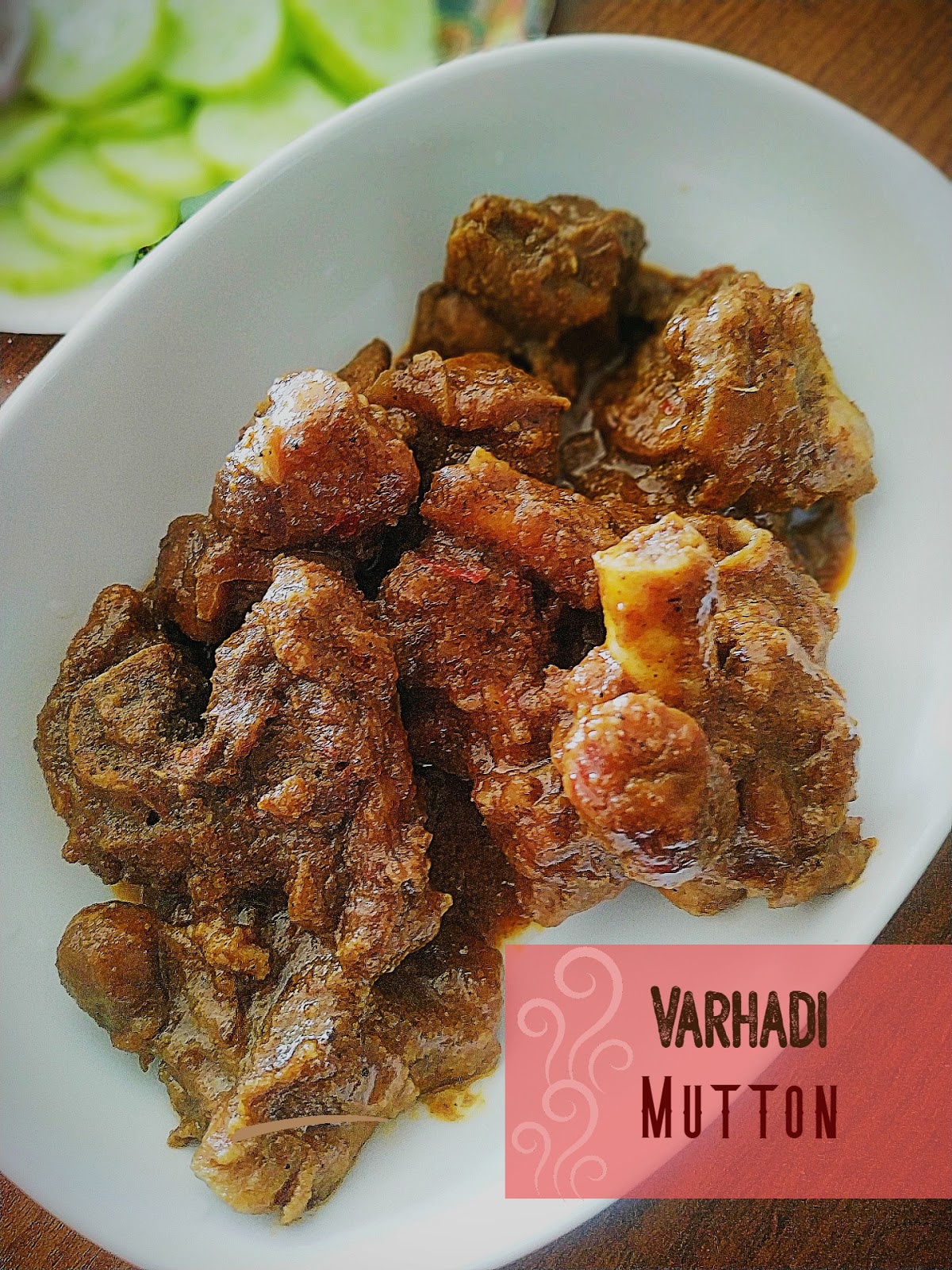
    Varhadi is a dialect of Marathi typically spoken in Vidarbha region of Maharashtra. Vidarbha is the north-eastern region of Maharashtra and is known for its extreme climates - round the year dry weather and  also known for its boldness. This region primarily consists of Amravati and Nagpur. Here  there are two cuisines  "varhadi" and "saoji". Both these cuisines are particularly spicy, and not meant for the faint hearted.

    Saoji is a community which is known for its super spicy non vegetarian food. Varhadi cuisine is a little milder than its counterpart saoji, but it is still on the spicier side. A typical morning in Nagpur would start of with a plate of "tarri pohe",which is served with a thin gravy that is spicy and hot. It is garnished with shev and coriander. Lunch would then comprise of many types of bhaats like - "gola bhaat","pithla bhaat" etc.. Unlike other Maharashtrian cities, rice is pretty staple here and part of both lunch and dinner. The Varhadi or Saoji non vegetarian spicy preparations go very well with these rice dishes.

    Now you might be wondering how come me being a Bengali, I am talking about Varhadi cuisine. Well to tell the truth until this day I was not even aware of the cuisine name let alone the recipe. I have a very good friend who is a certified and a passionate chef. Since mom is visiting me now, he offered to drop by and prepare a very traditional Maharashtrian preparation for us. He didn't tell me what dish he was about to make, just gave me instructions that I should soak some 10-12 odd dry red chillies in hot water for half an hour before he arrived. And of course clean and keep the mutton aside.

    He arrived at my home with a small blue tupperwear container. When I peeked in it looked like a fresh masala paste with a very unique aroma. I couldn't quite place it as to what was giving that different aroma, but it certainly didn't smell like the usual masala that goes into a mutton curry. Then began the cooking. The soaked chillies had to be made into a paste. Mom offered a lending hand and made the paste with the help of sil batta. It is a rectangular shaped rough unpolished stone with a cylindrical, movable stone on top is used to make wet/dry masalas and chutneys in Indian households. All my childhood I have always seen my mom making masala paste with sil batta. But I am devoid of that expertise and rather lousy at it. But I do admit the taste and texture of a sil batta based masala paste and that made in mixer grinder is very different.

    Once the chilli paste was done, the actually cooking started.  I noticed the change in look and feel of the gravy base when the secret paste was added. The flavours were very unique and appetizing. Nothing I had have before. The color was also on the blackish side, which is signature to this cuisine. Finally it was kind of a picnic feel when we all sat down on the floor, placing all the food on top pf newspapers. The whole house was already smelling of the secret masala. I had made Indrayani rice to go with the mutton. Its a special kind of fragrant rice found in this part of the country which I like better than basmati. It needs to be cooked with a little more than required water to give that mushy texture. A dollop of ghee and the mutton tasted like a piece of heaven. It was not until we finished our food that my friend finally gave away the name of his recipe - Varhadi mutton. He also said, this preparation is so very traditional that its hardly found commonly in Pune. Nonetheless here is his special recipe for it.

    Picnic style serving on a newspaper

    Preparation Time : 30 minutes
    Cooking Time: 60 minutes

    Ingredients (for Varhadi Masala):
    • Bay Leaf - 2
    • Dry Coconut -  1/2 grated
    • Cumin Seed - 1 tsp
    • Coriander seed - 1 tsp
    • Stone flower (Dagad Phool) - 2 tbsp
    • Black Pepper - 15-20
    • Black Cardamom - 6-8
    • Caraway seeds (Shah jeera) - 1/2 tsp
    • Clove - 3
    • Nutmeg - 1/2 grated
    • Star Anise - 1
    • Mace - 1
    • Cinnamon - 1 inch
    • Poppy Seeds - 2 tsp
    Ingredients (for gravy):
    • Mutton - 750 gm
    • Dried Red chilli (Beydgi) - 10 to 12
    • Onion - 2 big, finely chopped
    • Garlic - 15-16, finely chopped
    • Ginger - 1 small piece
    • Varhadi Masala - 3 tbsp [paste of everything mentioned under varhadi masala]
    • Curd - 3 tbsp
    • Mustard oil
    • Salt as required

    1. Clean and wash the mutton. marinate it with salt and red chilli powder.

    2. Take all the spices mentioned under Varhadi masala and make into a fine paste with required water. Consistency will be like the picture


    3. Soak the dried red chillis in hot water for about half an hour
    Tip: If you do not have the specific red chilli use any variant of spicy dry red chilli for this

    4. Using sil batta grind the chillis to a fine paste
    Note: You can always grind it in mixer, but the texture from using a sil batta is finer


    5. Chop the onions and the garlic finely

    6. Take a wok, and heat oil. When the oil is smoking add the onion and chilli paste. Add the ginger. Fry it till the onions are softer.

    7. Add the Varhadi masala to it and cook till oil separates.


    8. Switch off the flame and add the curd so as to not curdle it. Notice the rich dark brownish color the masala base acquires. Hence at times it is also called kala masala.


    9. Add the marinated mutton. Fold in. Cook for 15 minutes on medium flame.


    10. Take a pressure cooker and cook for 5-6 whistle or till the required time for mutton to cook.

    11. Open the pressure cooker and transfer the contents back into the wok. Cook till oil floats up for about 5-10 minutes.


    Serve with Indrayani rice, Basmati rice, sweet pulao or any other less spicy rice. If it is Indrayani rice add some desi ghee on top to accentuate the flavours of the mutton when had with the rice. Have a garden salad on the side.


    Cuisine reference link
    Share
    Tweet
    Share
    No comments
    Newer Posts
    Older Posts

    About me

    I am a software engineer by profession and a writer at heart. Born and brought up in Kharagpur, I moved to the city of dreams Mumbai when I got my first job. Till then I had not cooked a single dish in my life. Not even Maggi or tea. My dad had a strong belief that his little princess never will be in a situation where she had to cook for herself. Hence I was not allowed to spend time in the kitchen till I was studying.


    So when I faced the daunting task of living alone, dabbas came to initial rescue. After that I managed a whole year on just boiled vegetables and rice. And then I landed in US. The bounty of fresh produce and cooking ingredients available in the super marts eventually lured me into making my very first meal ever. There was no turning back after that. I finally discovered how much I was in love with cooking and being creative in the kitchen.


    This blog is a humble attempt to present our culinary heritage to one and all and document some of the very traditional recipes which gets passed on through generations just by word of mouth.


    So just sit back with a cup of tea or coffee and enjoy the curries and the stories related to each.


    Follow Us

    Footprints

    Blog Archive

    • ▼  2026 (4)
      • ▼  May (1)
        • A Suitcase Full of Stories: My Heartfelt Shopping ...
      • ►  January (3)
    • ►  2025 (3)
      • ►  December (1)
      • ►  June (1)
      • ►  February (1)
    • ►  2024 (21)
      • ►  December (2)
      • ►  September (1)
      • ►  August (3)
      • ►  July (4)
      • ►  May (2)
      • ►  April (5)
      • ►  March (3)
      • ►  January (1)
    • ►  2023 (7)
      • ►  December (2)
      • ►  November (1)
      • ►  October (1)
      • ►  May (1)
      • ►  March (1)
      • ►  January (1)
    • ►  2022 (18)
      • ►  September (1)
      • ►  August (2)
      • ►  July (2)
      • ►  June (3)
      • ►  April (1)
      • ►  March (3)
      • ►  February (2)
      • ►  January (4)
    • ►  2021 (60)
      • ►  December (5)
      • ►  October (5)
      • ►  September (5)
      • ►  August (7)
      • ►  July (6)
      • ►  June (5)
      • ►  May (3)
      • ►  April (4)
      • ►  March (6)
      • ►  February (6)
      • ►  January (8)
    • ►  2020 (55)
      • ►  December (5)
      • ►  November (3)
      • ►  October (10)
      • ►  September (7)
      • ►  August (7)
      • ►  July (9)
      • ►  June (3)
      • ►  May (9)
      • ►  March (1)
      • ►  January (1)
    • ►  2019 (3)
      • ►  November (1)
      • ►  April (1)
      • ►  January (1)
    • ►  2018 (1)
      • ►  December (1)
    • ►  2017 (4)
      • ►  December (2)
      • ►  November (1)
      • ►  September (1)
    • ►  2016 (10)
      • ►  August (1)
      • ►  July (2)
      • ►  June (5)
      • ►  April (1)
      • ►  March (1)
    • ►  2015 (10)
      • ►  December (1)
      • ►  August (1)
      • ►  June (1)
      • ►  May (2)
      • ►  April (4)
      • ►  March (1)
    • ►  2014 (22)
      • ►  November (2)
      • ►  August (2)
      • ►  July (3)
      • ►  June (2)
      • ►  May (4)
      • ►  April (3)
      • ►  January (6)
    • ►  2013 (22)
      • ►  November (2)
      • ►  October (4)
      • ►  September (5)
      • ►  August (2)
      • ►  July (1)
      • ►  June (1)
      • ►  May (2)
      • ►  April (1)
      • ►  March (1)
      • ►  February (2)
      • ►  January (1)
    • ►  2012 (31)
      • ►  December (4)
      • ►  October (3)
      • ►  September (8)
      • ►  July (1)
      • ►  June (1)
      • ►  May (14)
    • ►  2010 (9)
      • ►  July (3)
      • ►  June (2)
      • ►  April (1)
      • ►  March (2)
      • ►  February (1)
    • ►  2009 (4)
      • ►  February (2)
      • ►  January (2)

    recent posts

    Pinterest Board

    Popular Posts

    • Champaran Mutton / Ahuna Mutton - A Bihari Delicacy
        When I finish a long week of work, self doubt, frustration of dealing with people and finally when the weekend comes, I feel cooking somet...
    • Khandeshi Kala Masala - Kala Mutton Masala
        25 September Maharashtra is a land of unique local flavours. And still it is mainly known for its Vada Pavs, poha, pav bhaji and modaks. I...
    • Kochur Dum / Kochur Dalna / Arbi Masala/ Taro or Colocasia Curry
      August 19 Kochu or taro is one of my favorite vegetables. It is as versatile as potato only much more tasty. It is equally starchy an...
    • Tetor Macher Jhol (Bitter Gourd Fish Curry)
      Anything Bitter hardly finds takers. Same applies for Bitter Gourd. As a kid I hated bitter gourd in any form. Grown ups around me would...
    • Macher Bhorta | Fish Bharta | Mach Makha| Bengali Style Mashed Fish
        October 18 Bhortas or bharta as we call it in pan India, are the quintessential Bengali food, a staple in Bangladeshi cuisine. They are th...
    • Complete Details to plan your ISKON Mayapur Visit
      Radha Madhav during Pushya Abhishek on 6th Jan 2023 First of all wish you a very happy new year. I have been away from blogging for a while ...
    • Kumro Phool bhaja (Pumpkin Blossom fritter) and a Jade trip of Konkan in rains
      Rains , Lush green forest laden mountains, Cascading milky white waterfalls, cloud filled valleys, Turbulent coastlines,...
    • Varhadi Mutton - A Traditional Vidharba Cuisine
      Varhadi is a dialect of Marathi typically spoken in Vidarbha region of Maharashtra. Vidarbha is the north-eastern region of Maharashtra ...
    • Golda Chingri Malaikari (Giant River prawns in coconut milk gravy)
      One of the main reasons I love Kolkata is because of the fish we get here. Its so fresh and one can get restaurant grade fish quality even i...
    • About Slow Travel | Spice2Nuts - a spice initiative by Harish Bali (Visa2Explore)
      Moments from my travels - 1. Forest in Meghalaya 2. An old boat in Shnongpdeng 3. Fish Mint 4. Local Cinnamon  Traveling has always been a p...

    Liebster Award

    Liebster Award

    Very Good Recipes

    Very Good Recipes

    You can find my recipes on Very Good Recipes

    Contact Us

    Name

    Email *

    Message *

    Pages

    • Travelogue Index
    • VEGETARIAN RECIPE
    • CHICKEN RECIPES
    • SEAFOOD RECIPES
    • MUTTON RECIPES
    • RICE RECIPES
    • EGG RECIPES
    • DAAL RECIPES
    • ROTI & PARATHA RECIPES
    • BAKING RECIPES
    • SWEET RECIPES
    • SNACKS RECIPES
    • SIDES RECIPES
    • SOUP RECIPES
    • SALAD & BOWLS RECIPES
    • ROASTED RECIPIES
    • JAM & PRESERVE RECIPES
    • BEVERAGE RECIPES
    • SAUCES, SPICES & CURRY BASE RECIPES
    • CHUTNEY & DIPS RECIPES
    • FESTIVE RECIPES
    • Contact Us
    • TRAVELOGUES OF EAST INDIA
    • TRAVELOGUES OF WEST INDIA
    • TRAVELOGUES OF SOUTH INDIA
    • TRAVELOGUES OF NORTH INDIA
    • TRAVELOGUES of ASIA
    • North East Recipe

    This Blog is protected by DMCA.com

    DMCA.com for Blogger blogs
    FOLLOW ME @INSTAGRAM

    Curries n Stories © 2020 All rights reserved.
    Created with by BeautyTemplates