• Home
  • Recipes
    • Vegetarian
    • Seafood
    • Snacks
    • Chicken
    • Mutton
    • Egg
    • Roti & Parathas
    • Dessert
    • Sides
    • Soups
    • Salad & Bowls
    • Rice
    • Daal
    • Bakes
    • Roasted
    • Beverages
    • Sauces, Spices & Curry Base
    • Chutney & Dips
    • Festive Recipes
  • Cuisine
    • Bengali
    • Maharashtrian
    • Rajasthan
    • Punjab
    • Chennai
    • Andhra
    • Mangalore
    • Mughlai
    • Kashmiri
    • Chinese
    • Singapore
    • Mexican
    • Continental
    • Italian
    • French
    • American
    • Thai
    • Bangladeshi
    • Arab & Persia
    • North East
  • Meal Type
    • Breakfast
    • Lunch
    • Dinner
    • Snacks
    • Dessert
    • Appetizer
    • Accompaniments
  • How To
    • Preservation Techniques
  • Travel
    • East India
    • West India
    • North India
    • South India
    • Asia
    • America
  • Lifestyle
    • Craft & Creation
    • Experiences
  • Musing
  • Contact
  • Bengali Blogs

Curries & Stories

pinterest facebook twitter instagram tumblr linkedin

Hilsa Fry, Ilish Mach Bhaja

If there's one dish that can make any Bengali's heart skip a beat, it's Ilish Mach Bhaja. The mere mention of it evokes a wave of nostalgia, reminding us of home, family gatherings, and the monsoon rains tapping against the windows. Ilish, or Hilsa, isn't just a fish; it's a sentiment deeply ingrained in Bengali culture. And when it comes to Ilish Mach Bhaja, it's more than just a dish—it's an experience.

Growing up, the first heavy downpour of the season was always met with a buzz of excitement at home. The rain meant that the Ilish season was officially upon us, and soon the markets would be brimming with fresh, glistening Hilsa. The weekend morning would start with a trip to the local fish market, where my father would haggle with the fishmonger to get the freshest Ilish and other fishes.

Not every Hilsa makes the cut for that perfect Ilish Mach Bhaja. There are certain nuances that every Bengali knows, passed down through stories and experiences. A good Hilsa has to be just the right size—not too small, not too big, but just enough to give you those luscious cuts with that perfect marbling of fat. Yes, fat—because a good Hilsa is oily, and that’s where half the flavor comes from.

As a kid, I would sit around the kitchen, impatiently waiting for that moment when the first piece of Ilish would hit the hot mustard oil in the pan. The aroma would fill the entire house, making it impossible to wait until lunch. 


Hilsa Fry, Ilish Mach Bhaja


The Art of Frying Ilish

Making Ilish Mach Bhaja isn't just about tossing the fish into the pan and hoping for the best. There's a certain finesse to it, a delicate balance that needs to be achieved to get that perfect golden crust while keeping the fish tender and juicy inside.

First, the fish is marinated lightly with turmeric and salt, allowing the natural flavors to shine through. Mustard oil is a must here—no other oil can give you that sharp, pungent flavor that complements the richness of the Ilish. The oil is heated until it's just shy of smoking, and then the fish is gently lowered into the pan. The key is to resist the urge to flip the fish too soon. Let it develop that beautiful crust before turning it over. And once it's done, you let it rest for a minute, allowing the oil to drain off, and then you're ready to dig in.

Hilsa Fry, Ilish Mach Bhaja
View from my home in rains


Rains, Ilish & a Sense of Comfort

There’s something almost poetic about enjoying Ilish Mach Bhaja on a rainy day. The pitter-patter of raindrops, the cool breeze that carries the smell of wet earth, and the sizzle of Hilsa frying in mustard oil—all these elements come together to create an experience that’s nothing short of magical.

Rainy days are also when Ilish tastes the best. Some say it’s the freshness of the fish, others say it’s the chill in the air, but I believe it’s the nostalgia. It’s the memories of sitting by the window, watching the rain, while the aroma of frying Ilish wafts through the house. It’s the stories shared around the dining table, the laughter, the love, and the sense of togetherness that make the experience complete.

For many Bengalis, the monsoon isn’t just a season—it’s a ritual, and at the heart of that ritual is Ilish Mach Bhaja. It’s comfort food in its truest sense, a dish that warms you from the inside out. The crispy, golden exterior of the fish contrasts beautifully with the soft, delicate flesh inside, creating a texture that’s as comforting as it is satisfying.

On those rainy afternoons, when the world outside is a blur of grey and green, there’s nothing better than sitting down to a plate of steaming hot rice, a piece of perfectly fried Ilish, and maybe a drizzle of ghee. Add a side of mashed potatoes or some mustard greens, and you’ve got yourself a meal that’s simple yet profoundly fulfilling.

The First Bite: A Symphony of Flavors

There’s something almost magical about the first bite of Ilish Mach Bhaja. The crisp exterior gives way to the tender, flaky flesh inside. The flavor is rich, with a slight bitterness from the mustard oil that perfectly complements the sweetness of the fish. And then there’s the subtle heat from the turmeric, which rounds out the dish beautifully.

Pair it with some hot, steaming rice and a drizzle of ghee, and you have a meal that’s nothing short of divine. It's the kind of food that makes you close your eyes and sigh with contentment.

For me, Ilish Mach Bhaja is more than just a dish. It's a connection to my roots, a bond with my past. Every time I make it, I’m transported back to those lazy Sunday afternoons, the sound of the rain outside, and the warmth of my family around the dining table. It’s a dish that tells a story—a story of tradition, of love, and of the simple joys of life.

So, if you ever get the chance to taste Ilish Mach Bhaja, take a moment to savor it—not just the flavors, but the history and the emotions that come with it. Trust me, it’s an experience you won’t forget.

Hilsa Fry, Ilish Mach Bhaja


The art of slowing down with Ilish

In a world that’s always rushing, the ritual of preparing and enjoying Ilish Mach Bhaja during the monsoon is a reminder to slow down. It’s about taking the time to appreciate the little things—the smell of rain, the taste of fresh fish, the company of loved ones. It’s about celebrating the moment, the season, and the traditions that make us who we are.

So the next time it rains, and you find yourself craving something special, think of Ilish Mach Bhaja. Whether you’re a seasoned Ilish lover or someone trying it for the first time, let the rain and the fish create a moment of joy and connection, just as they have for countless generations before. Because, after all, there’s nothing quite like the taste of Ilish on a rainy day.

Preparation Time : 5 minutes
Marination Time : 30 minutes
Cooking Time : 5-8 minutes 

Serves - 1 or 2 adults

Ingredients :

  • Hilsa Fish pieces (Peti) - 2
  • Turmeric - 1/2 tsp
  • Green Chilis ( as side) - 2
  • Mustard Oil - 1/4 cup
  • Salt as per taste
Procedure :
  1. Cut and wash the hilsa pieces, pat dry
  2. Now marinate the fish with salt, turmeric powder and 1 tsp mustard oil for about 30 minutes.
  3. Heat mustard oil in a pan, when the oil is smoking carefully slide in the marinated fish pieces. Fry evenly till the edges turn slightly brown and crispy. Flip over the fish and repeat. 
  4. Don't throw away the leftover oil in the pan, because that oil has a lot of flavor from the fish. You can pour it over steamed rice and have it along with the fish for the best flavors. 
Serve it with steamed rice, the leftover mustard oil from frying the hilsa fish, some fried green chilis, mash everything and enjoy. That's the most traditional way of enjoying a hilsa fish fry. You can also pair it with mashed potato and dal if you want.

Hilsa Fry, Ilish Mach Bhaja


Share
Tweet
Share
No comments
Bhutanese Meal

I wanted to recreate some of the amazing traditional recipes that we tasted in Bhutan. And when I say traditional, I don't mean the set menu that you get in the traditional restaurants in Thimpu. For me traditional means, the meal you are served in a farmhouse, following a farm-to-table concept. So if you are planning for a Bhutan trip and a farmhouse meal is not yet considered in your itinerary, then you better do because otherwise you will miss out on experiencing the charm of having food with the locals in their house with the ingredients they source directly form their farms. 

Traditional Bhutanese Meal

A traditional Bhutanese meal recreated by yours truly with as many sides as I could make in a single day! The meal I prepared today had the following items:

  • Chili Potato Stir Fry
  • Chicken with Bhutanese Chili Powder - Stir fry
  • Asparagus Stir fry
  • Brinjal stir fry
  • Chili Onion Salad with Cheese
  • Rice

All of these dishes take maximum 15-20 minutes to prepare and are super easy. I will have a separate series of blogs on the vegetarian and non-vegetarian Datshis that I made at home.


Traditional Bhutanese meal


Chili Potato Stir Fry

Preparation Time : 5 minutes 

Cooking Time : 15 minutes 

Serves - 1 adult

Ingredients :

  • Potato - 1 medium
  • Bhutanese Chili powder / Red Chili Powder - 1/2 tsp * ( can be adjusted)
  • Butter - 2.5 tsp
  • Oil - 1 tsp
  • Salt as per taste
Procedure :
  1. Cut potatoes into thin flat shapes ( Refer to image) and wash them well
  2. Now boil some water and blanch these potatoes for 2 minutes
  3. Discard the water and separate out the blanched potatoes
  4. Now in a pan heat 2 tsp of butter. Keep the flame on medium so as to not burn the butter. Once the butter melts, add 1/2 tsp of Bhutanese red chilli powder or any chilli powder.
  5. Add the blanched potatoes and coat them in the butter chilli sauce. Add salt. Add Sichuan pepper powder ( optional). Cook this for 5 minutes till potatoes are done. You can add a little water if you feel the potatoes are sticking to the pan. And that's it, a super simple potato side to go with rice.
    Traditional Bhutanese Meal

Chicken with Bhutanese Chili Powder - Stir fry

Preparation Time : 10 minutes 

Cooking Time : 20 minutes 

Serves - 1 adult

Ingredients :

  • Chicken - 300 gm
  • Bhutanese Chili powder / Red Chili Powder - 1/2 tsp * ( can be adjusted)
  • Dry Red Chili ( whole) - 2
  • Onion - 1 medium, sliced
  • Butter - 2 tsp
  • Oil - 1 tsp
  • Salt as per taste
Procedure :
  1. Cut chicken on the bone into bite sized pieces. You can use boneless chicken too. Wash and keep the chicken aside.
  2. Now heat some water in a vessel and add a spoon of salt. When the water comes to a rolling boil, drop in the chicken pieces. Let the chicken pieces be in the water for 2 minutes. Turn off the heat and strain the water and chicken in two different bowls and keep the water aside, we will use it later.
  3. Now heat a pan and add 3 tsp of butter and 1 tsp of refined oil. When the oil is hot, temper it with dry red chili. Once fragrant add the sliced onions and let it fry till pinkish.
  4. Now add the boiled chicken pieces and 1 tsp of Bhutanese chili powder or any chili powder. Toss everything well and let the chicken fry for about a minute.
  5. Now add about 1/2 cup of the reserved water and cover and cook. You can repeat adding a little water until the chicken is soft and cooked.
  6. Now remove the cover and dry out any excel water till the oil releases.
  7. Serve it hot with steamed rice. Best served with Bhutanese red rice.
Traditional Bhutanese Meal

Asparagus Stir fry
This asparagus stir-fry with garlic and butter is one of my favorite side dishes. Please note the Bhutanese version uses very tender spears of Asparagus which are in season in summer and tastes amazing.

Procedure :

Preparation Time : 5 minutes 

Cooking Time : 15 minutes 

Serves - 1 adult

Ingredients :

  • Asparagus - 250 gm
  • Garlic - 4 cloves, minced
  • Butter - 2 tsp
  • Oil - 1 tsp
  • Salt as per taste
Prepping
  • You need to separate the tough ends of the Asparagus before you cook them. The easiest trick for this is to remove the white or pale green/pink part of each spear, then rinse the spears under water and pat them dry.  
  • Asparagus cooks very quickly in the pan, so be sure to get your sauces ready before you start cooking the Asparagus. 
  • Mince the garlic finely.
Cooking
  1. Add refined oil to the pan and when the oil is hot, add the minced garlic and cook for a minute or two until it is fragrant. Add 1/2 tsp of chili flakes and toss in the oil. 
  2. Next add the asparagus and salt as per taste. Stir every 30-40 seconds to ensure each side of the Asparagus gets enough time to be in direct contact with the hot pan. Cover and cook, the Asparagus will get cooked in its own moisture, but if you feel they are sticking, sprinkle a few drops of water in between. The Asparagus usually gets cooked in 4-5 minutes. 
  3. When you are stir frying, you need to keep a close watch on the spears. Keep testing the spears during the cooking process, so you wont pull them out too early or you don't overcook them turning it into a mush.
  4. Add 1 tsp of butter before finishing the dish, let the butter melt in the pan and coat the fried Asparagus evenly.
Transfer to a plate and enjoy immediately while they are still hot for the best taste.

Traditional Bhutanese Meal

Brinjal stir fry
Tender brinjals which have no/ very less mature seeds are best for this preparation. We saw these long and tender brinjals everywhere in their vegetable markets which were completely seedless. The local name for Eggplant/ brinjal is "Dolom".


Procedure :

Preparation Time : 5 minutes 

Cooking Time : 10 minutes 

Serves - 1 adult

Ingredients :

  • Brinjal/ Eggplant ( preferably tender and thin) - 100 gm
  • Rice Flour - 2 tsp
  • Corn flour - 4 tsp
  • Sichuan Pepper - 1/2 tsp, finely crushed ( Optional)
  • Black Pepper powder - 1/4 tsp
  • Salt as per taste
Procedure :
  1. Wash and clean the brinjals.
  2. Cut the eggplants into thin long slices.
  3. Now make a slurry of corn flour, rice flour, salt and Sichuan pepper powder ( optional) or black pepper powder. The slurry will be slightly runny in texture.
  4. Heat oil in a wok enough for deep frying the brinjals.
  5. Now dip each of the brinjal slices in the slurry so as to coat them properly and slowly slower them into the hot oil. Fry till the outer layer is crispy
Serve immediately with steamed rice.

Traditional Bhutanese Meal

Chili Onion Salad with Cheese

Procedure :

Preparation Time : 5 minutes 

Serves - 1 adult

Ingredients :

  • Onion - 1/2 medium
  • Green Chili - 1, chopped
  • Tomato - 1/2 , medium
  • Cheese - 20 gm or 1 slice
  • Salt as per taste
Procedure :
  1. Chop onions, green chilli and tomato
  2. In a mixing bowl add the chopped onions, green chilli, tomato and add salt as per taste
  3. Now crumble some cheese and give it a nice mix
Serve it with your Bhutanese meal.
Share
Tweet
Share
No comments


My maid Savita has been making lunch for me from the past several months now. Not that I don't like to cook now-a-days. But every work from home working lady knows how challenging it becomes to prepare meals three times a day while you juggle a 10-12 hour work life also. Hence just to balance the yin and yang of cooking in my life, I have outsourced the lunch prep to my maid. 

The obvious question is has that really reduced my efforts in the kitchen ? The answer is both Yes and No. When I was managing my lunch, on days I didn't feel like cooking, I would just whip up some shortcut meals like leftover dishes from the past night or just make extra poha in breakfast and have the same in lunch. But now I am forced to start my day thinking what Savita needs to cook that day. If I happen to forget getting the vegetable she will be making, then there is an additional mad rush to get it delivered through any of the 15-minute delivery apps before my maid arrives. 

I want to have rotis in lunch but making them was always a pain for me, that was perhaps the strongest reason for me to think about getting a cook to make lunch. And while she is at it, I thought alright lets ask her to make the subzis as well, that way no leftovers from last night, I would always eat fresh - the first step to keep one healthy!

It didn't take me long to realize the fallacies of my decision. I had probably envisioned having something similar to what my palate was used to. But I was wrong. The inherent Marathi mulgi inside Savita was confused at my food requests like peyaj potoler , kundrur torkari, shada alu, khichudi, fulkopir torkari etc. I realized, just like I don't speak Marathi organically, Savita also doesn't speak my food language.  Most of the dishes she made had an unmissable amount of ground peanuts or like 3 cups of oil floating lavishly on top or the generous usage of chilly that would start a raging fire in my mouth. 

I was confused. I had tried food items from the boxes of my Marathi colleagues when we used to go to office everyday and still fondly remember the rustic taste of the Thalipeeth, the earthy notes of shepu bhaji or the comforting sabudana khichdi. Not to mention the delicious chicken curries. And none of these had any overpowering seasoning or spices. But the Marathi dishes that Savita was dishing out were making me contemplate my life decisions. Something had to be done and fast. I decided to teach her a thing or two especially about the seasoning and spice levels. Fortunately around this time my mom came down to Pune and I entrusted her the role of cooking teacher for Savita. 
While I would be sitting on conference call in my room, I would hear the daily banter of these two ladies from the kitchen, some of them borderline hilarious. After almost 3 months of scolding's and handholding Savita learnt to make some of the Bengali recipes. She also learnt more more thing, that at times we add a pinch of sugar in our dishes to balance. She also learnt to make smaller rotis which I preferred. The only catch was, I needed to keep repeating the recipes she had learnt, otherwise she would forget.

There were occasions when Savita would bring some special food cooked at her home - like ridge gourd gravy, capsicum gravy, masala baigan, spicy lauki subzi to name a few and I really loved them! So it was not that she didn't know to cook good stuff, its just that I discovered that she didn't want to spend much time cooking at my home as she wanted to wrap it up quickly just like how she finished her jhadu-poocha job at my home. I had to again council her and explain that if I was paying her a separate salary for cooking then she needs to devote appropriate time for the same. She probably understood I am still not sure, but I do see her giving time to this work now-a-days. But as you might have guessed by now, depending on a house help for anything comes with its own challenges and at times makes you feel you were better off doing it yourself. So as of now my bitter-sweet journey with Savita's cooking is going on till I decide on otherwise. 

The monsoons are already in, so one of these days I felt like having begun pora with roti. Begun Pora  is basically a mash of charred brinjal with some additional aromats. The northern part of India knows this by the name of Baigan bharta, but let me tell you there are several differences between a Begun Pora and a Baigan Bharta. First, we do not cook the the charred baigan mash again which is usually done for baigan bharta. Secondly I have seen people adding turmeric to Baigan bharta, but it is not added in a Begun Pora as turmeric would subdue the organic smokey charred flavor of the roasted Baigan. Its a very lazy kind of dish where you let the fire do all the hard work. I told Savita to make the rotis while I setup the brinjal to roast. I knew she wouldn't have the patience to roast the brinjal to perfection so I didn't want to leave the job to her.  Plus, the final finishing has to be done with a generous drizzle of mustard oil and a final mash to blend in everything harmoniously. Though its typically eaten in the winter months but monsoon in Pune is colder than winters. So I enjoyed the smokey rustic plate of deliciousness with the handmade rotis while it rained outside. 


Preparation Time : 15 minutes 

Cooking Time : 15 minutes 

Serves - 2 adults

Ingredients :

  • Brinjal - 1 Medium 
  • Garlic cloves - 10
  • Tomato - 1 medium
  • Onion - 1 medium, finely chopped 
  • Green Chilies - 1 finely chopped
  • Cilantro - half a cup loosely packed, finely chopped
  • Mustard Oil - 2 tsp
  • Salt to taste


Procedure :

1. Wash and pat dry the brinjal. Make deep slits all over the surface of the brinjal.
Tips: To ensure your brinjal is not having any mature seeds always select brinjals which feel lighter. 

2. Now carefully stuff each slit with a garlic clove ( the slits need to be deep enough so that you can push the garlic cloves completely inside).

3. Place the brinjal on an open flame and keep turning occasionally until the outer skin is completely charred and flaking. 

4. Place the charred brinjal in a plate and let it cool down

5. This is an optional step. I wanted to add a slight tanginess to the bharta hence I roasted the tomato as well. cut the tomato into quarter. Take a roasting net and place the tomatoes skin side up. Keep turning the tomatoes to get a uniform char all over. Let it cool down as well.

6. In the meantime finely chop the onions, cilantro and green chilli. 

7. Peel the skin off the eggplant and the tomato while they are still slightly warm as it will be easier to do.

8. Now chop the eggplant and tomatoes with a knife

9. Add the chopped onion, cilantro, green chilli, salt and mustard oil to the chopped eggplant and tomato.

10. Now is the time to use your hands as its traditionally done to mash everything up nicely. But if you don't want to use hands then use a masher or a fork to bring everything together. 

I like to serve begun pora with freshly made rotis or Indian flatbreads but you can enjoy it with steamed rice also.
Share
Tweet
Share
No comments

Gande te maaz


One of the most fascinating aspects of Kashmir is its food and especially the similarity in taste with Bengali cuisine at times. The beautiful subtle flavors of Kashmir perfectly gel with a Bengali palate. At least I have felt so after visiting Kashmir 3 times in a row.

Even 5-6 years ago when I used to travel I never felt the urge to explore regional cuisine in depth. I was a food back then as well, but still food was part and parcel of the journey, I never realized how much more I can learn about a specific place through its cuisine. During the covid times I think I revisited my passion for understanding food and its impact on our culture. Being locked at home I started taking food photography seriously, every element that goes into telling an intrinsic story about the food on the plate. And around the same time I also got really hooked onto a few travel blogger channels on Youtube who would also showcase the food of the region during their travel. One such blogger is Harish Bali. My mom was the first one to introduce me to his videos. His videos were very interesting and at the same time the kind of effort he put to know about some of the very authentic dishes of the place was truly intriguing. That was the first time I realized what I have been missing on my travels. Just to research about the sightseeing places and just having food on the go is not enough to immerse in the culture of that place. I need to experience their food and ingredients that gives the cuisine of the place unique characteristics. His Meghalaya series was like an epitome of experiencing local food. And that was one of the reasons after the covid regulations eased up my first visit was to Meghalaya and I kind of tried everything Mr Bali had spoken about in his blog series. That experience kind of opened up a new perspective in front of me. I started looking at travels in a new way.

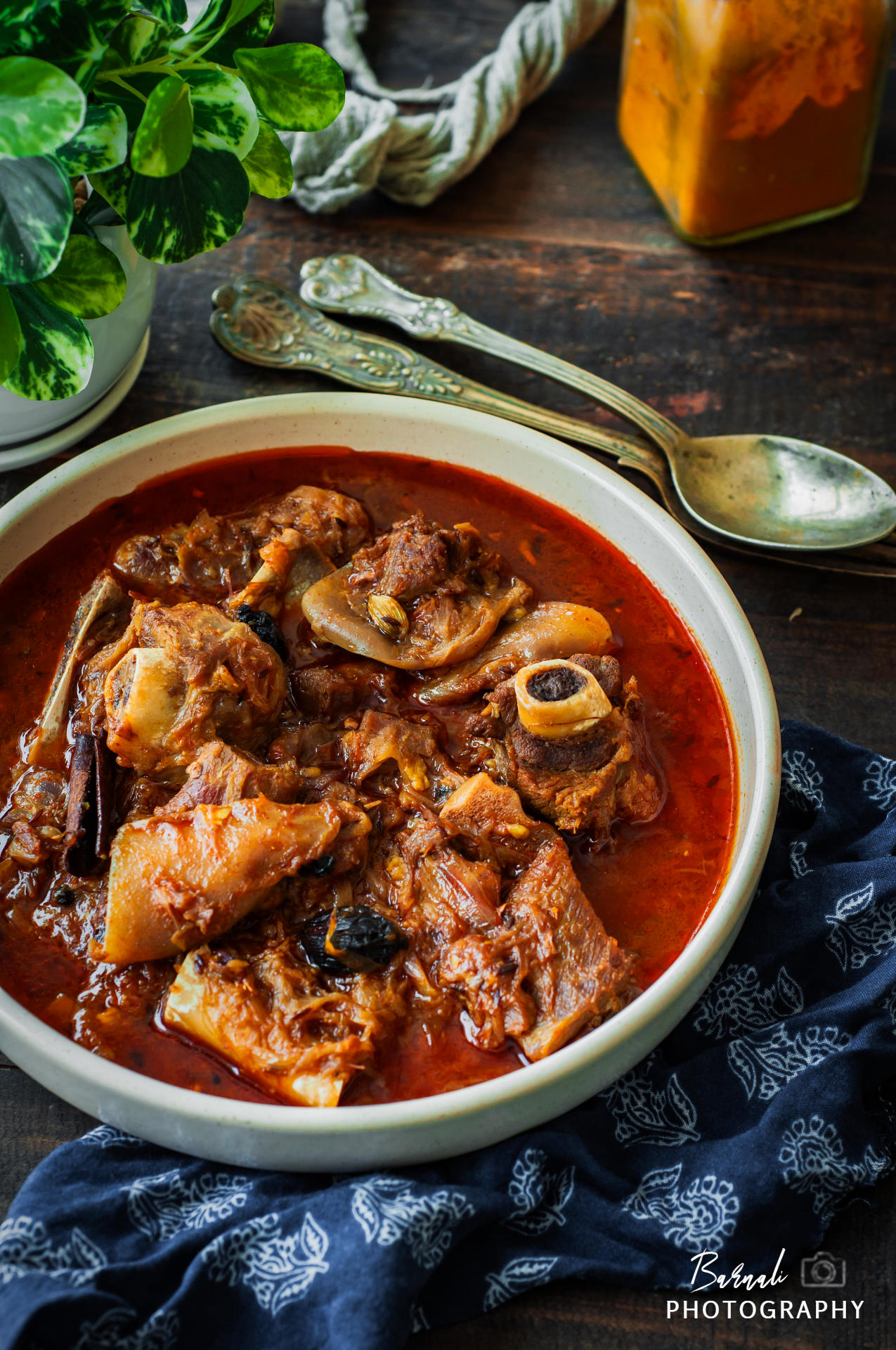
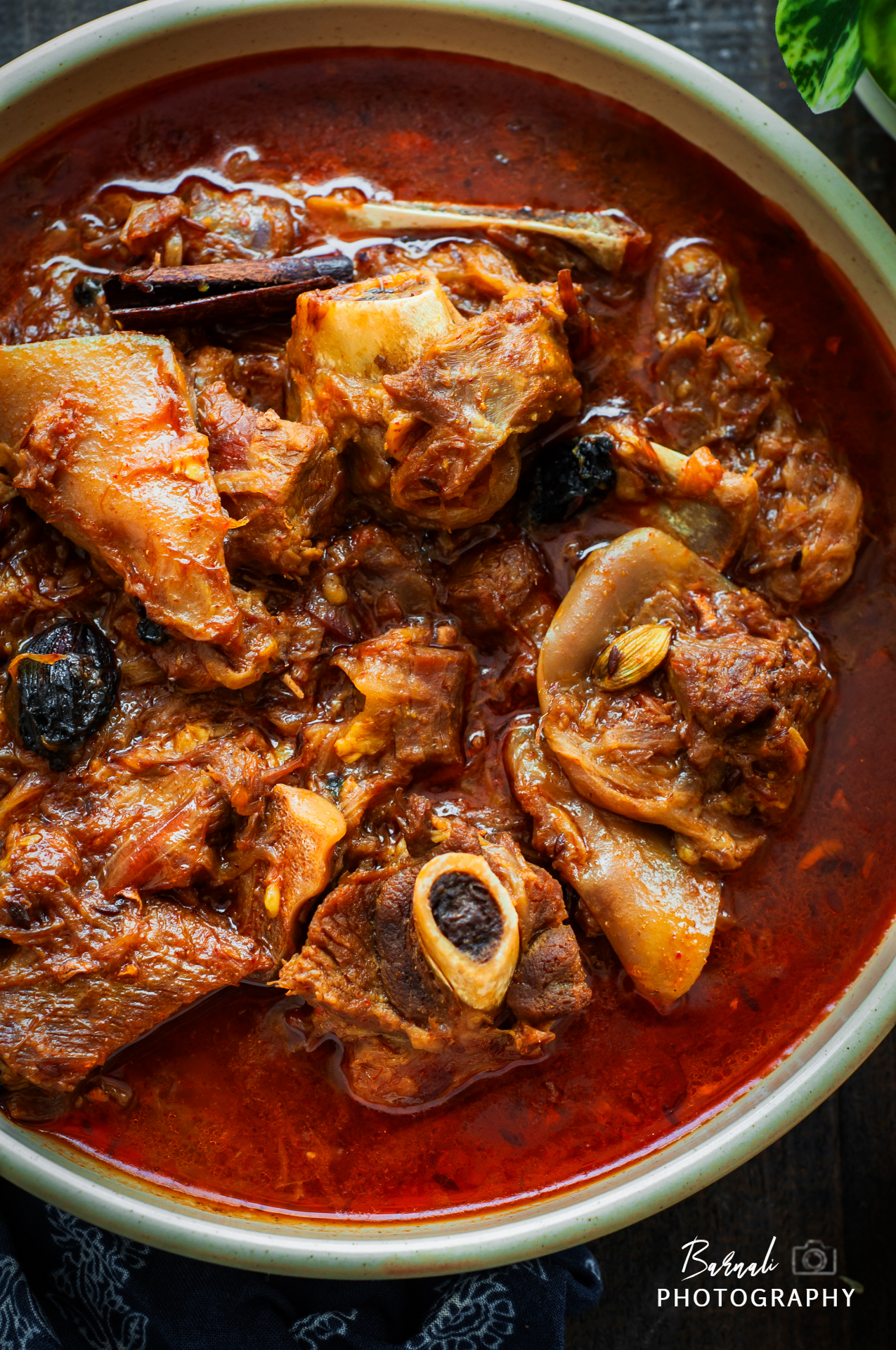
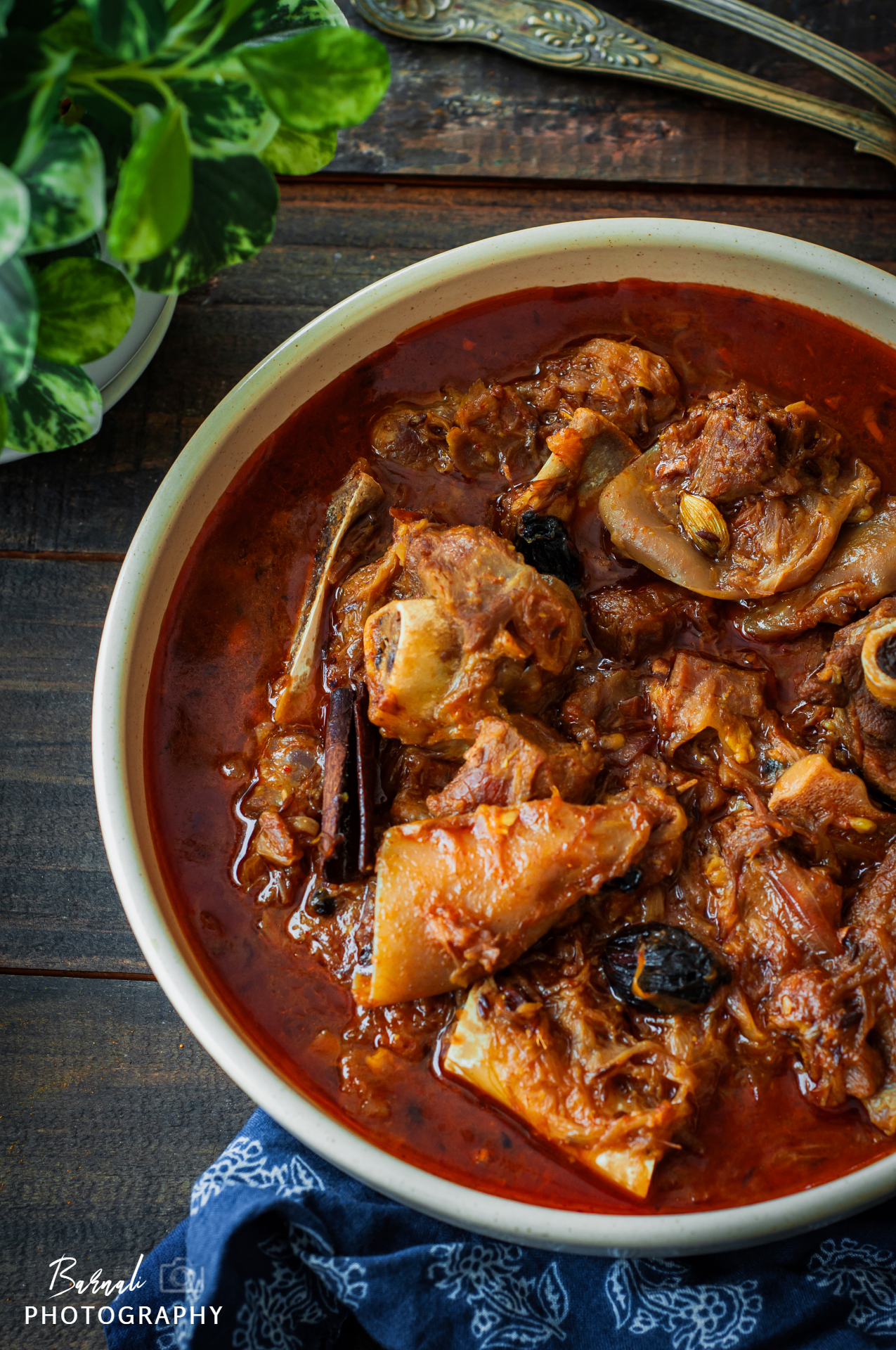
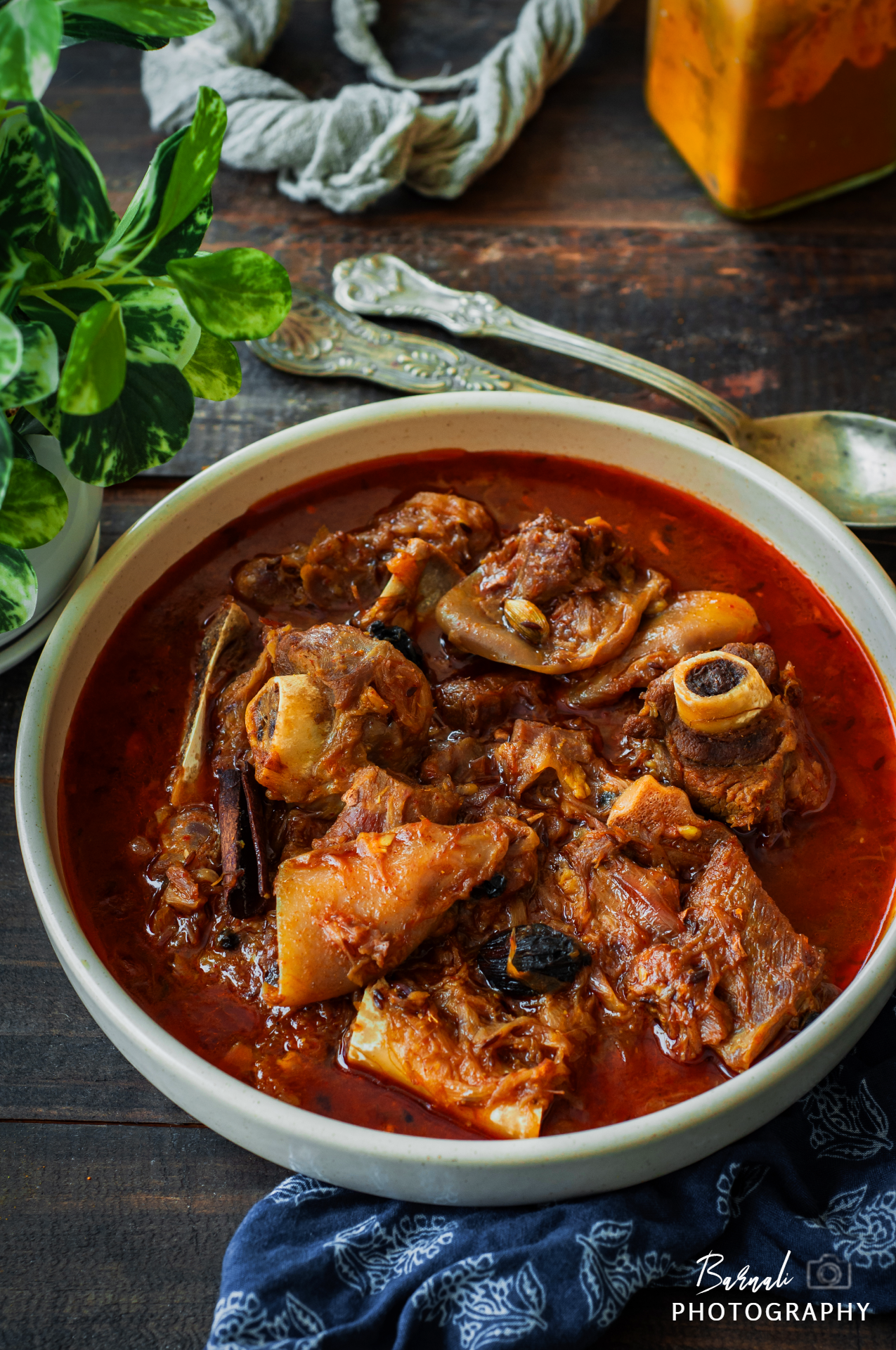
Gande te Maaz, Kashmiri Mutton Curry
 

My next destination was Kashmir. And along with the places I am going to see, I consulted many travel forums on what food I should be trying out where. The first trip blew my mind in terms of the very simplistic and rustic food we experienced in the most remote parts of Kashmir. It was very much like our own food, incorporating a lot of fresh vegetables, very mild on the spices, aroma and flavors still uplifting the core essence of Kashmiri cuisine. That trip made us fall in love with haak saag more than anything else. The second trip was a more educated one. I was already aware what to expect and this time I wanted to experiment more. We tried Kashmiri Trout in one of the best cafes in Pahalgam and absolutely fell in love. Tried tabak maaz, nun chai, sheermal, mutton rogan josh, homely spread at our Driver's home, apple juice ( Read all about these experience in Part 1 & Part 2 ) and a bunch of other local favorites. We learnt techniques how they prepare their meat for various dishes. Removing impurities from the meat by blanching for a few minutes is one of the very essential steps in any meat or non veg recipes. We also learnt how adding a little baking soda would help in retaining the color of the vibrant haak saag. We also learnt that Black cardamom and fennel powder were the two core ingredients added to almost every single dish here which gave the preparations its characteristic sweet delicate aroma. While it may sound weird that the so called garam masalas are used in even preparing the saag, but if you have tried the saag preparations of this region you will definitely start loving them for that unique flavor. 

The 3rd trip to Kashmir was more like retracing a few known cuisines and falling for them all over again. You might be surprised to know I didn't really enjoy the whole wazwan as it was too heavy for us to enjoy a full course. But having said that we loved a few particular dishes from the wazwan which I also tried recreating once back home. I will soon talk about the Dum aloo recipe which I have made over and over again! 

Among the mutton preparations Rogan Josh definitely tops the chart. I had also uploaded the Kashmiri Pandit version of the recipe on my blog long ago which is equally delicious. The next one would be Mirchwangun Korma which I liked. Somehow the white gravy based mutton dishes of this region couldn't win me over yet. Now that again maybe because I have tried it only in the hotels so far. Maybe if I can get an opportunity to taste it in any homestay or any local's home my perception would change. I would definitely look for travelling many more times to Kashmir just to explore unseen places and experience more of their not so popular food items.

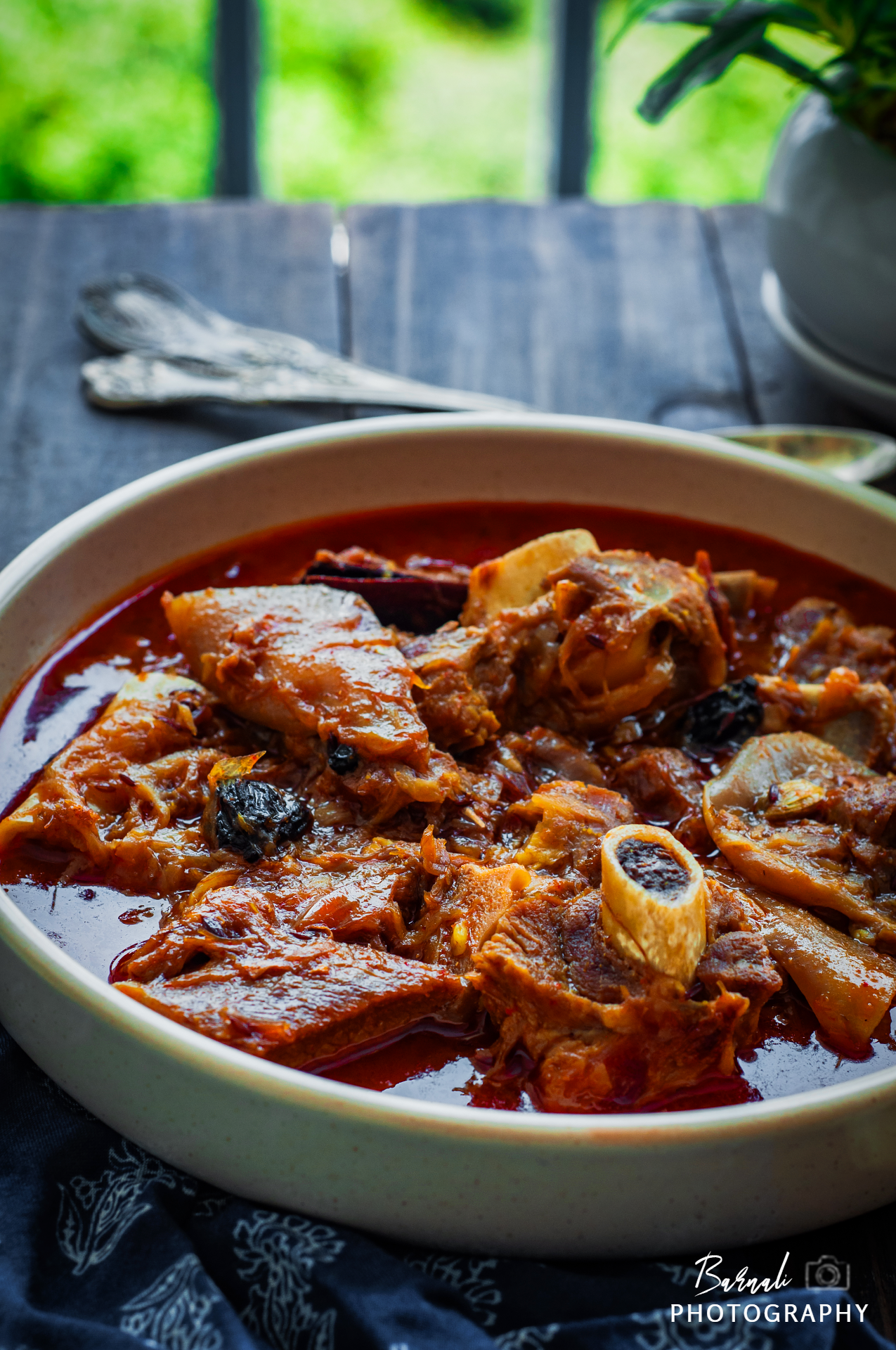
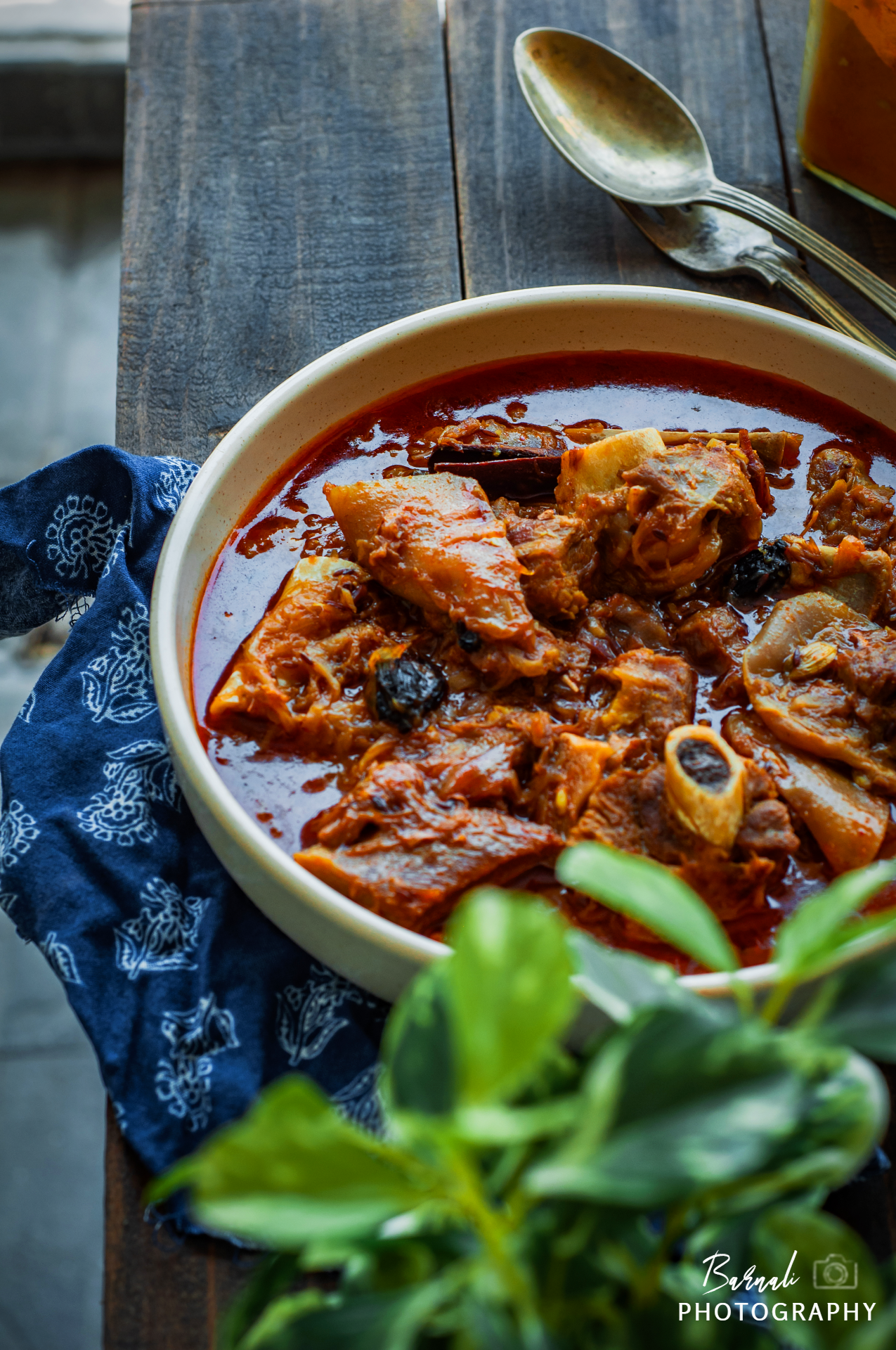
Today I will be making a very straightforward basic Kashmiri Mutton curry. It has all the flavor profile from the region and also comes with a red hot gravy. one of the best things about certain Kashmiri gravies is that they are easy on the stomach even if they look really spicy. It is because the spices are very minimal and the color comes from the vibrant Kashmiri Red chili. So even on a hot summer day you can relish this recipe without worrying about a heartburn!


Gande te maaz, kashmiri mutton curry

Preparation Time : 20 minutes 

Cooking Time : 60 minutes 

Serves - 4 adults

Ingredients :

  • Mutton (Shoulder cut) - 500 gm
  • Onion - 300 gm ( thinly sliced)
  • Cumin Seeds - 1 tsp
  • Fennel Powder / Sauf Powder - 1.5 tsp
  • Dry Ginger Powder / Saut Powder - 1/2 tsp
  • Kashmiri Red Chili Powder - 1 tsp
  • Turmeric Powder - 1 tsp + 1/2 tsp
  • Ginger Garlic Paste- 1 tsp 
  • Cinnamon - 1 inch + 1 inch
  • Cloves - 2 + 3 
  • Green Cardamom / Choti Ealichi - 2 + 2
  • Black Cardamom / Badi Ealichi - 1 + 1
  • Salt - as per taste 
  • Sugar - as per taste
  • Water - as needed ( e.g 500 ml)
  • Mustard Oil - as needed


Procedure :

1. Clean & Wash the Mutton. Take a cooker & about 500 ml water. Let it come to a rolling boil. Now add the mutton pieces and let it again come to a boil. Skim the impurities accumulating over the water as much as you can. 

2. Now add 2 tsp ginger garlic paste, 1 tsp salt, 1 inch cinnamon stick, 3 cloves, 2 green cardamom, 1 black cardamom, and a pinch of turmeric. Now cook this for 3-4 whistles till its 50% done.  Separate the stock and mutton and keep both of them aside. 

Gande te Maaz, Kashmiri Mutton Curry


3. Now take a deep bottom kadai and heat mustard oil. When the oil is hot temper it with jeera, 1 black cardamom, 2 green cardamom, 1 inch cinnamon stick and 2 cloves. When the whole spices are fragrant add the sliced onion. Add a pinch of salt and fry the onions till the onions become bit caramelized. 

4. While the onions are frying make two different pastes - a) mix 1 tsp red chili powder with water and create a paste b) mix 1.5 tsp of fennel powder & 1/2 tsp of dry ginger powder with a little water and make a paste.

5. Now add the red chili paste to the caramelized onions and add a little bit of the mutton stock. Give it a stir and let it cook till you see oil separating 

6. Now add the cooked mutton pieces and fold in so that the masala coats all the pieces.

7. Now add the fennel and dry ginger paste. At this stage you can also add 1/4 tsp of ginger garlic paste but this is totally optional. For authentic Kashmiri flavors skip ginger garlic paste at this stage. Add 1 tsp of turmeric and a little stock if you feel the masala has become too dry and sticking to the kadai. Fry till raw smell is gone.


Gande te maaz, Kashmiri mutton curry


8. Now add the reserved stock as much as you want the gravy. Adjust seasoning. Give it a good mix and transfer to pressure cooker again. Now cook the mutton till its 100% done and all the masalas are properly cooked. 
Tip : if you have time then finish the cook on the mutton in the Kadai itself that way the gravy will turn more tasty.

Serve it with steamed rice any kind of Indian flatbread and Enjoy!

Gande te maaz, Kashmiri mutton curry


My Favorite Food Experiences from Kashmir Trip:
  • First  Kashmir Trip - Favorite Foods Experiences
  • Second Kashmir Trip - Favorite Food Experiences 

Other Kashmiri Recipes:
  • Pandit Style Kashmiri Rogan Josh
  • Shah Jeera Chicken Pulao 
  • Kashmiri Pulao with Apples & Dry Fruit

Share
Tweet
Share
No comments

Neem Shukto


It is only mid of April and the temperature in Pune is soaring like crazy. last week however there was some mild relief from the heat due to thundershowers. The beauty of Pune is that once it rains, the mercury plunges quite a bit so even during intense heat spells these occasional rains are giving us the much needed respite. I think all over India it is almost the same situation. Today morning itself i read a news update which said a Doordarshan news anchor fainted during a live telecast due to the heatwave. It happened because of some technical snag the temperature controls were not working in the studio and due to the intense heat her blood pressure plummeted suddenly. I can resonate with the situation, because I have seen such situations in which the ac malfunctioned inside a closed room and the heat and suffocation was worse than being out in the sun where you at least have natural air.

We are trying to be as much hydrated as possible when we are at home or while going out during the afternoon. Also I usually keep a water bowl on the terrace for bigger birds and a small hanging water bowl for smaller ones. Both are earthen bowls which helps keep the water cold. I have seen birds enjoying a good bath in the morning or having a drink throughout the day. I would request everyone to have at least some sort of water bowl in front of their homes or balconies. It will help street animals or birds to be hydrated during these harsh summer days. 

When it comes to food, due to the heat I don't feel like eating much especially during the afternoons. I know many people might feel this way. Like always, the summer months call for such foods which are light on the stomach, mildly spiced, mostly of soupy consistency which is easy to digest. More than a lot of oily and spicy non-veg dishes, I crave for simple old school preparations with seasonal vegetables. 

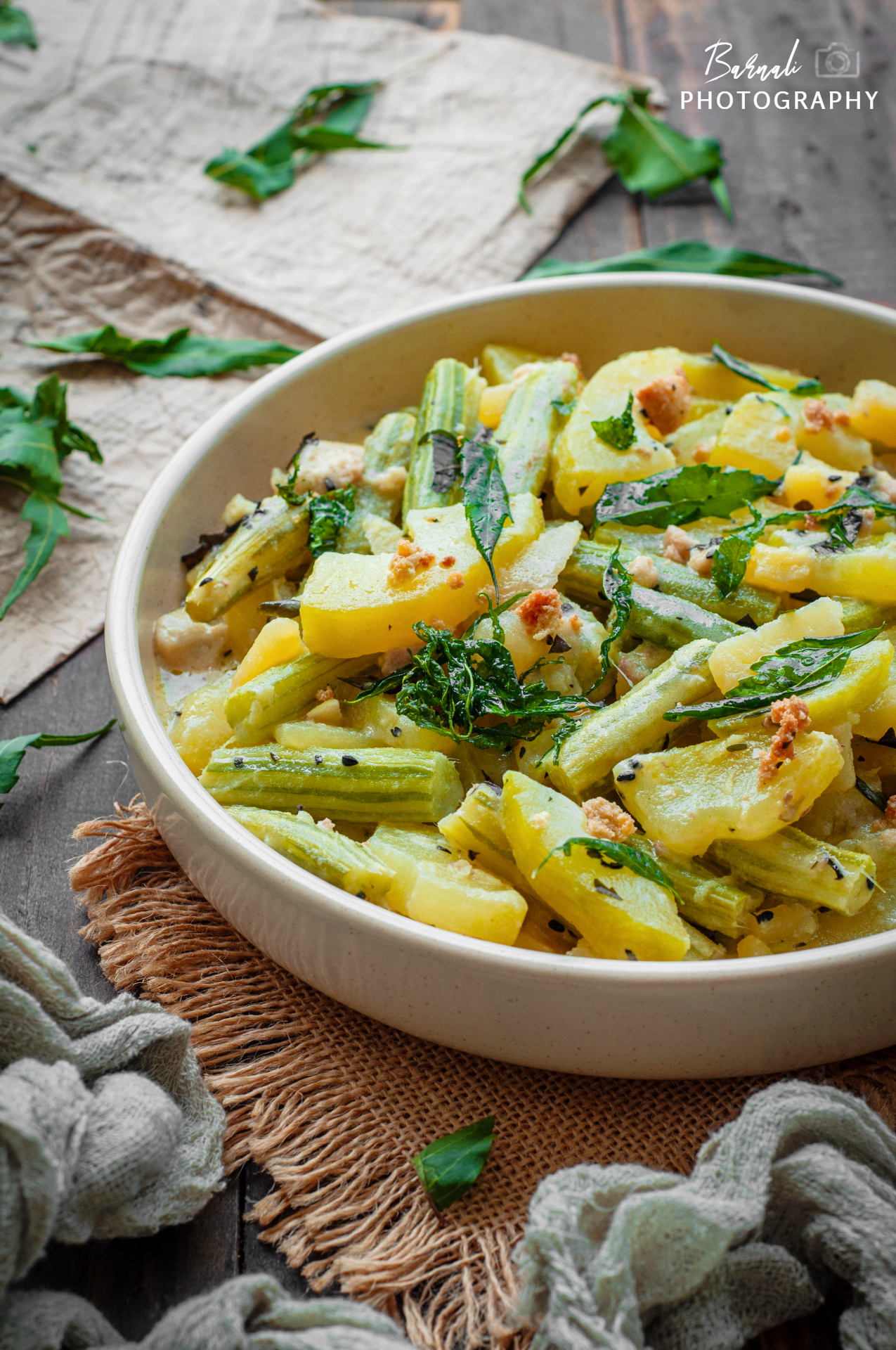
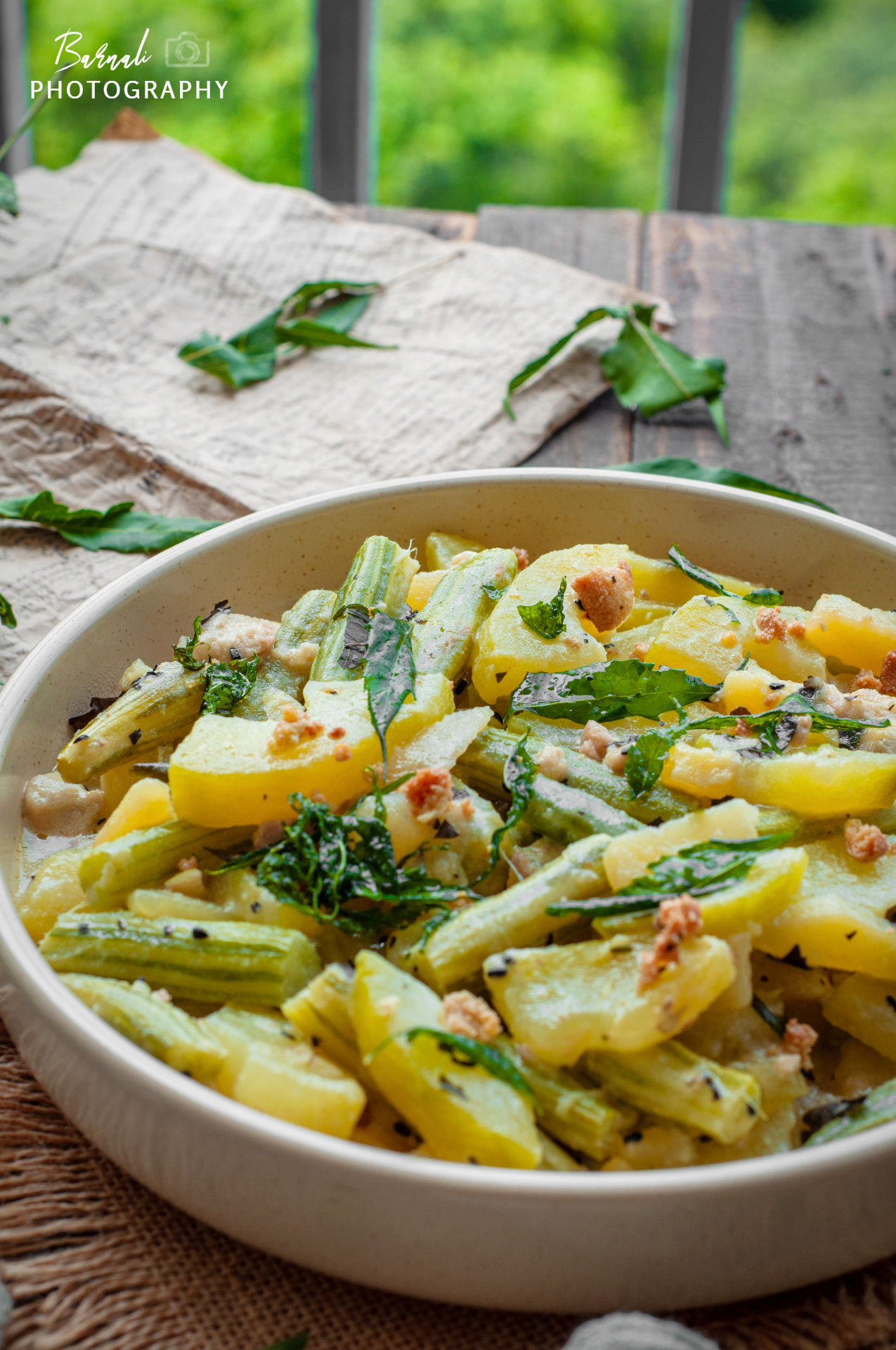
Neem Shukto

It is an age old traditional in Bengali cuisine to start the meal with something bitter or teto. The bitter taste cleanses the palate, aids digestion, and makes subsequent courses taste better. The bitter greens, such as hinche, kalmi, thankuni, and neem, also have medicinal properties. The tradition of eating bitter dishes at the start of a meal is rooted in ancient Ayurvedic dietary practices and medicinal value. The bitter dishes are eaten throughout the year, especially in late spring and early summer to ward off diseases like measles and chickenpox. And just because of that as a kid we were always advised / forced to have bitter dishes like neem pata bhaja or ucche bhaja during the summers. Obviously I hated it back then. But as I grew my palate for bitter also evolved and slowly I took a great liking for bitter dishes like shukto or fish curry with bitter gourd etc.

Shukto is one of the most iconic dishes of the Bengali kitchen is a distinctly bitter stew made with a medley of seasonal vegetable. Shukto can be made with so many different variations just by changing the vegetables in the dish. I have a couple of shukto dishes already in my blog including one with Hilsa. 

This time however its not a traditional shukto but a fusion of neem jhol and shukto. Neem leaves are known for their medicinal properties. And they are also tasty when used in the recipe in the right way. A small amount goes a long way in enhancing the flavor and taste.  You can also say this recipe is an easier version having all the earthiness of Shukto but with less hassles. So if you want to try out a simpler version of Shukto, do give this dish a try.


Preparation Time : 15 minutes 

Making Time : 20 minutes 

Serves - 4-5 adults

Ingredients :

  • Raw Papaya/ Kacha Pepe - 500 gm
  • Potato / Aloo - 2 medium
  • Drumstick - 3 whole 
  • Neem Leaves - 3 sprigs
  • Bori (sundried lentil dumplings) -10 
  • Black Cumin / Kalo Jeera / Kalonji - 1/2 tsp
  • Ginger - 1 tsp grated
  • Milk - 1 cup
  • Salt - as per taste 
  • Sugar - 3 tsp or more as per taste
  • Water - as needed
  • Mustard Oil - for tempering

Neem Shukto


Procedure :

1. Wash and dry the neem leaves a day before. Take out the leaves from the sprig. Now heat a kadai, add 1 tsp of mustard oil, when oil is smoking add the neem leaves, fry on medium heat for 2 minutes till they turn crisp. take care not to burn the leaves. Take out the leaves into a plate and let it cool.  

2. In the same oil, fry the boris till they take a light brown hue all around. Take them out in the same plate and let them cool down.

3. Take out the string from the drumsticks and cut into 3-4 cm long pieces. Peel the skin and cut the potato into long segments of same size and shape. Peel the raw papaya and slice them into small half moon shapes, about 5-mm thick. 

4. Boil water in a saucepan, once the water is boiling add 1 tsp of salt and drop the cut papaya pieces. Cover and cook for about 7-8 minutes. Drain the water and keep the papaya to cool down.

5. Take a pressure cooker, add a cup of water and add the drumstick pieces. Add a pinch of salt. Cook these for two whistles and immediately open the cooker lid by placing the cooker under running tap water to release the pressure inside. This way the drumstick will retain its green color. Drain the water and keep the drumstick aside. Preserve the water.

Neem Shukto


6. Now in a kadai heat mustard oil. When the oil is hot, add kalo jeera or Kalonji.  Add the potato pieces and some salt. Fry on medium heat for about 5-6 minutes turning them frequently till they are 80% done.

7. Now make some space in the kadai and add a little more oil, once its hot add 1/2 of the grated ginger. fry for a few seconds and mix with the potato. Now add the boiled drumstick and boiled papaya. fold in nicely.

8. Adjust the salt and sugar at this stage. It should be a little sweet so add accordingly. Add the remaining 1/2 of the grated ginger fold in and cook for 2-3 minutes.

9. Heat the milk slightly, this will prevent it from getting split when added to the subzi. Now add the milk in the kadai and give everything a nice mix. Add the preserved water from boiling the drumstick to increase the gravy. I prefer this to be a little soupy as it goes well with plain rice.

10. Lightly crush the fried neem leaves and add to the kadai. 

11. Break the boris and sprinkle it in the kadai. Now finish off the dish by adding half a teaspoon of ghee and mix well. Keep it covered for a few minutes for the smell of the ghee to spread inside.

Serve it with steamed rice on a hot summer afternoon. 

Neem Shukto


Other Vegetarian Recipes for Summer:

  • Lauer Khosha Bhaja | Bottle Gourd Peel Stir Fry
  • Potol Shorshe Posto Aam diye | Pointed gourd in mustard & poppy seed paste with raw mango
  • Bengali Shukto
  • Potol Aloo Posto | Pointed Gourd & Potato in Poppy seed paste
  • Doi Potol | Pointed Gourd in Yoghurt gravy
  • Lau Palong | Bottle Gourd & Spinach Medley
  • Jhinge Aloo Posto | Ridge Gourd & Potato in Poppy seed paste
  • Beet Greens
  • Tetor Daal | Moong Dal with Bitter Gourd

Share
Tweet
Share
No comments
Older Posts

About me

I am a software engineer by profession and a writer at heart. Born and brought up in Kharagpur, I moved to the city of dreams Mumbai when I got my first job. Till then I had not cooked a single dish in my life. Not even Maggi or tea. My dad had a strong belief that his little princess never will be in a situation where she had to cook for herself. Hence I was not allowed to spend time in the kitchen till I was studying.


So when I faced the daunting task of living alone, dabbas came to initial rescue. After that I managed a whole year on just boiled vegetables and rice. And then I landed in US. The bounty of fresh produce and cooking ingredients available in the super marts eventually lured me into making my very first meal ever. There was no turning back after that. I finally discovered how much I was in love with cooking and being creative in the kitchen.


This blog is a humble attempt to present our culinary heritage to one and all and document some of the very traditional recipes which gets passed on through generations just by word of mouth.


So just sit back with a cup of tea or coffee and enjoy the curries and the stories related to each.


Follow Us

Footprints

Blog Archive

  • ▼  2026 (3)
    • ▼  January (3)
      • If You Still Feel It
      • A Ten-Second Wind That Took Me Home
      • We Don't Say It Anymore
  • ►  2025 (3)
    • ►  December (1)
    • ►  June (1)
    • ►  February (1)
  • ►  2024 (21)
    • ►  December (2)
    • ►  September (1)
    • ►  August (3)
    • ►  July (4)
    • ►  May (2)
    • ►  April (5)
    • ►  March (3)
    • ►  January (1)
  • ►  2023 (7)
    • ►  December (2)
    • ►  November (1)
    • ►  October (1)
    • ►  May (1)
    • ►  March (1)
    • ►  January (1)
  • ►  2022 (18)
    • ►  September (1)
    • ►  August (2)
    • ►  July (2)
    • ►  June (3)
    • ►  April (1)
    • ►  March (3)
    • ►  February (2)
    • ►  January (4)
  • ►  2021 (60)
    • ►  December (5)
    • ►  October (5)
    • ►  September (5)
    • ►  August (7)
    • ►  July (6)
    • ►  June (5)
    • ►  May (3)
    • ►  April (4)
    • ►  March (6)
    • ►  February (6)
    • ►  January (8)
  • ►  2020 (55)
    • ►  December (5)
    • ►  November (3)
    • ►  October (10)
    • ►  September (7)
    • ►  August (7)
    • ►  July (9)
    • ►  June (3)
    • ►  May (9)
    • ►  March (1)
    • ►  January (1)
  • ►  2019 (3)
    • ►  November (1)
    • ►  April (1)
    • ►  January (1)
  • ►  2018 (1)
    • ►  December (1)
  • ►  2017 (4)
    • ►  December (2)
    • ►  November (1)
    • ►  September (1)
  • ►  2016 (10)
    • ►  August (1)
    • ►  July (2)
    • ►  June (5)
    • ►  April (1)
    • ►  March (1)
  • ►  2015 (10)
    • ►  December (1)
    • ►  August (1)
    • ►  June (1)
    • ►  May (2)
    • ►  April (4)
    • ►  March (1)
  • ►  2014 (22)
    • ►  November (2)
    • ►  August (2)
    • ►  July (3)
    • ►  June (2)
    • ►  May (4)
    • ►  April (3)
    • ►  January (6)
  • ►  2013 (22)
    • ►  November (2)
    • ►  October (4)
    • ►  September (5)
    • ►  August (2)
    • ►  July (1)
    • ►  June (1)
    • ►  May (2)
    • ►  April (1)
    • ►  March (1)
    • ►  February (2)
    • ►  January (1)
  • ►  2012 (31)
    • ►  December (4)
    • ►  October (3)
    • ►  September (8)
    • ►  July (1)
    • ►  June (1)
    • ►  May (14)
  • ►  2010 (9)
    • ►  July (3)
    • ►  June (2)
    • ►  April (1)
    • ►  March (2)
    • ►  February (1)
  • ►  2009 (4)
    • ►  February (2)
    • ►  January (2)

recent posts

Pinterest Board

Popular Posts

  • Champaran Mutton / Ahuna Mutton - A Bihari Delicacy
      When I finish a long week of work, self doubt, frustration of dealing with people and finally when the weekend comes, I feel cooking somet...
  • Khandeshi Kala Masala - Kala Mutton Masala
      25 September Maharashtra is a land of unique local flavours. And still it is mainly known for its Vada Pavs, poha, pav bhaji and modaks. I...
  • Complete Details to plan your ISKON Mayapur Visit
    Radha Madhav during Pushya Abhishek on 6th Jan 2023 First of all wish you a very happy new year. I have been away from blogging for a while ...
  • Macher Bhorta | Fish Bharta | Mach Makha| Bengali Style Mashed Fish
      October 18 Bhortas or bharta as we call it in pan India, are the quintessential Bengali food, a staple in Bangladeshi cuisine. They are th...
  • Green Chilli Thecha || Maharashtrian Hirvi Mirchi Thecha || Green Chilli Salsa
     26 July Though I have been staying in Maharashtra for over a decade now, it was just a couple of years ago I started exploring the local or...
  • Dim Toast | Egg Toast | Dim Pauruti | Savoury French Toast
      April 25 Calcutta or Kolkata. A city known for its food and culture, where hospitality and love are synonymous with lip-smacking grub. Cho...
  • About Slow Travel | Spice2Nuts - a spice initiative by Harish Bali (Visa2Explore)
    Moments from my travels - 1. Forest in Meghalaya 2. An old boat in Shnongpdeng 3. Fish Mint 4. Local Cinnamon  Traveling has always been a p...
  • Varhadi Mutton - A Traditional Vidharba Cuisine
    Varhadi is a dialect of Marathi typically spoken in Vidarbha region of Maharashtra. Vidarbha is the north-eastern region of Maharashtra ...
  • Arabic Chicken Mandi | Smokey Chicken & Rice
      Dec 14 Chicken Mandi has always been on my bucket list. The soft succulent meat pieces soaked in beautiful aromatics, the fragrant long gr...
  • Tangy Sweet Mint Fish | Fish Pudina Recipe | Fish Hariyali
    February 20 I am a hardcore fishiterian..if that's a word. There has been hardly any occurrence where I have tasted a fish and not liked...

Liebster Award

Liebster Award

Very Good Recipes

Very Good Recipes

You can find my recipes on Very Good Recipes

Contact Us

Name

Email *

Message *

Pages

  • Travelogue Index
  • VEGETARIAN RECIPE
  • CHICKEN RECIPES
  • SEAFOOD RECIPES
  • MUTTON RECIPES
  • RICE RECIPES
  • EGG RECIPES
  • DAAL RECIPES
  • ROTI & PARATHA RECIPES
  • BAKING RECIPES
  • SWEET RECIPES
  • SNACKS RECIPES
  • SIDES RECIPES
  • SOUP RECIPES
  • SALAD & BOWLS RECIPES
  • ROASTED RECIPIES
  • JAM & PRESERVE RECIPES
  • BEVERAGE RECIPES
  • SAUCES, SPICES & CURRY BASE RECIPES
  • CHUTNEY & DIPS RECIPES
  • FESTIVE RECIPES
  • Contact Us
  • TRAVELOGUES OF EAST INDIA
  • TRAVELOGUES OF WEST INDIA
  • TRAVELOGUES OF SOUTH INDIA
  • TRAVELOGUES OF NORTH INDIA
  • TRAVELOGUES of ASIA
  • North East Recipe

This Blog is protected by DMCA.com

DMCA.com for Blogger blogs
FOLLOW ME @INSTAGRAM

Curries n Stories © 2020 All rights reserved.
Created with by BeautyTemplates